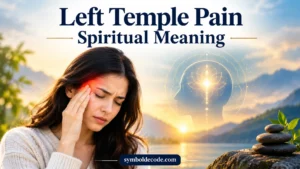
The Left Temple Pain Spiritual Meaning may connect with stress, emotions, energy, and your inner thoughts. Some people believe left temple pain encourages self-awareness, emotional balance, and spiritual reflection. From a spiritual perspective, it may remind you to notice your feelings, reduce mental pressure, and reconnect with your higher self. However, these interpretations are personal beliefs, not proven medical explanations. Headaches can also result from stress, dehydration, eye strain, or other physical causes. Understanding both perspectives can help you approach the experience with care and an open mind.
Your body and mind work together, and emotional pressure can sometimes contribute to headaches. When you relax after a stressful period, changes in cortisol, the body’s main stress hormone, may influence headache patterns. Some people use these moments to reflect on what they have been carrying, thinking, or ignoring in daily life. Still, temple pain does not prove a spiritual message or energy imbalance. If headaches become severe, frequent, or unusual, seek advice from a doctor to identify the cause and find suitable relief.
Quick Answer
Left temple pain spiritual meaning is sometimes interpreted as a prompt to explore intuition, emotional tension, self-awareness, and inner balance. In contemporary American spirituality, people may view it as a reminder to slow down and reflect. However, these meanings are subjective beliefs, not scientifically established explanations for pain.
TL;DR
- Intuition: The left side may symbolize inner awareness in some modern spiritual beliefs.
- Emotions: Temple discomfort can prompt reflection on feelings or personal stress.
- Balance: Some interpretations encourage balancing responsibilities with rest and self-care.
- History: Spiritual traditions have different beliefs about the head and forehead.
- Modern life: People may use symbolic interpretations in journaling, meditation, or personal reflection.
- Physical health: Pain is not proof of blocked energy or a spiritual awakening.
1. What Does Left Temple Pain Mean Spiritually?
The left temple is the area on the side of your head, between the outer corner of your eye and your ear. Because the head is associated with thought, awareness, and perception, some people explore temple discomfort through a spiritual lens.
However, there isn’t one universally accepted spiritual meaning for pain in this area. Interpretations depend on personal beliefs, cultural background, and the circumstances surrounding the experience.
Intuition and Inner Awareness
In contemporary spiritual discussions, the left side of the body is sometimes associated with intuition and receptivity. Within this framework, left temple discomfort may inspire you to pay closer attention to your feelings or reconsider a decision.
For example, you might reflect on whether you’re ignoring your instincts about a relationship or situation. This doesn’t mean the pain confirms that your intuition is correct. Instead, the experience can serve as a personal reminder to examine your thoughts carefully.
Emotional Awareness
Another interpretation connects discomfort with emotional pressure or the need for greater balance. If you’ve been dealing with demanding responsibilities, difficult conversations, or uncertainty, you might use the experience as an opportunity to consider how you’re feeling.
The important point is that reflection can be meaningful without assuming that pain has a supernatural cause.
2. Left Temple Pain and Emotional Stress
Emotions can influence how people experience their bodies. Consequently, some spiritual interpretations of left temple pain focus on emotional tension, unresolved concerns, and the relationship between thoughts and feelings.
In American culture, where work demands and busy schedules can leave little room for reflection, the idea of slowing down may feel especially relevant. Nevertheless, emotional symbolism shouldn’t be confused with a medical explanation.
Unresolved Feelings
Some contemporary spiritual perspectives suggest that physical discomfort can encourage people to notice feelings they’ve overlooked. This is a reflective interpretation rather than proof that emotions are trapped in a particular part of the body.
You might ask yourself whether you’re carrying disappointment, avoiding a difficult conversation, or struggling to express your needs.
Consider these reflective questions:
• Have I been avoiding an important conversation?
• Am I giving myself enough time to process difficult feelings?
• Have recent responsibilities left me feeling overwhelmed?
• Is there a situation that needs my attention?
These questions can help you understand your emotional experience without assuming that a headache reveals a hidden spiritual problem.
The Importance of Emotional Balance
Emotional balance doesn’t mean feeling happy all the time. Instead, it involves recognizing different feelings and responding to them thoughtfully.
If temple discomfort occurs during a stressful period, you might choose to pause, write in a journal, or make room for a calmer routine. These practices can support self-awareness, although they don’t establish the cause of the pain.
3. Left Temple Pain and Intuition
Intuition is often described as an inner sense that helps someone recognize patterns or make decisions. In some modern spiritual communities, the left side of the body represents receptivity, making left-sided sensations a subject of personal interpretation.
Still, left temple pain isn’t reliable evidence of psychic ability, spiritual sensitivity, or a message from the universe.
Listening to Your Inner Voice
Sometimes, people already have concerns about a decision before they consciously examine them. Reflection can help bring those concerns into focus.
For example, you might feel uncertain about accepting a new responsibility. Rather than treating temple pain as a definite warning, consider the practical reasons behind your hesitation.
Ask yourself whether you have enough information, whether your expectations are realistic, and whether the decision fits your values.
Intuition Versus Fear
Intuition and anxiety can sometimes feel similar. Both may involve uncertainty, strong emotions, or a desire to avoid a situation.
A thoughtful approach considers evidence alongside feelings. Instead of making an important decision based on a physical sensation, give yourself time to evaluate the circumstances.
This approach allows spirituality to remain a tool for reflection rather than a source of unnecessary fear.
4. Historical Background of Head and Temple Symbolism
The head has held symbolic importance across many societies. It has represented intelligence, identity, authority, perception, and the connection between the human body and the sacred.
However, historical traditions generally assigned meanings to particular images, rituals, or body parts. They didn’t establish one universal interpretation of pain in the left temple.
Ancient Ideas About the Head
In ancient Egypt, images of the eye of Horus became associated with protection, healing, and royal power. These beliefs formed part of a larger religious system involving gods, kingship, and the preservation of order.
In other societies, the head appeared in rituals and artwork connected with identity, honor, wisdom, or spiritual authority. Such examples show that people have long explored connections between the body and their understanding of the world.
However, these historical associations shouldn’t be treated as direct evidence that left temple pain carries a specific message.
The Forehead and Spiritual Awareness
Some South Asian religious traditions use forehead markings with meanings connected to devotion, religious identity, or spiritual practice. In certain Hindu traditions, the concept of the ajna chakra is associated with the area between the eyebrows and with inner awareness.
This location is important to distinguish from the left temple. The forehead’s spiritual associations don’t establish that pain on either side of the head indicates chakra activity.
Understanding these differences helps readers appreciate historical symbolism without blending distinct traditions into one oversimplified explanation.
5. Left Temple Pain Spiritual Meaning in American Culture
The United States includes many spiritual perspectives, from organized religious traditions to meditation practices and personal forms of spirituality. As a result, people may interpret physical experiences through different cultural and personal frameworks.
Some Americans prefer practical explanations, while others also explore what an experience means to them emotionally or spiritually. These approaches don’t have to be mutually exclusive, provided symbolic interpretations aren’t mistaken for established facts.
Personal Spirituality and Self-Reflection
Modern American spirituality often emphasizes personal growth, mindfulness, and discovering one’s values. Within this setting, an unexpected physical sensation might prompt someone to reconsider their routine or emotional priorities.
For instance, a person facing a major career decision might use a quiet moment to reflect on their goals. The discomfort itself doesn’t prove that a spiritual message exists, but the reflection may still feel personally valuable.
A Practical American Perspective
In everyday American life, people often balance work, family responsibilities, technology, and social commitments. Consequently, the idea of paying attention to personal well-being can resonate with many readers.
Some may interpret left temple discomfort as a reminder to slow down. Others may see it simply as a physical symptom that deserves attention.
Neither response needs to be turned into a universal rule. Personal meaning depends on the individual, while physical symptoms deserve attention on their own terms.
6. Cross-Cultural and Spiritual Interpretations
Spiritual interpretations of the body vary widely. The left side, the forehead, and the temples don’t carry identical meanings across religions or cultures.
It’s therefore important to discuss these ideas respectfully and avoid claiming that every tradition teaches the same thing.
South Asian Spiritual Traditions
In some Hindu traditions, the ajna chakra is associated with awareness, concentration, and insight. It is commonly represented in spiritual explanations as being located between the eyebrows.
Some modern wellness communities use the term third eye more broadly when discussing intuition or inner perception. However, interpretations differ, and this concept shouldn’t automatically be applied to pain in the left temple.
Buddhist Symbolism
Some Buddhist traditions associate a mark between the Buddha’s eyebrows, known as the urna, with the special qualities of an awakened being.
This symbol has its own religious and artistic history. It isn’t a general teaching that temple pain indicates spiritual development.
Contemporary Spiritual Beliefs
Some modern spiritual writers associate the left side of the body with receiving, emotion, or inward attention. Others emphasize the idea of balance between different aspects of life.
These interpretations may help individuals explore personal questions, but they aren’t universal religious teachings. They should also be distinguished from the beliefs of specific cultural communities.
Read More: Right Thumb Pain Spiritual Meaning
7. Emotional and Psychological Associations
The meaning people assign to a physical sensation can influence how they respond to it. If someone believes a sensation signals a need for reflection, they may become more attentive to their emotions and surroundings.
However, that interpretation doesn’t establish why the sensation occurred.
The Search for Meaning
Humans naturally look for patterns, especially when an experience feels unexpected. Finding meaning can help people organize their thoughts and make sense of difficult periods.
For example, someone experiencing a stressful transition might interpret an uncomfortable moment as an opportunity to reconsider their priorities. The value lies in the reflection, not in assuming that the body has delivered a coded message.
Awareness Without Overinterpretation
It’s also possible to focus too closely on physical sensations when worrying about their meaning. Searching repeatedly for signs can sometimes increase uncertainty instead of providing reassurance.
A balanced approach leaves room for curiosity without treating every sensation as evidence of a spiritual event.
Consider the following perspectives:
• Self-awareness: Notice your thoughts without judging them immediately.
• Emotional clarity: Identify feelings that may need attention.
• Grounded reflection: Consider ordinary explanations alongside personal beliefs.
• Healthy boundaries: Avoid letting symbolic interpretations control important decisions.
• Personal choice: Decide which reflective practices genuinely support your well-being.
8. Left Temple Pain and the Third Eye
The third eye is a spiritual concept associated with inner awareness and insight in some religious and modern spiritual traditions. It is often represented as an eye or point between the eyebrows.
Because this symbol concerns perception and awareness, some people connect it with unusual sensations around the head. However, the traditional third-eye location differs from the left temple.
What the Third Eye Represents
In certain Hindu spiritual frameworks, the ajna chakra has associations with concentration and insight. Modern spiritual discussions sometimes broaden these meanings to include intuition, self-knowledge, and personal transformation.
These interpretations vary between traditions and individual practitioners.
Does Left Temple Pain Mean the Third Eye Is Opening?
There is no established evidence that left temple pain means your third eye is opening. A sensation in this area cannot confirm spiritual awakening, heightened psychic ability, or changes in spiritual energy.
If the concept interests you, explore it through reading, quiet reflection, or meditation that feels comfortable. Keep the distinction clear between a symbolic practice and a physical symptom.
9. Left Temple Pain as a Reminder to Seek Balance
Balance is a common theme in modern spiritual writing. It can refer to the relationship between work and rest, personal needs and responsibilities, or reflection and action.
Some people choose to interpret an uncomfortable moment as an opportunity to examine these areas. That interpretation can be useful without assuming that the discomfort was spiritually caused.
Work and Personal Responsibilities
A demanding schedule can leave little room for reflection. If you’re juggling several commitments, you might benefit from reviewing your priorities and considering whether your routine feels manageable.
You don’t need to believe that pain contains a message to make thoughtful changes.
Relationships and Boundaries
Another useful reflection involves personal boundaries. You might consider whether you’re agreeing to commitments that conflict with your needs or avoiding conversations that could improve understanding.
These questions are relevant regardless of the physical cause of temple discomfort.
Rest and Self-Awareness
Some people find meaning in taking a pause when something interrupts their routine. They may use the moment to step away from distractions, reconnect with their priorities, or consider what needs attention.
However, reflection isn’t a substitute for appropriate care when pain is persistent, severe, or unusual.
10. Modern Uses in Tattoos, Social Media, and Personal Spirituality
Spiritual ideas about intuition and inner awareness appear in modern American wellness culture, personal artwork, and online discussions. People may use symbolic images to express beliefs, values, or experiences.
However, left temple pain itself isn’t a widely established visual symbol with one recognized meaning. Modern interpretations often draw on broader ideas about intuition, the head, or the third eye.
Tattoos and Personal Expression
Someone interested in intuition might choose a third-eye design, an abstract eye, or a geometric symbol. Such imagery can represent self-discovery or spiritual interest, depending on the person’s intentions.
A tattoo doesn’t necessarily indicate a belief about physical pain. Its meaning is personal and may change over time.
Social Media Interpretations
Online posts sometimes connect physical sensations with spiritual awakening, energy shifts, or emotional changes. These claims can attract attention because they offer simple explanations for confusing experiences.
Nevertheless, popularity doesn’t establish accuracy. A post that assigns one meaning to every left-sided headache should be treated as a personal opinion rather than a universal spiritual teaching.
Journaling and Meditation
Some people use journaling to explore experiences that feel significant. They might record their emotions, recent circumstances, and thoughts about a particular event.
Meditation can also provide a quiet setting for reflection. Neither practice proves that a physical sensation carries supernatural meaning, but both may help someone explore personal beliefs thoughtfully.
11. Common Misunderstandings About Left Temple Pain
Spiritual discussions can become confusing when personal interpretations are presented as established truths. Understanding the difference helps readers approach symbolism with curiosity rather than fear.
Myth: Left Temple Pain Always Has a Spiritual Meaning
There is no universal spiritual rule assigning a fixed meaning to left temple pain. Interpretations differ, and many people don’t attach spiritual significance to headaches at all.
Myth: It Proves Your Intuition Is Becoming Stronger
Pain cannot confirm that someone has developed psychic abilities or greater spiritual awareness. Intuition is better explored through reflection, experience, and careful consideration of evidence.
Myth: It Means Negative Energy Is Attached to You
There is no reliable basis for concluding that left temple pain proves negative energy, a curse, or a spiritual attack. Such claims may cause unnecessary anxiety.
Myth: Every Headache Is an Emotional Message
Physical discomfort has many possible explanations. Treating every headache as a symbolic warning can distract from practical considerations and appropriate medical evaluation.
Myth: The Left Side Has the Same Meaning in Every Culture
Cultural and religious traditions differ in their symbolism. A modern spiritual interpretation shouldn’t be presented as a belief shared by all religions or communities.
12. Physical Causes and When to Take Pain Seriously
Although spiritual reflection may interest you, physical discomfort should not automatically be interpreted symbolically. Headaches can occur for many reasons, and the location alone doesn’t reveal the cause.
Common contributors to headaches include stress, dehydration, eyesight problems, and migraines. Persistent or unusual temple pain may require assessment by a qualified healthcare professional.
Recognizing Physical Symptoms
Pay attention to how the pain begins, how long it lasts, and whether other symptoms occur. Recurring, worsening, or unexplained pain deserves attention rather than being dismissed as a spiritual experience.
In particular, new temple pain accompanied by scalp tenderness, jaw pain while chewing, or vision problems can sometimes indicate a serious condition requiring urgent medical assessment.
When to Seek Urgent Help
Seek emergency help if a headache begins suddenly and is extremely severe or occurs with symptoms such as weakness, confusion, difficulty speaking, or loss of vision.
These symptoms should never be dismissed as signs of spiritual awakening or an energetic shift. A symbolic interpretation cannot determine whether a medical condition is present.
Keeping Spiritual Reflection Grounded
If spiritual reflection is meaningful to you, it can exist alongside practical attention to your health. You can explore your feelings while recognizing that physical symptoms may have causes unrelated to spirituality.
The safest approach is to treat symbolism as a source of reflection, not as a diagnosis or a replacement for medical care.
13. How to Reflect on Left Temple Pain Without Fear
You don’t need to settle on a spiritual explanation to learn something from an uncomfortable experience. A calm, open-minded approach can help you consider your emotions without assuming that every sensation has a hidden message.
Ask Yourself Thoughtful Questions
Begin by considering what has been happening in your life. Are you facing a difficult decision, managing several responsibilities, or feeling uncertain about a relationship?
These questions can help you explore your circumstances without treating pain as a supernatural warning.
Record Your Thoughts
If journaling suits you, write down your feelings and the context surrounding the experience. Avoid assuming that a connection between stress and pain proves a spiritual cause.
You can use a simple reflection process:
• Notice: Describe the experience without assigning meaning immediately.
• Reflect: Consider your recent emotions and circumstances.
• Question: Explore possible explanations instead of accepting the first interpretation.
• Ground: Separate personal beliefs from established facts.
• Respond: Give appropriate attention to your physical well-being.
Choose Meaning That Supports You
A useful interpretation should encourage thoughtful choices rather than create fear or pressure. If a spiritual idea makes you feel threatened, obligated, or convinced that something terrible will happen, step back and examine that belief.
You can remain curious about symbolism while staying grounded in everyday reality.
FAQs:
What Does Left Temple Pain Mean Spiritually?
Some modern spiritual interpretations associate left temple pain with intuition, emotional awareness, or the need for balance. However, these ideas are subjective and don’t establish the cause of the pain.
Does Left Temple Pain Mean Spiritual Awakening?
Not necessarily. There is no established evidence that left temple pain signals spiritual awakening or heightened consciousness. If the idea interests you, explore it as a personal belief rather than a confirmed explanation.
Is Left Temple Pain Connected to the Third Eye?
Some people connect sensations around the head with third-eye symbolism. However, the third eye is commonly associated with the area between the eyebrows, not specifically the left temple. Pain in the temple doesn’t prove that a chakra is opening.
Does Left-Sided Head Pain Have an Emotional Meaning?
Some people use headaches as a prompt to reflect on stress, relationships, or personal responsibilities. Nevertheless, emotional reflection cannot determine the physical cause of pain.
What Does Left Temple Pressure Mean Spiritually?
In contemporary spiritual discussions, pressure around the left temple may be interpreted as a reminder to pay attention to inner awareness or emotional balance. These interpretations aren’t universal, and physical causes should also be considered.
Should I Worry About Left Temple Pain?
The seriousness depends on the symptoms and circumstances, not on a spiritual interpretation. Seek appropriate medical attention for persistent, worsening, or unusual pain, and get emergency help for a sudden, extremely severe headache or concerning neurological symptoms.
Conclusion:
Left Temple Pain Spiritual Meaning is often associated with intuition, emotional awareness, inner balance, and self-reflection. In contemporary American spirituality, these themes may encourage people to pause, explore their feelings, and reconnect with their personal values. Historical traditions have also connected the head and forehead with wisdom, identity, and spiritual awareness, although interpretations vary across cultures and should not be treated as interchangeable explanations. While this experience may inspire personal reflection, physical pain does not prove that a supernatural message is present. Instead, consider it an opportunity to reflect thoughtfully on your emotions and priorities while respecting different cultural beliefs. Above all, remember that your physical well-being matters just as much as your spiritual curiosity, and persistent, severe, or unusual temple pain deserves appropriate medical attention.