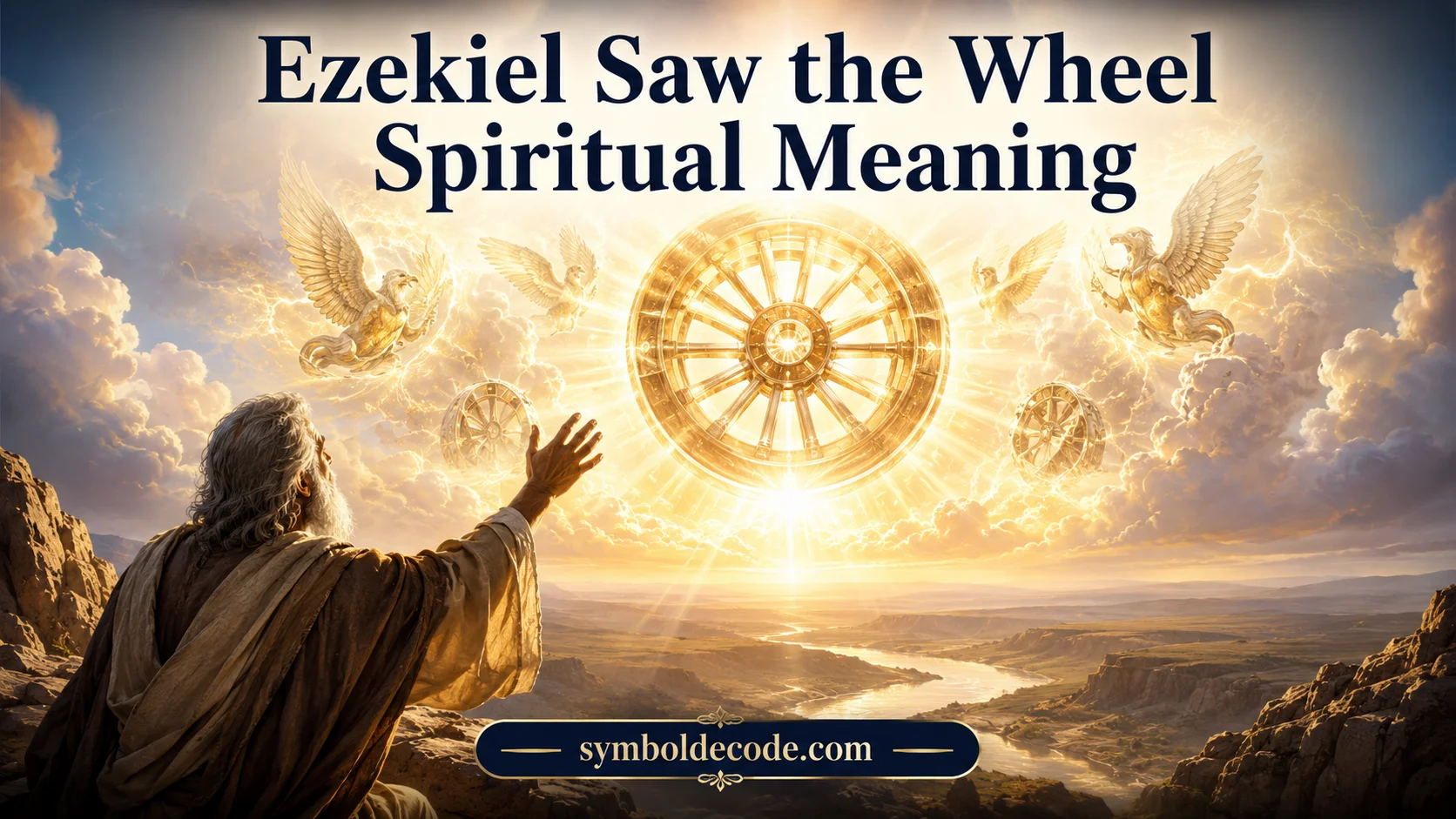
Ezekiel Saw the Wheel Spiritual Meaning starts with Ezekiel, a prophet, in the first chapter of the book, where he recounts his experience by the river Chebar. The heavens opened, and he witnessed remarkable visions near Babylon, marking his prophetic journey. His depiction of the wheel within a wheel is one of the most intriguing passages in the Bible. With rich imagery, like four living creatures and intricate wheels, each element shows divine presence, order, and deep symbolic meaning.
The vision was received in BC while exiled near the Kebar Canal, where Babylonian chariots would thunder past. This helped the prophet grasp the symbolism, which transcends any pagan model. The wheels announce Yahweh’s throne is not tied to Jerusalem but moves among nations. At age, taken into captivity, he later encountered Yahweh in a glorious vision at age, learning God is omnipresent, who commands, controls everyone, everything, all people, and all nations.
Quick Answer
The Ezekiel Saw the Wheel Spiritual Meaning symbolizes divine movement, God’s presence, and spiritual guidance. In the USA, it often reflects faith, hope, and trust in a higher plan, while broader interpretations connect it to cosmic order and life’s constant change.
TL;DR
• Represents divine presence and movement
• Originates from the biblical Book of Ezekiel
• Symbolizes guidance, order, and transformation
• Popular in American gospel music and faith culture
• Sometimes linked to mystical or cosmic meanings
What Is Ezekiel’s Wheel in the Bible?
This section explains what Ezekiel actually saw and why it matters. For American readers, it’s important because the image is often referenced in sermons and spiritual discussions.
The Vision Described
In the Book of Ezekiel, the prophet describes a dramatic scene. He sees wheels intersecting, glowing like fire, and moving in every direction.
• Wheels within wheels moving without turning
• Bright, fiery appearance like glowing metal
• Covered with eyes, symbolizing awareness
• Moving alongside heavenly beings
Why It Stands Out
Unlike simple symbols, this vision is complex and mysterious. Because of that, it has inspired both religious cultural interpretations for generations.
Historical Background and Ancient Roots
Understanding the past helps explain why this symbol still resonates today in the USA.
Biblical Origins
The vision appears in the Old Testament, written around the 6th century BCE. It reflects a time of crisis for the Israelites.
• Seen during exile in Babylon
• Represents God’s presence beyond a single place
• Shows divine power in uncertain times
• Reinforces faith during hardship
Possible Ancient Influences
Some scholars connect the imagery to earlier Near Eastern symbols.
• Ancient chariot imagery linked to divine movement
• Circular shapes symbolizing eternity
• Eyes representing awareness or watchfulness
• Cosmic order seen in early mythologies
Spiritual Meaning of Ezekiel Saw the Wheel
This section focuses on the deeper meaning, especially how Americans interpret it today.
Core Symbolism
The wheel carries layered meanings that go beyond the literal vision.
• God is always present and active
• Life moves according to a higher plan
• Change is part of spiritual growth
• Everything is connected in divine order
Personal Interpretation
For many in the USA, the symbol feels personal and comforting.
• Trust in unseen guidance
• Faith during uncertain times
• Reminder of constant spiritual motion
• Encouragement to stay aligned with purpose
Symbolism of the Wheel in the USA
In American culture, this symbol appears in both religious and everyday settings.
Faith and Church Culture
Churches often reference Ezekiel’s vision in sermons and teachings.
• Symbol of God’s active presence
• Used in spiritual lessons about trust
• Represents divine direction in life
• Linked to perseverance and hope
Cultural Influence
The image also shows up outside formal religion.
• Popular in gospel songs like “Ezekiel Saw the Wheel”
• Referenced in storytelling and art
• Used as a metaphor for life’s movement
• Inspires spiritual discussions online
Cross-Cultural and Spiritual Interpretations
Although rooted in the Bible, similar ideas appear worldwide.
Universal Symbolism
Many cultures use circular symbols to express similar ideas.
• Cycles of life and rebirth
• Balance and harmony in the universe
• Endless motion and continuity
• Connection between physical and spiritual worlds
Spiritual Traditions
Different traditions interpret the imagery in unique ways.
• Mystical traditions see cosmic order
• Some view it as a vision of higher realms
• Others connect it to spiritual awakening
• Often linked to divine intelligence
Emotional and Psychological Meaning
Symbols affect how people feel and think. This one is no exception.
Common Feelings It Evokes
The wheel vision often creates strong emotional responses.
• Awe and wonder at divine power
• Comfort in uncertain situations
• Curiosity about the unknown
• Sense of purpose and direction
Psychological Interpretation
Modern readers sometimes see it as a metaphor.
• Life constantly moving forward
• Adaptability during change
• Awareness of bigger patterns
• Feeling guided rather than lost
Modern Usage in American Life
Today, the symbol continues to appear in many forms.
Everyday Expressions
People use the idea of the “wheel” metaphorically.
• Life “in motion” or “turning”
• Trusting the process of change
• Letting events unfold naturally
• Seeing patterns in life’s journey
Visual and Creative Uses
It also shows up in design and art.
• Tattoos symbolizing faith or movement
• Wall art in spiritual homes
• Jewelry representing divine guidance
• Social media posts about transformation
Read More: Flock of Geese Spiritual Meaning
Symbolism Table: Meanings Across Contexts
| Context | Meaning in the USA | Common Associations | Notes |
| Religion | God’s presence and power | Faith, trust, guidance | Strong church influence |
| Personal Growth | Life’s movement and change | Transformation, resilience | Popular in self-reflection |
| Art & Culture | Mystery and cosmic order | Creativity, symbolism | Seen in music and visuals |
| Spirituality | Divine connection | Awareness, awakening | Broader than religion |
| Psychology | Life patterns and cycles | Growth, adaptation | Modern interpretation |
Misunderstandings and Controversies
Like many symbols, this one can be misunderstood.
Common Misinterpretations
Some interpretations go beyond the original context.
• Seen as literal physical objects
• Linked to conspiracy theories
• Misused in fictional explanations
• Confused with unrelated symbols
Balanced Perspective
It’s important to stay grounded in context.
• Originally a spiritual vision
• Meant to convey meaning, not mechanics
• Interpretations vary widely
• Respectful understanding is key
How the Meaning Has Changed Over Time
Symbols evolve as cultures change.
Early Interpretations
Originally, the vision focused on divine presence.
• Emphasis on God’s power
• Linked to prophetic messages
• Centered on faith during exile
Modern Interpretations
Today, meanings are broader and more personal.
• Focus on life’s movement
• Used in motivational contexts
• Connected to personal growth
• Shared widely through media
FAQs:
What does Ezekiel’s wheel represent spiritually?
It represents divine movement and God’s presence. Many see it as a sign of guidance and trust in a higher plan.
Is Ezekiel’s wheel a real object?
No, it’s described as a vision. Most interpretations see it as symbolic rather than physical.
Why is it called a “wheel within a wheel”?
The phrase describes its structure. It suggests movement in all directions and deeper layers of meaning.
How is it used in modern culture?
It appears in music, art, and spiritual discussions. Many people use it as a metaphor for life’s journey.
Does it have meaning outside Christianity?
Yes, similar symbols appear in other traditions. They often represent cycles, balance, and universal order.
Conclusion:
The vision of Ezekiel’s wheel remains one of the most intriguing symbols in spiritual history, blending vivid imagery with deep meaning. In the United States, the Ezekiel Saw the Wheel Spiritual Meaning continues to inspire faith, creativity, and quiet reflection, reminding people that life is always moving under a greater plan.
This ancient symbol encourages trust, awareness, and openness to change, whether viewed through a religious or personal lens. Even today, it invites us to look beyond the surface and see the bigger picture unfolding in our lives