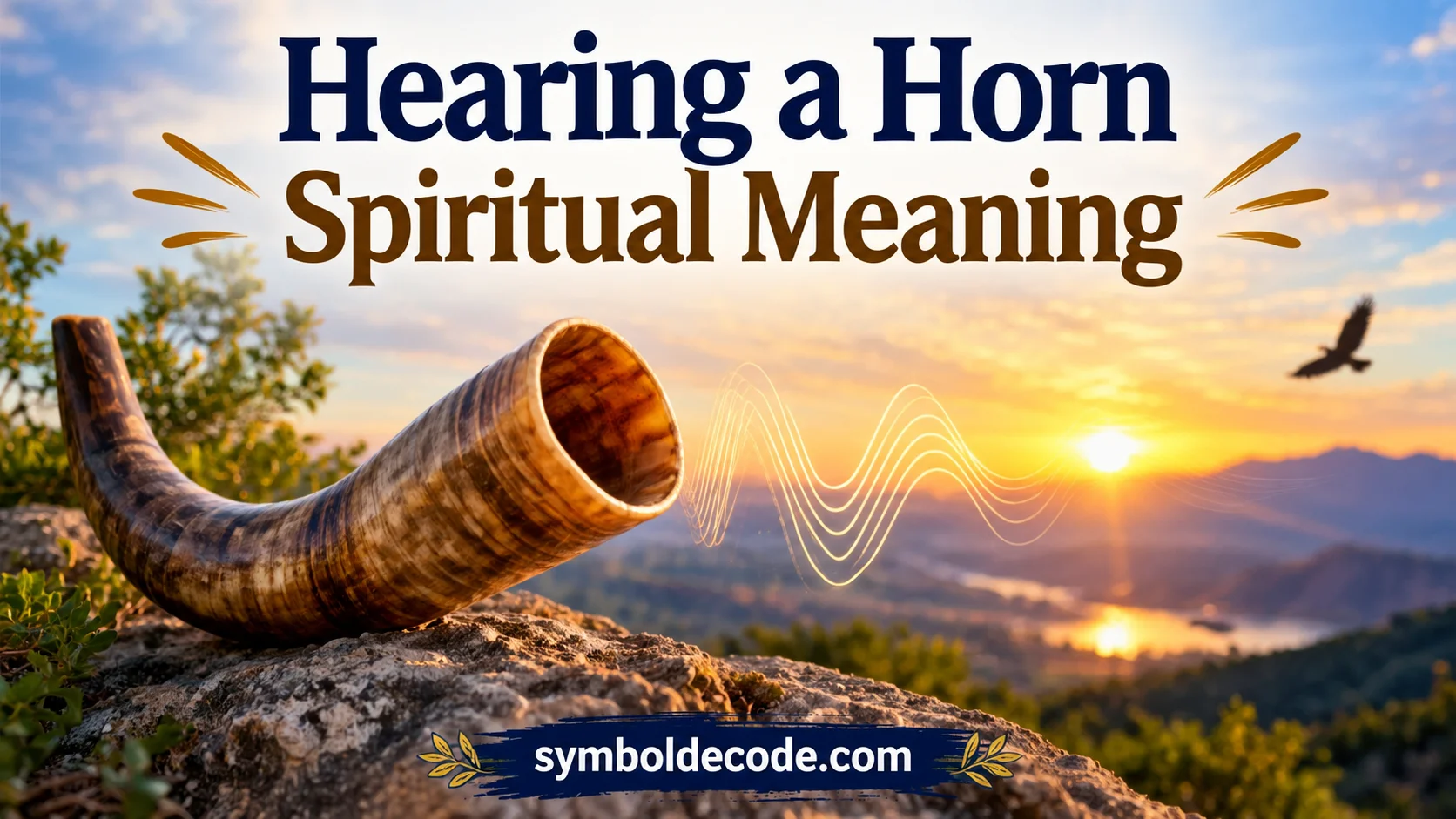
Hearing a Horn Spiritual Meaning can symbolize an urgent message, spiritual awakening, or a call to action. Hearing a horn may feel like a significant call to attention, especially during important moments in your life. In the Bible, the horn is a powerful symbol of communication, authority, worship, and divine intervention. The ram’s horn, called the shofar, can also represent a need to notice truths, acknowledge change, and listen closely to what resonates within your subconscious world.
The spiritual significance of the shofar comes from biblical history and Jewish tradition. Its piercing sound served as a call to repentance, renewal, and remembrance. Scripture connects the shofar with Mount Sinai, the fall of Jericho, and the anointing of kings. During Rosh Hashanah and Yom Kippur, it encourages God’s people to reflect, repent, and return to Him. For Christians, these historical roots can point toward faith, awareness, and deeper spiritual realities.
Quick Answer
Hearing a Horn Spiritual Meaning is commonly associated with a call to pay attention, warning, awakening, transition, or announcement. In American culture, the meaning often depends on the type of horn and situation, while spiritual traditions may connect horn sounds with sacred communication, preparation, or change.
TL;DR
• A horn commonly symbolizes attention, warning, announcement, or awakening.
• Ancient societies used horns to communicate across long distances.
• Biblical traditions connect horn sounds with gathering, worship, warning, and major events.
• American culture often associates horns with traffic, trains, music, hunting, and celebration.
• A personal interpretation depends heavily on timing, context, and emotional response.
• A symbolic meaning should remain reflective rather than treated as certain prediction.
What Does Hearing a Horn Symbolize?
The meaning of a horn begins with its basic purpose: getting attention. A horn produces a strong, recognizable sound that can travel farther than an ordinary human voice. For that reason, its symbolism often centers on communication.
A Call to Notice Something
A horn can represent a moment when you need to become more aware. Symbolically, it may encourage you to notice an opportunity, relationship, decision, or emotion that you have overlooked.
The sound can also represent interruption. Something has broken through the background noise and demanded attention.
Common Symbolic Meanings
Depending on the setting, hearing a horn may suggest:
• Awareness of something requiring your attention
• Warning about a situation that deserves caution
• Awakening after a period of feeling stuck
• Announcement of an important transition
• Action when waiting has gone on too long
• Celebration after completing a meaningful chapter
These meanings aren’t fixed rules. Your surroundings and personal associations matter just as much.
Historical Origins of Horn Symbolism
Horn symbolism reaches far beyond modern spiritual websites or contemporary beliefs. Humans have used animal horns as practical objects and signaling instruments for thousands of years.
Ancient Uses of Horns
Horns could be shaped into containers, tools, musical instruments, and signaling devices. Their natural hollow structure made them especially useful for producing sound.
In ancient societies, a loud horn could communicate across fields, hills, camps, or gathering places. Therefore, the horn became associated with authority, warning, ceremony, and public announcements.
Ancient Egyptian culture also connected ram imagery with important religious figures. The Metropolitan Museum of Art documents representations of ram-headed deities and Amun’s association with the ram. This shows how horn imagery could carry ideas of divine identity, protection, and power.
From Practical Sound to Symbol
Over time, the practical purpose of horns became symbolic as well. A sound that once simply gathered people could represent a spiritual summons.
This pattern appears repeatedly throughout history. A horn says, in effect, stop, listen, and recognize what is happening now.
Biblical Meaning of Hearing a Horn
Biblical symbolism gives horn sounds several different meanings. The shofar, traditionally made from an animal horn, became an important instrument in Jewish religious life and appears throughout the Hebrew Bible.
A Call to Gather
In biblical accounts, trumpet and horn sounds could call people together. The sound therefore represented community, preparation, and collective attention.
This symbolism remains important today because gathering around a meaningful event is still connected with the idea of hearing a call.
A Signal of Warning
Horn sounds could also serve as alerts. In this context, hearing a horn symbolizes preparation rather than guaranteed danger.
For someone approaching the symbolism spiritually, the message may be interpreted as an invitation to slow down and examine what deserves attention.
A Sacred Announcement
The horn also appears around significant religious events and moments of transition. Its sound can therefore symbolize the arrival of something important.
It is useful to remember that biblical symbolism belongs to specific religious traditions. It should not be treated as proof that every unexplained horn heard today has a biblical origin.
What Does a Horn Mean Spiritually?
Spiritual interpretations usually focus on the horn as a call. Instead of seeing the sound as a fixed prediction, many people use it as a prompt for reflection.
A Call to Wake Up
One interpretation is spiritual awakening. The horn interrupts ordinary awareness and encourages a person to look more closely at their life.
You might associate this meaning with a period when your priorities are changing. Perhaps an old routine no longer feels meaningful, or you are beginning to question an important decision.
A Call to Take Action
Another interpretation involves movement. A horn does not usually communicate quietly. Its sound is direct and noticeable.
Symbolically, that can represent the need to stop delaying something important. The meaning may involve starting a project, having an honest conversation, or making a thoughtful change.
A Moment of Preparation
A horn can also symbolize preparation. Historically, people used horn sounds before gatherings, ceremonies, battles, hunts, and other significant activities.
Spiritually, this can represent preparing yourself emotionally or mentally for a new stage.
What Does Hearing a Horn at Night Mean?
Hearing a horn at night can feel more powerful because nighttime is usually quieter. A sudden sound can therefore create a strong emotional reaction.
Symbolic Meaning of a Night Horn
From a spiritual perspective, some people associate a night horn with reflection, awareness, or an inner call. The darkness can represent the unknown, while the sound represents something breaking through uncertainty.
However, nighttime also changes how ordinary sounds are perceived. Traffic, trains, distant machinery, wildlife, and neighboring activity can sound surprisingly close when the surroundings are quiet.
A Time for Reflection
If the sound feels meaningful to you, consider what was happening immediately before you heard it.
Ask yourself:
• What was I thinking about at that moment?
• What emotion did the sound create?
• Was the sound familiar or unusual?
• Did it remind me of a person or event?
• Is something in my life currently changing?
These questions can reveal personal symbolism without assuming a supernatural explanation.
What Does Hearing a Horn in a Dream Mean?
Dreams often transform ordinary sounds and objects into symbolic experiences. A horn in a dream may represent communication, urgency, attention, or an important announcement.
A Loud Horn in a Dream
A loud horn may symbolize something that feels impossible to ignore. Your mind could be highlighting an issue that has received too little attention.
For example, someone avoiding a difficult decision might dream of a horn because the situation feels increasingly urgent.
A Distant Horn
A distant horn can suggest something that feels close enough to notice but not yet fully understood. It may represent an opportunity, memory, goal, or concern that remains in the background.
Dream symbolism is highly personal. The same horn can represent excitement for one person and anxiety for another.
Raed More: Itchy Right Wrist Spiritual Meaning
Horn Symbolism in American Culture
The United States has developed many everyday associations with horns. Their meanings range from practical communication to music, transportation, outdoor traditions, and celebrations.
Everyday American Associations
A car horn is perhaps the most familiar modern example. It can mean “pay attention,” “move,” “I’m here,” or “watch out.”
Train horns carry another powerful association. They can evoke travel, distance, crossing points, industrial history, and movement.
| Context | Meaning in the USA | Common Association | Symbolic Idea |
| Car horn | Immediate attention | Traffic | Awareness |
| Train horn | Warning and approach | Rail travel | Transition |
| Musical horn | Expression and performance | Concerts | Creativity |
| Hunting horn | Outdoor tradition | Hunting culture | Calling |
| Celebration horn | Excitement | Events and sports | Joy |
Historical American Connections
Horns also have a place in American material culture. During the colonial and early national periods, powder horns were practical objects used by hunters and soldiers. Many were decorated with maps, names, buildings, and personal designs.
The Library of Congress preserves examples of engraved powder horns from the 1700s. These objects show that horns could represent both practical survival and personal identity.
That history adds another layer to modern symbolism. In American culture, the horn can suggest self-reliance, communication, movement, and heritage.
Cross-Cultural and Spiritual Horn Meanings
Horn symbolism appears in many cultures, although the meanings are not identical. Treating these traditions separately is important because each has its own history and religious context.
Jewish Tradition
The shofar has an important role in Jewish religious practice. It is associated with sacred observance, remembrance, reflection, and calling people toward attention.
Its meaning cannot simply be reduced to a generic “spiritual sign.”
Norse Mythology
Norse mythology includes the Gjallarhorn, associated with Heimdall. Its sound is connected with a major cosmic event in the mythological tradition.
This makes the horn a symbol of warning, announcement, and transformation within that specific story.
Ancient Egypt
Ram horns and ram imagery were connected with deities including Amun and Khnum. Museum evidence shows that ram-headed religious imagery could represent divine power and protection.
These examples demonstrate why horn symbolism has remained powerful across different periods. The horn combines natural strength with a sound that commands attention.
What Does Hearing a Horn Mean Emotionally?
A horn can create an immediate emotional response because it is designed to stand out. Even an ordinary car horn can make someone feel alert within seconds.
Feelings of Alertness
The first response is often attention. Your body notices the sound before you have time to interpret it.
That makes the horn a useful symbol for awareness. It can represent the moment when something moves from the background into conscious attention.
Feelings of Urgency
A sudden horn can also create urgency. Spiritually, that feeling may become associated with an issue you already consider important.
However, urgency doesn’t necessarily mean danger. It may simply indicate that something deserves closer consideration.
Feelings of Celebration
Not every horn carries a warning. Musical horns, ceremonial horns, and celebratory sounds can represent joy, victory, energy, and community.
Therefore, your emotional response is an important part of interpretation.
What Does a Horn Mean in Modern Spirituality?
Modern spiritual discussions often interpret unexpected sounds as meaningful experiences. Horns are especially interesting because their historical role already involves communication and announcements.
A Symbol Rather Than a Prediction
A healthy symbolic approach treats the horn as a prompt for reflection rather than a guaranteed prediction.
For example, hearing a horn might encourage you to ask whether you have been ignoring an important issue. It doesn’t establish that a specific event will happen.
Intuition and Personal Meaning
Your personal history can shape the experience. A horn may remind one person of childhood, while another may associate it with travel, religious ceremonies, music, or family traditions.
Consequently, the most useful interpretation often begins with your own associations.
Hearing a Horn and Spiritual Awakening
Spiritual awakening is one of the most common modern interpretations of a meaningful horn sound. The connection comes from the horn’s traditional role as a call to attention.
Moving From Autopilot
People sometimes describe periods when life feels repetitive. Work, responsibilities, and routines can become automatic.
A symbolic horn can represent a mental interruption. It reminds you to ask whether your current direction still reflects your values.
Recognizing a New Chapter
The sound may also represent transition. A chapter could be ending, while another is beginning.
Rather than predicting what happens next, the symbol can encourage greater awareness of the present moment.
Is Hearing a Horn a Warning Sign?
A horn can symbolize warning, but hearing one doesn’t automatically mean something bad is coming.
Why Warning Became Part of the Symbol
Historically, horns were useful because they could warn people from a distance. That practical function naturally became symbolic.
The warning interpretation therefore makes sense historically. Yet it should remain an interpretation rather than a statement of fact.
A More Grounded Interpretation
If a horn makes you feel uneasy, consider whether something already concerns you. The sound may have brought an existing worry into sharper focus.
That doesn’t make the feeling meaningless. Instead, it gives you an opportunity to examine the concern calmly.
Horn Symbolism in Tattoos, Decor, and Identity
Horn imagery remains popular because it can communicate strength, heritage, creativity, spirituality, or connection with nature.
Horn Tattoos
A horn tattoo can carry different meanings depending on its design. A ram horn may suggest strength or endurance, while a musical horn may represent creativity.
A ceremonial horn may emphasize heritage or spirituality. The surrounding imagery often changes the interpretation.
Home Decor
Antler and horn-inspired objects sometimes appear in rustic or Western-style interiors. In these settings, horns can evoke wilderness, outdoor traditions, craftsmanship, or rural history.
However, modern decorative use doesn’t necessarily preserve the original spiritual meaning of the object.
Social Media and Personal Expression
Online, horn imagery can be used to represent confidence, awakening, celebration, or individuality.
Because digital symbolism moves quickly, meanings can change according to trends and communities.
Misunderstandings and Controversies Around Horn Symbolism
Horn imagery can sometimes be misunderstood because horns appear in many unrelated traditions.
Horns Don’t Always Mean Evil
Some modern imagery associates horns with demons or dark forces. However, this is only one cultural interpretation.
Across history, horns have also represented protection, abundance, authority, communication, celebration, nature, and sacred ritual.
Context Changes Meaning
A horn on a religious artifact is different from a horn on a vehicle. A musical horn is different again.
Therefore, judging symbolism from the shape alone can create confusion. Meaning depends on culture, historical period, purpose, and surrounding imagery.
Avoiding Overinterpretation
An unexplained sound can feel profound. Still, there is no reliable basis for claiming that every unexpected horn comes from a supernatural source.
A balanced approach allows spiritual reflection while recognizing ordinary explanations.
How to Interpret Hearing a Horn Personally
There is no universal dictionary that can determine exactly what your experience means. Instead, interpretation works best when you combine context, emotion, symbolism, and common sense.
Consider the Setting
First, identify the likely physical source. Was there a road, railroad, event, construction site, or musical activity nearby?
This simple step can prevent an ordinary sound from becoming unnecessarily frightening.
Notice Your Emotional Response
Next, remember how you felt. Did you experience calmness, excitement, fear, nostalgia, or curiosity?
Your emotional response can reveal what the sound symbolizes to you personally.
Look at Your Current Life
Finally, consider what is happening in your life. Are you facing a decision, beginning something new, ending an old chapter, or searching for direction?
A horn may become meaningful because it mirrors an issue already occupying your attention.
FAQs:
Is hearing a horn a spiritual sign?
Some spiritual traditions interpret horn sounds as calls to attention, warnings, announcements, or awakening. However, hearing a horn alone doesn’t prove that a supernatural message has occurred.
What does hearing a horn at night symbolize?
Spiritually, a nighttime horn may symbolize awareness, reflection, preparation, or a call to notice something important. Ordinary sources such as traffic and trains should also be considered.
Does a horn symbolize good luck?
A horn can symbolize celebration, abundance, protection, or positive change in some traditions. However, horn symbolism isn’t universally connected with good luck.
What does a horn mean in the Bible?
Biblical horn symbolism includes gathering, warning, worship, announcement, and major transitions. The meaning depends on the specific passage and religious context.
What does hearing a horn in a dream mean?
A horn in a dream may represent urgency, communication, awakening, or something demanding attention. Personal memories and emotions strongly influence dream symbolism.
Is hearing an unexplained horn always spiritual?
No. Sounds can travel unexpectedly, especially at night, and the brain can sometimes misidentify distant or unfamiliar sounds. Spiritual interpretation is a personal framework, not a proven explanation.
Conclusion:
The Hearing a Horn Spiritual Meaning can center on attention, awakening, warning, communication, preparation, or transition. These ideas have deep historical roots because horns were once essential tools for gathering people, signaling danger, and marking important events. For modern Americans, a horn carries both everyday and symbolic meanings: a car horn may demand attention, a train horn can suggest movement, while a musical horn may represent celebration or creativity. If a horn sound feels meaningful to you, pause and consider the moment without rushing to a fixed conclusion. Ask what the sound brought to your attention, what emotion it created, and whether it connects with something already changing in your life.