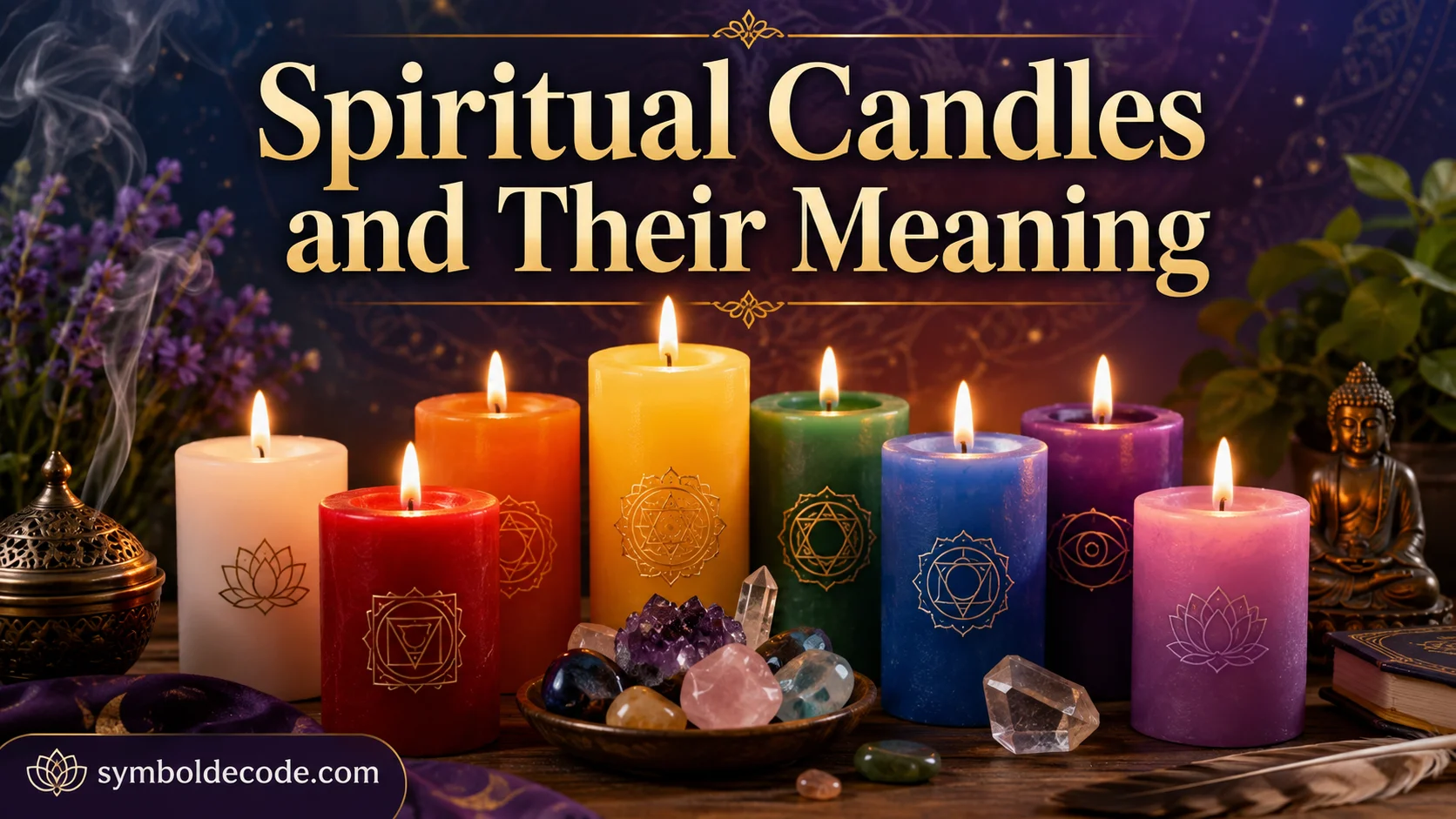
Spiritual Candles and Their Meaning can help explain how candle color, flame, and intention shape spiritual practice. Candle magic uses the candle as a physical symbol of energy, while color creates emotional associations, symbolic associations, and energetic associations. Across sacred traditions, folk customs, and personal rituals, candles support focus, awareness, clarity, and harmony. A red candle may represent romance, while an altar candle can express devotion. These meanings help practitioners make an informed choice.
Candles have served practical, religious, ceremonial, decorative, and romantic reasons throughout history. In prayers, meditation, spiritual healing, and contemplation, they can create a quiescent atmosphere that feels sacred and sublime. Different candle colors may represent different spiritual energies. A pink candle can symbolize love, while a turquoise candle may represent prosperity and abundance. These traditions connect candle use with the aura, Divine Light, and personal spiritual reflection in modern life.
Quick Answer
Spiritual Candles and Their Meaning in the United States commonly points to light, prayer, peace, protection, remembrance, hope, and personal intention. Different colors can add symbolic associations, but their meaning depends on the tradition and context.
TL;DR
- Candles often symbolize light overcoming darkness.
- White commonly represents peace, purity, and clarity.
- Red is often linked with love, passion, courage, and vitality.
- Blue can suggest calmness, wisdom, and communication.
- Candlelight has strong American associations with prayer and remembrance.
- Modern spiritual practices often use candles to focus personal intentions.
What Are Spiritual Candles?
Spiritual candles are ordinary candles used within a meaningful spiritual, religious, reflective, or symbolic setting. They may be plain or decorated, and their symbolism can come from color, shape, scent, flame, or ritual context.
In America, the same candle can have several meanings. A white candle in a church may represent sacred light, while that same white candle at home may represent peace or a fresh beginning.
Color, Shape, and Context
Color is one of the easiest ways people assign symbolic meaning to candles. However, context usually matters more than color alone.
A candle may also be shaped as a pillar, taper, votive, figure, or devotional object. Some people choose scented candles because fragrance helps create a particular mood.
Common symbolic elements include:
• White: peace, purity, clarity, and spiritual reflection
• Red: love, passion, courage, energy, and strength
• Blue: calmness, wisdom, truth, and communication
• Green: growth, renewal, abundance, and prosperity
• Purple: spirituality, intuition, reflection, and transformation
• Black: protection, boundaries, endings, or release
These associations are common in modern Western spiritual practices, but they aren’t universal.
What Is the History of Candle Symbolism?
Candle symbolism began with a practical human relationship with fire. Long before electric lighting, flame offered warmth, visibility, safety, and a way to gather after dark.
Over time, people naturally connected light with ideas beyond survival. A flame could represent life, guidance, sacred presence, or hope during difficult circumstances.
Ancient Roots
The exact history of early candles is complicated because ancient societies used several forms of lamps and burning materials. Wax and tallow candles became established lighting technologies over time.
Ancient Mediterranean cultures used lamps and flames in religious settings. Fire also held important roles in ceremonies and household life across many societies.
However, it’s important not to claim that modern candle color meanings came directly from one ancient source. Many current color associations developed much later.
Religious Development
Jewish, Christian, Buddhist, Hindu, and other traditions have used lamps or candles in different ceremonial settings.
In Christianity, candlelight became closely connected with Christ as light and with worship. In Judaism, candle lighting carries important meanings in Sabbath observance, festivals, and remembrance.
Hanukkah provides one of the clearest examples. The holiday’s candle-lighting tradition recalls the rededication of the Jerusalem Temple and the traditional story of oil lasting eight days.
Christian Easter traditions also developed powerful candle symbolism. The Paschal candle represents Christ as light, particularly during the Easter vigil.
What Do Candle Colors Mean Spiritually?
Candle colors often work like visual shorthand. They help people express an intention without saying it aloud.
Still, there isn’t a single worldwide dictionary for candle colors. The same shade may carry different meanings in different religions, magical traditions, cultures, or personal practices.
Common Color Associations
| Candle Color | Common Symbolic Meaning | Typical Context |
| White | Peace, purity, clarity | Prayer, reflection, new beginnings |
| Red | Love, courage, passion | Relationships, vitality, confidence |
| Pink | Compassion, affection, harmony | Love, friendship, self-kindness |
| Orange | Creativity, motivation, enthusiasm | Personal growth and inspiration |
| Yellow | Confidence, joy, communication | Learning, focus, optimism |
| Green | Growth, renewal, abundance | Prosperity, nature, fresh starts |
| Blue | Peace, wisdom, calm | Meditation, reflection, communication |
| Purple | Spirituality, intuition, transformation | Contemplation and spiritual practice |
| Black | Protection, boundaries, release | Ending cycles and symbolic protection |
| Brown | Grounding, stability, home | Security and practical intentions |
| Gold | Achievement, abundance, illumination | Celebration and aspiration |
| Silver | Reflection, intuition, mystery | Contemplative or symbolic practices |
Why Color Isn’t a Fixed Rule
Color symbolism changes with culture and circumstance. For example, white can represent purity in many American religious settings, while white has mourning associations in some Asian cultures.
Likewise, red can symbolize romantic passion in one setting and celebration, luck, sacrifice, or political identity in another.
Therefore, the most useful approach is to treat candle colors as symbolic suggestions rather than universal laws.
What Do Spiritual Candles Symbolize in America?
In the United States, candles have become part of both religious and secular life. Their meaning often depends on where they’re used and who is lighting them.
Prayer and Faith
Many Americans encounter spiritual candles through churches, chapels, synagogues, temples, or personal prayer spaces. A flame can create a visual reminder of devotion and attention.
Votive candles are especially familiar in Christian settings. Lighting one may accompany a prayer, remembrance, or request.
Remembrance and Public Mourning
Americans also use candles during vigils after tragedies or the deaths of public figures. Groups may gather with candles because the small flames create a shared visual expression of grief and solidarity.
The United States Holocaust Memorial Museum, for example, includes candle lighting as part of remembrance practices. Its Hall of Remembrance contains an eternal flame and allows visitors to light memorial candles.
This use gives candlelight a meaning that reaches beyond religion. It can say, in a simple way, we remember.
Holidays and Community Life
Candles also appear during Christmas, Hanukkah, Kwanzaa-related celebrations, Advent, birthdays, weddings, and memorial services.
In these settings, candlelight can mark transition. One flame may represent a person, while many flames can symbolize community.
What Is the Spiritual Meaning of a Candle Flame?
The flame itself is often the heart of candle symbolism. It moves, flickers, grows, and eventually disappears, making it a natural image for change.
For many people, the flame represents life, consciousness, hope, or spiritual attention.
Light in Darkness
The most widespread symbolic idea is simple: light brings visibility into darkness.
That image appears across literature, religion, art, and everyday speech. A candle can therefore represent guidance during uncertainty or hope during hardship.
Flame and Personal Reflection
Modern spiritual practitioners sometimes use candle gazing during meditation. Watching the steady movement of a flame can encourage quiet attention.
However, interpretations of flame behavior should remain personal. A flickering flame can have ordinary causes, including airflow, wick length, wax composition, or room temperature.
A flame isn’t a scientifically established method for predicting events or measuring invisible forces.
What Do White Spiritual Candles Mean?
White candles are among the most widely recognized spiritual candles in America. Their symbolism often includes peace, purity, clarity, protection, and new beginnings.
Why White Feels Sacred
White reflects light strongly, so it naturally fits the symbolism of illumination. In many Western religious settings, white also connects with cleanliness, holiness, celebration, and innocence.
Because of this broad symbolism, white candles can appear in many situations. Someone may light one during prayer, meditation, remembrance, or a personal fresh start.
White is also sometimes treated as a flexible substitute when another candle color isn’t available. That idea belongs mainly to modern spiritual and magical traditions rather than being a universal religious rule.
What Do Red, Green, Blue, and Purple Candles Mean?
The most familiar colored candles often represent emotional or personal themes. Their meanings are especially common in modern spiritual communities.
Red Candles
Red is frequently connected with love, passion, courage, vitality, and determination. In a personal ritual, someone may choose red when focusing on confidence or emotional intensity.
Green Candles
Green often represents growth, renewal, prosperity, nature, and abundance. Its connection with plants and spring makes growth an intuitive association.
Blue Candles
Blue commonly suggests peace, calmness, wisdom, communication, and reflection. Its connection with sky and water can also reinforce feelings of openness and tranquility.
Purple Candles
Purple often carries associations with spirituality, intuition, wisdom, mystery, and transformation. In American culture, purple has also gained associations with ceremony, dignity, and creativity.
These meanings overlap, but they aren’t rigid. Personal experience can be just as important as traditional correspondence.
Read More: Spiritual Meaning of Earwig in House
What Is the Spiritual Meaning of Lighting a Candle?
Lighting a candle can transform an ordinary action into a deliberate moment. The physical act creates a beginning, while the flame provides a visible focus.
Intention and Attention
Many people light candles while praying, meditating, journaling, or setting a personal intention. The candle doesn’t have to be viewed as possessing supernatural power for the ritual to feel meaningful.
Instead, the repeated action can help separate intentional time from everyday distractions.
For example, someone might light a candle before writing about a difficult experience. Another person might light one during evening prayer. Someone else may simply use candlelight to create a quiet atmosphere.
A Symbolic Pause
A candle can also symbolize stopping and paying attention.
In a fast-moving culture, that small pause can feel significant. The flame becomes a reminder to slow down, reflect, remember, or reconnect with a chosen value.
How Are Spiritual Candles Used in Modern Life?
Spiritual candles have moved well beyond formal religious spaces. Today, Americans may encounter them in bedrooms, meditation corners, wellness spaces, wedding ceremonies, social media posts, and home decor.
Home Decor and Personal Ritual
A candle can make a room feel peaceful and intentional. Some people arrange candles near books, crystals, plants, photographs, or other meaningful objects.
Others keep their practice extremely simple. A single candle may be enough.
Tattoos and Personal Identity
Candle imagery can also appear in tattoos. A burning candle may represent hope after hardship, remembrance of someone who died, faith, resilience, or the idea of carrying light through difficult times.
Because tattoo symbolism is personal, the same candle design can mean completely different things to two people.
Social Media and Visual Culture
Candlelight photographs are common in online spaces focused on mindfulness, spirituality, relaxation, and self-care.
The visual appeal matters too. Warm light creates a feeling of intimacy and quiet, making candles useful symbols even when no formal ritual is involved.
How Do Candles Connect With Other Cultures and Religions?
Candle and lamp traditions exist across many cultures, but they shouldn’t be treated as one shared belief system.
Different communities developed their own meanings through history, theology, ceremony, art, and local customs.
Judaism
Candle lighting has important roles in Jewish life, including Sabbath and festival observances. A yahrzeit candle is traditionally lit in memory of a deceased loved one.
In the United States, these traditions remain visible in homes, synagogues, museums, and public commemorations.
Christianity
Christian candle symbolism frequently connects light with Christ, prayer, worship, resurrection, and hope.
The Paschal candle used around Easter is one especially important example. Its symbolism developed within the early Christian tradition and remains part of many Christian communities.
Buddhism and Hindu Traditions
In several Buddhist and Hindu settings, lamps or candles can symbolize illumination, wisdom, devotion, or the overcoming of darkness.
However, practices vary greatly by region and tradition. There isn’t one single Buddhist or Hindu meaning for every candle.
A Respectful Comparison
The similarities are striking, but they shouldn’t erase important differences.
Across traditions, light can represent positive ideas such as wisdom or hope. Yet the theological meaning behind that light may be very different.
What Do Spiritual Candles Mean Emotionally and Psychologically?
Candlelight has a strong emotional effect because humans respond to changes in light, atmosphere, color, and ritual.
A quiet flame can make a space feel slower and more private. That doesn’t automatically make the candle spiritually powerful, but it can influence how a person experiences the moment.
Common Emotional Associations
• Hope: Light suggests possibility during difficult periods.
• Peace: Soft illumination can create a calmer atmosphere.
• Memory: A flame provides a visible focus for remembrance.
• Love: Warm candlelight is strongly connected with intimacy.
• Courage: A small light can symbolize endurance through darkness.
• Renewal: Lighting a new candle can mark a fresh beginning.
These associations are influenced by culture and personal experience. Someone who grew up lighting candles at family celebrations may experience them differently from someone who encountered them mainly in religious ceremonies.
Are Spiritual Candle Meanings Always Positive?
Not necessarily. Candles can symbolize endings, grief, protection, mystery, sacrifice, or loss as well as peace and hope.
The Meaning of Black Candles
Black candles sometimes make people uncomfortable because black is associated with death or darkness in parts of American culture.
Yet in modern spiritual and magical practices, black may symbolize protection, boundaries, release, or the ending of an unwanted chapter. It doesn’t automatically represent evil.
Context is essential. A black candle used in a remembrance ceremony and a black candle used in a personal spiritual practice can have entirely different meanings.
Misunderstandings About Candle Magic
Some modern practices interpret candle flames, wax patterns, or burning speed as messages. These interpretations belong to particular spiritual systems and shouldn’t be presented as proven facts.
A candle can have deep personal meaning without being treated as a supernatural prediction tool.
How Have Candle Meanings Changed Over Time?
Candle symbolism has never been completely fixed. Its meaning changes as technology, religion, culture, and personal spirituality change.
From Necessity to Symbol
Before electric lighting, candles were useful sources of illumination. As electric lights became common, candles became less necessary for everyday visibility.
Ironically, their reduced practical role helped strengthen their symbolic role. People increasingly used candles for atmosphere, ceremony, celebration, remembrance, and decoration.
From Public Ritual to Personal Practice
Historically, many candle rituals were tied to religious communities. Today, Americans may create private rituals without belonging to a formal institution.
Someone may light a candle for meditation without following a specific religion. Another person may combine candlelight with journaling or quiet reflection.
This shift doesn’t erase older meanings. Instead, it adds new layers.
How Should You Choose a Spiritual Candle?
Choosing a spiritual candle doesn’t require a complicated system. Start with the purpose and then consider color, shape, scent, and personal association.
Choose by Intention
Think about what the candle represents to you.
If you’re focusing on peace, blue or white may feel appropriate. If you’re marking growth, green may fit naturally. If you’re remembering someone, a simple white candle may provide a meaningful focus.
Let Context Guide You
If you’re participating in a religious ceremony, follow that tradition’s established practices rather than applying a generic color chart.
For personal rituals, you have more freedom. Your own memories and associations can become part of the symbolism.
Keep the Practice Grounded
A candle can support reflection without needing extraordinary claims.
Its greatest symbolic power may come from what you choose to remember, express, or contemplate while the flame burns.
FAQs:
What does a candle symbolize spiritually?
A candle commonly symbolizes light, hope, prayer, remembrance, clarity, and spiritual attention. Its exact meaning depends on the tradition and context.
What candle color is best for spiritual protection?
White and black are both associated with protection in some modern spiritual practices. However, color meanings vary, so the tradition behind the practice matters.
What does a white candle mean spiritually?
A white candle often represents peace, purity, clarity, protection, and new beginnings. In religious settings, it may carry additional meanings connected with worship.
What does a red candle symbolize?
Red commonly represents love, passion, courage, vitality, and strong emotion. Its meaning can change when used in a particular religious or cultural setting.
What does lighting a candle for someone mean?
Lighting a candle for someone can express remembrance, prayer, sympathy, love, or solidarity. In American memorial culture, candlelight often communicates that someone hasn’t been forgotten.
Do candle flames have spiritual meanings?
Some spiritual traditions interpret flame behavior symbolically. However, flame size, movement, and burning speed also have ordinary physical causes, so such interpretations are matters of belief rather than established fact.
Are candle color meanings universal?
No. Candle colors don’t have one universal meaning across all religions and cultures. Modern color charts are best understood as common symbolic associations, not fixed rules.
Conclusion:
The symbolism of a candle is remarkably simple and flexible. A small flame can represent hope, prayer, peace, remembrance, love, protection, or renewal, depending on the person and setting. In the United States, candles appear in religious ceremonies, holidays, memorials, homes, weddings, meditation practices, and personal rituals. Their meaning has shifted from practical light toward a broader language of emotion and intention. Ultimately, Spiritual Candles and Their Meaning isn’t about memorizing a rigid list of colors. It’s about understanding how light, tradition, memory, and personal experience come together. Whether you light one for prayer, remembrance, reflection, or a fresh beginning, the meaning often begins with the intention you bring to the flame.