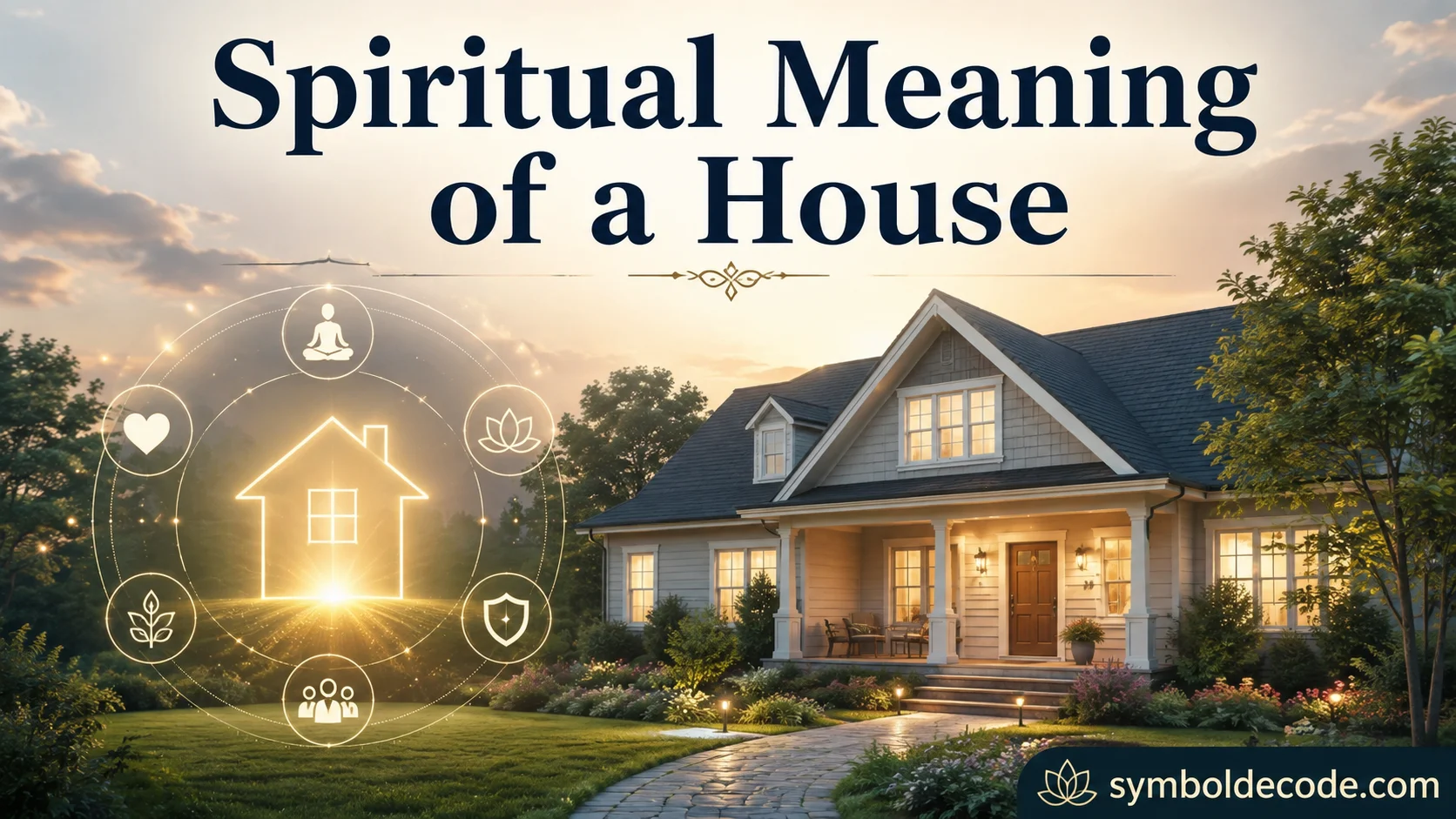
The Spiritual Meaning of a House often begins with the quiet power found in the spaces we inhabit. The soul of a home is shaped by its walls, floors, thresholds, land, and materials. These elements can hold feelings and communicate something when we give them attention. Nature offers symbolism too. Snails carry a steadfast, secure refuge, while hermit crabs show adaptability by finding new shelter. This connection also appears in astrology, where the sign Cancer and its crab are closely linked with the concept of home.
Architecture can be seen as a sacred act, connecting the architect with creation, God, and the patterns of nature. Traditional buildings balanced form and matter, joining their material and spiritual sides. Traditional master builders used practical knowledge, geomancy, and astrology to create places supporting health, comfort, and harmony. The traditional Persian houses of Kashan are finest examples of this approach. Their spiritual aspects helped create health-giving buildings and lasting masterpieces. This pattern can guide modern architects toward comfortable, pro-life spaces.
Quick Answer
The Spiritual Meaning of a House commonly represents security, identity, grounding, protection, family, and personal growth. In the United States, it can also symbolize independence and the idea of creating a stable life, while broader spiritual traditions often connect the home with sanctuary and the inner self.
TL;DR
- A house often symbolizes safety, stability, and belonging.
- Its foundation can represent personal values and emotional grounding.
- Doors and windows can symbolize boundaries, choices, and opportunities.
- Historically, homes have been connected with family, community, and sacred life.
- In America, homeownership often carries meanings of independence and achievement.
- Spiritually, a house can represent the inner self and life journey.
What Does a House Symbolize Spiritually?
A house is one of the most familiar symbols in human life. Because people eat, sleep, celebrate, grieve, and build relationships inside homes, the structure can become a symbol of the life itself.
For American readers, this symbolism is especially meaningful because the home has long been connected with family life and personal independence.
A House as a Safe Place
The first spiritual association is protection. Walls separate the private world from the outside world, creating a natural image of shelter.
A peaceful house may therefore symbolize emotional security, while an unstable or damaged house may suggest vulnerability in symbolic interpretations.
A House as the Self
A house can also represent the person who lives inside it. The rooms become different parts of life, while the foundation represents deeper values.
This idea appears in psychology and spiritual reflection alike. However, it should be treated as a metaphor rather than a fixed interpretation.
Core Symbolic Meanings
• Protection from outside pressures and uncertainty
• Grounding through routines, values, and familiar surroundings
• Identity expressed through personal space and belongings
• Belonging created through family, friendship, and community
• Growth as people change their spaces and their lives
Historical Roots of House Symbolism
The symbolic meaning of houses is much older than modern real estate. Human communities have long treated dwellings as more than practical shelters.
In ancient societies, the home was often connected with family ancestry, religious practice, food, fire, and social order. Therefore, the house could represent both physical life and spiritual continuity.
Ancient Hearth Traditions
The hearth was especially important in many ancient societies. Fire provided warmth, food, light, and protection, making it a natural center of household life.
In ancient Greek and Roman traditions, household religious practices could include honoring protective household deities and ancestors. The Roman lares, for example, were associated with the household and family.
These traditions helped reinforce an idea that remains familiar today: home can be a place where memory, family, and protection meet.
The House as a Microcosm
Many cultures have treated the dwelling as a small version of the wider world. Its structure could mirror ideas about order, nature, family, or the universe.
However, house symbolism differs greatly across cultures. There isn’t one ancient interpretation that explains every home or spiritual tradition.
Spiritual Meaning of a House in the United States
American culture gives the house several layers of meaning. It can represent family, independence, privacy, achievement, and the hope of creating a stable future.
The familiar idea of the American Dream has also linked the house with personal success. A home can become a visible symbol of progress from modest beginnings toward greater stability.
Home and Independence
In the United States, owning or establishing a home has often been associated with independence. The house can represent having a private space where personal choices and family traditions can develop.
At the same time, this ideal isn’t equally available to everyone. Housing history in America also includes inequality, displacement, discrimination, and economic barriers.
Home and Belonging
A house doesn’t have to be owned to feel meaningful. Renters, apartment dwellers, people living with relatives, and people who move frequently can all experience a strong sense of home.
This distinction matters because home is an emotional idea as much as a physical structure.
| House Context | Symbolic Meaning in America | Common Association | Important Note |
| Family home | Belonging and continuity | Memories and traditions | Meaning depends on relationships |
| First home | Independence and achievement | New beginnings | Ownership isn’t required |
| Childhood home | Memory and identity | Nostalgia | Memories may be positive or difficult |
| New house | Change and opportunity | Fresh chapter | Moving can bring mixed emotions |
| Old house | History and continuity | Heritage and stories | Age doesn’t automatically imply spiritual meaning |
What Does the Foundation of a House Symbolize?
The foundation is naturally connected with stability and strength. Without a solid foundation, the rest of the structure becomes vulnerable.
Spiritually, people may use this image to reflect on the foundations of their own lives.
Foundation and Personal Values
A strong foundation can symbolize values such as honesty, patience, family, responsibility, or faith. These deeper principles may support a person’s choices during difficult periods.
Therefore, seeing or thinking about a foundation can inspire a simple question: What keeps my life steady?
Foundation and Emotional Grounding
The foundation may also represent emotional grounding. When life feels uncertain, people often return to familiar routines, relationships, or beliefs.
This symbolism doesn’t mean that every foundation problem carries a hidden message. Practical concerns should remain practical concerns.
What Do Doors and Windows Symbolize?
Doors and windows are powerful parts of house symbolism because they connect the inside with the outside.
A door controls entry and exit. A window allows observation, light, and connection with the world beyond the walls.
Door Symbolism
A door can represent:
• Opportunities waiting to be explored
• Boundaries protecting personal space
• Choices between different directions
• Transitions from one stage of life to another
A closed door may symbolize privacy or protection. An open door may suggest welcome, possibility, or change.
However, the meaning depends heavily on context.
Window Symbolism
Windows are often associated with perspective and awareness. Looking through a window can symbolically suggest observing life without immediately entering it.
Light coming through a window may also represent hope, clarity, or understanding in modern spiritual interpretations.
What Do Different Rooms Symbolize?
People sometimes interpret rooms as symbolic parts of life. This approach can make a familiar house feel like a map of personal experiences.
These meanings aren’t universal, but they can be useful for personal reflection.
Kitchen
The kitchen often represents nourishment, family, creativity, and abundance. It is traditionally connected with preparing food and gathering together.
In American homes, kitchens can also symbolize hospitality and everyday family connection.
Bedroom
A bedroom commonly suggests rest, privacy, intimacy, and renewal. Because it is usually one of the most private spaces, it can symbolize the part of life kept away from public attention.
Living Room
The living room can represent social connection and communication. It is often where guests gather, conversations happen, and shared experiences unfold.
Basement and Attic
Basements and attics can carry deeper symbolic meanings. Because they are often used for storage, people may associate them with memories, forgotten experiences, or parts of life that receive less attention.
In dream interpretation, these associations can become particularly strong.
What Is the Psychological Meaning of a House?
The house has also been studied as a meaningful cultural and psychological object. People don’t simply occupy houses; they decorate, organize, modify, and personalize them.
As a result, the home can communicate identity and values.
Home as an Extension of Identity
Furniture, photographs, artwork, colors, collections, and personal objects can reveal what matters to someone.
For example, a person who surrounds themselves with family photographs may place strong value on memory and connection. Someone who prefers a simple space may value order or calm.
These are possibilities, not rules.
Home and Emotional Memory
A house can hold powerful memories. The smell of a kitchen, the sound of stairs, or a particular room can remind someone of childhood.
Because of this, houses often symbolize time as well as space. They can connect the present with earlier stages of life.
What Does a House Represent in Dreams?
When a house appears in a dream, many symbolic traditions interpret it as a representation of the dreamer’s inner life.
The condition of the house, the rooms involved, and the emotions felt during the dream can all change the possible meaning.
A New House
A new house may symbolize change, possibility, independence, or a new chapter.
It can appear during periods when someone is thinking about personal growth or major life transitions.
An Old or Abandoned House
An old house may evoke memories, unfinished emotional matters, or the past. An abandoned house can intensify those themes by suggesting something neglected or forgotten.
Still, dreams are highly personal. There is no universal dream dictionary that can determine exactly what a house means for everyone.
Cross-Cultural and Spiritual Meanings of the Home
House symbolism appears across many religious and cultural traditions, although the meanings vary.
Some traditions emphasize the home as a place of family continuity. Others focus on cleanliness, hospitality, prayer, ancestral memory, or protection.
Sacred Space
In different cultures, ordinary homes may contain spaces dedicated to prayer, meditation, religious objects, or family traditions.
For example, Jewish households may display a mezuzah on a doorpost. Some Hindu households maintain spaces for worship. Other families use candles, artwork, books, or inherited objects to express spiritual values.
These practices should be understood within their own traditions rather than combined into one universal system.
Home and Hospitality
Hospitality is another widespread theme. Welcoming someone into your home can symbolize trust, generosity, friendship, and community.
This is particularly meaningful because the home is normally private. Opening that private space to others can therefore become a powerful expression of connection.
What Does the Condition of a House Symbolize?
The physical condition of a house often influences its symbolic interpretation. A bright, cared-for house may suggest order or comfort, while a damaged structure can suggest struggle or change.
However, physical conditions also have ordinary explanations.
A Beautiful House
A well-maintained house may symbolize care, pride, stability, and accomplishment. In American culture, it can also represent personal taste or financial achievement.
A Broken House
A damaged house may symbolically represent vulnerability, disruption, or the need for repair.
Yet there is an important distinction. A cracked wall doesn’t automatically signal spiritual trouble. Sometimes a crack is simply a structural issue requiring attention.
A Dark House
Darkness can represent uncertainty, mystery, privacy, or fear. Its meaning depends on the emotional atmosphere surrounding it.
A dark room that feels peaceful is very different from one that feels threatening.
House Symbolism in Tattoos, Art, and Modern Culture
Today, house imagery appears in tattoos, artwork, jewelry, social media posts, illustrations, and personal decor.
Modern interpretations often combine older ideas with personal experiences.
House Tattoos
A house tattoo may symbolize:
• Childhood memories and family history
• A place of belonging after years of change
• Roots connected with ancestry or hometown
• Protection and the desire for security
• A personal journey toward stability
Some people choose their childhood home, while others use a simple house outline.
Home Decor
House symbolism is also common in American decor. Signs and artwork featuring words such as “home” or “welcome” often emphasize comfort and hospitality.
Today, decorating a home can also become an expression of individuality. Color, furniture, artwork, and layout allow people to communicate who they are.
Misunderstandings and Controversies Around House Symbolism
House symbolism can become misleading when symbolic interpretations are presented as universal spiritual facts.
A house doesn’t automatically carry a positive or negative supernatural message because of its age, color, location, or condition.
Symbolism Is Not Prediction
Spiritual interpretations can encourage reflection, but they shouldn’t be treated as guaranteed predictions.
For example, an old house may symbolize history to one person and anxiety to another.
The American Dream Has Complex History
The house has long represented achievement in American culture. However, access to safe and stable housing has not been equal throughout American history.
Therefore, it is important to recognize both sides of the symbol. A house can represent opportunity and belonging while also reflecting economic and social inequality.
Avoiding Cultural Blending
Different traditions have their own beliefs about sacred homes, household rituals, and spiritual protection.
It is respectful to describe those traditions accurately rather than combining unrelated practices into one universal spiritual formula.
Read More: Spiritual Meaning of a Sparrow in Your House
How House Symbolism Has Changed Over Time
The meaning of the house has never stayed completely fixed. Ancient homes centered heavily on family, hearth, ancestry, and local community.
Later, houses became increasingly tied to privacy, property, status, and individual identity.
From Shelter to Identity
Modern Americans often personalize homes in ways that communicate lifestyle and personality.
Technology has also changed domestic life. Smart devices, remote work, social media, and online home tours have made the home both more private and more publicly visible.
From Ownership to Belonging
Another important shift is the growing recognition that home isn’t identical to ownership.
A rented apartment, shared house, dorm room, temporary residence, or family home can all become meaningful places.
The emotional idea of home can therefore survive even when the physical building changes.
How to Reflect on the Spiritual Meaning of Your House
If you’re interested in the symbolism of your own home, you don’t need complicated rituals.
Instead, pay attention to what your living space represents to you.
Ask Yourself Simple Questions
Consider these questions:
• Where in my home do I feel most peaceful?
• Which room holds my strongest memories?
• What does my front door represent to me?
• Which parts of my home feel neglected?
• What values does my living space express?
• What would make my home feel more meaningful?
These questions turn symbolism into personal reflection rather than superstition.
Look at the Whole Picture
A house can represent several things at once. It may be a shelter, a family center, a financial investment, a memory keeper, and a personal sanctuary.
Because of that complexity, the most meaningful interpretation is often the one that connects with your own experiences.
FAQs:
What does a house symbolize spiritually?
A house commonly symbolizes protection, stability, identity, belonging, and personal growth. In spiritual reflection, it may also represent the inner self and the journey of life.
What does a house represent in American culture?
In the United States, a house often represents independence, family, privacy, achievement, and the American Dream. However, the meaning of home differs widely across families and communities.
What does a house symbolize in a dream?
A house in a dream is often interpreted as a symbol of the self, personal life, or emotional world. The condition of the house and the feelings experienced in the dream can change its possible meaning.
What does a front door symbolize spiritually?
A front door can symbolize boundaries, opportunities, transitions, and choices. An open door may suggest welcome or possibility, while a closed door may suggest privacy or protection.
What does a house foundation symbolize?
A foundation commonly represents stability, grounding, values, and the deeper support beneath someone’s life. Symbolically, it can encourage reflection on what keeps a person steady.
Can a house represent your personality?
Yes, a house can be used as a metaphor for personality and identity. The way someone arranges and experiences their space may reflect preferences, memories, relationships, and values.
Conclusion:
The Spiritual Meaning of a House reaches far beyond the physical structure, symbolizing protection, grounding, identity, family, belonging, memory, and personal growth. In American culture, the home also represents independence, stability, and building a secure life, while across different traditions, homes may serve as places of prayer, hospitality, remembrance, and spiritual reflection. Ultimately, a house does not have one fixed meaning; its significance is shaped by the memories, relationships, values, and emotions connected to the space. Most importantly, your home can symbolize the place where you feel safe, grounded, connected, and comfortable enough to truly be yourself.