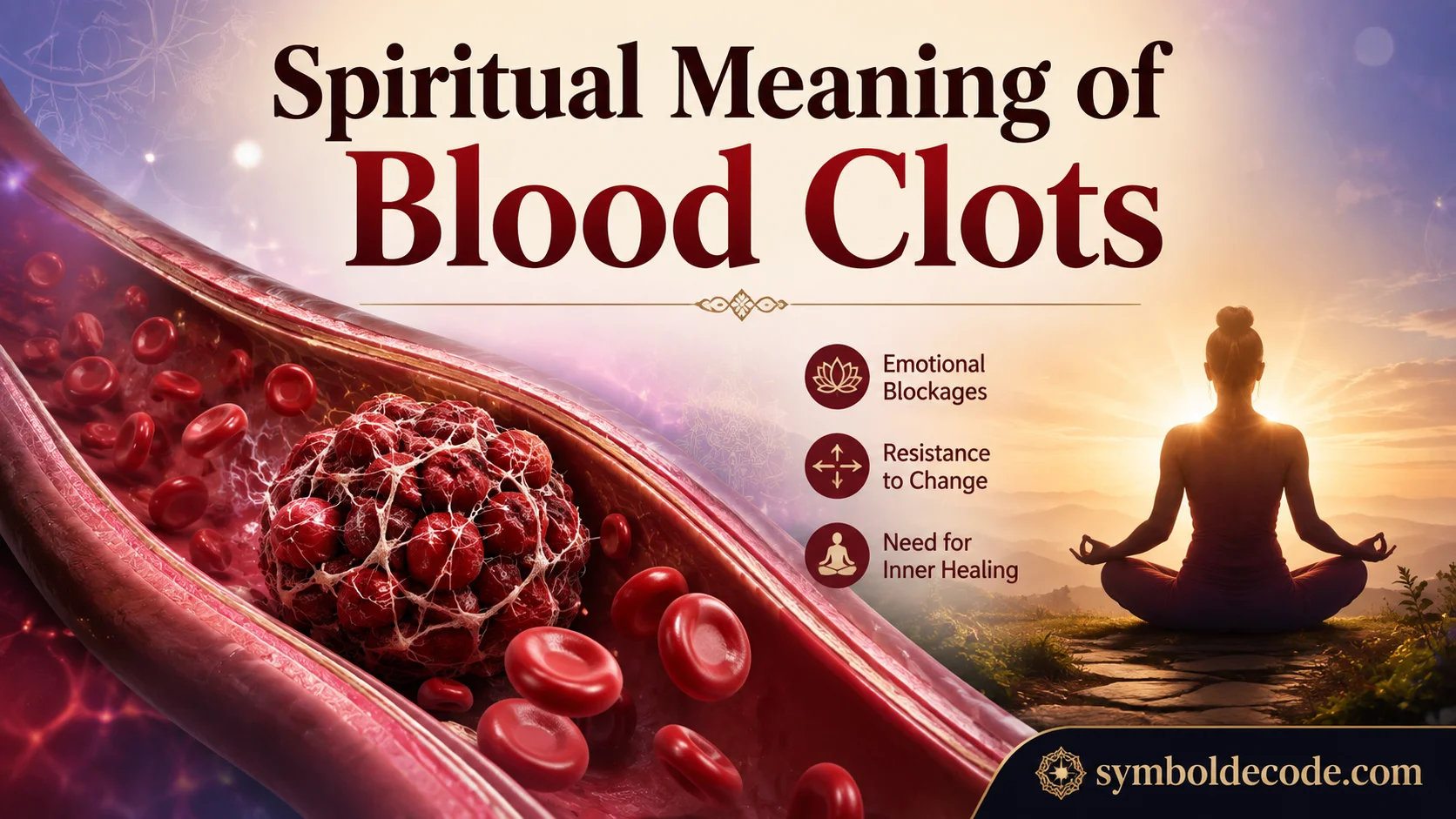
The Spiritual Meaning of Blood Clots connects with Dreaming, blockage, and healing energy in your life. A clot may represent congealed energy or something obstructing your natural flow. The symbol of blood is metaphorically representing life itself, linking the dreamer with love, spirit, and passion. These vivid dreams may reveal a negative undertone, showing hidden emotions like anger, defeat, or a need to protect something valuable before feeling energy depleted.
In spiritual symbolism, blood clots reflect stuck emotions, while physical blood clots are solid masses formed through coagulation. Science and Ayurveda explain their formation through the aggregation of blood cells, platelets, and proteins inside blood vessels. Factors like hormone therapy and smoking as lifestyle choices can create health risks. Serious issues may occur when clots obstruct blood flow, causing deep vein thrombosis, pulmonary embolism, myocardial ischemia, or strokes.
Quick Answer
The Spiritual Meaning of Blood Clots is often linked to blocked energy, emotional stagnation, or unresolved issues. In the U.S., it’s commonly seen as a symbolic warning to address stress, imbalance, or areas where life feels “stuck,” while broader traditions connect it to transformation and healing.
TL;DR
• Symbolizes blocked energy or emotional stagnation
• Often linked to stress, tension, or unresolved feelings
• In the U.S., seen as a wake-up or warning sign
• Can represent the need for healing or release
• Also tied to transformation and life changes
What Are Blood Clots in Symbolic Terms?
Blood clots form when blood thickens and stops flowing normally. Symbolically, this idea of interruption carries strong meaning. In everyday American thinking, flow often represents progress and well-being.
Symbolic Breakdown
• Flowing blood = life, vitality, and movement
• Clotting = blockage, resistance, or interruption
• Sudden clot = unexpected emotional or life disruption
• Persistent clot = long-term unresolved tension
Why This Matters
In symbolic interpretation, anything that stops natural flow can reflect inner or external obstacles. Because of this, blood clots are often viewed as a metaphor for areas where life feels restricted.
Historical Roots of Blood Symbolism
Blood has held deep symbolic meaning across history. Although ancient cultures didn’t specifically discuss blood clots symbolically, they did emphasize the importance of blood flow as life force.
Ancient Perspectives
• Ancient Greeks saw blood as tied to vitality and spirit
• Egyptian traditions linked blood to life and divine energy
• Early European beliefs viewed blood as sacred and powerful
• Many cultures feared “stagnant blood” as imbalance
Evolution Over Time
Over centuries, the idea of blocked or impure blood began to symbolize illness, imbalance, or moral tension. Today, these older ideas influence how people interpret blood-related symbols.
Spiritual Meaning of Blood Clots in the USA
In modern American culture, symbolism is often tied to self-reflection and emotional awareness. Blood clots are not usually part of traditional symbolism, but they are interpreted metaphorically.
Common Interpretations
• A sign to slow down and reassess life
• Emotional buildup that hasn’t been released
• Stress or pressure becoming overwhelming
• A warning to take better care of oneself
Cultural Context
Because the U.S. emphasizes mental health and personal growth, people often see such symbols as prompts for change rather than fixed meanings.
Emotional and Psychological Symbolism
From a psychological perspective, blood clots can represent emotional blockage. When feelings are suppressed, they may “build up” just like a clot.
Common Emotional Associations
• Repressed anger or sadness
• Feeling stuck in a situation
• Difficulty expressing emotions
• Fear of change or letting go
Inner Message
In this sense, the symbolism isn’t literal. Instead, it reflects how the mind uses physical ideas to process emotional states.
Read More: Spiritual Meaning of Car Trouble
Cross-Cultural and Spiritual Interpretations
While the U.S. focuses on personal meaning, other traditions offer broader spiritual views.
Global Symbolic Ideas
• In Eastern traditions, blockage may reflect disrupted life energy
• Some spiritual systems connect it to imbalance in body and mind
• Indigenous beliefs often link flow with harmony and health
• Holistic views see stagnation as a need for alignment
Respectful Understanding
These interpretations vary widely. However, they share a common theme: flow equals balance, and blockage signals disruption.
Blood Clots as a Symbol of Transformation
Interestingly, not all interpretations are negative. Some see blood clots as a turning point.
Positive Symbolism
• A signal to pause and reflect
• A chance to reset and heal
• A marker of life transitions
• A reminder to change direction
Why This Matters
Sometimes, what feels like a blockage can lead to growth and clarity.
Modern Usage and Interpretation
Today, symbolic meanings often show up in personal reflection, social media, and conversations about wellness.
Where You Might See This Symbolism
• Online discussions about emotional healing
• Journaling and self-help content
• Wellness and mindfulness communities
• Personal storytelling and life reflections
Key Idea
In modern life, people use symbolism as a way to make sense of complex experiences.
Blood Clots in Dreams and Symbolic Thinking
Dreams often use strong imagery, and blood is one of the most powerful symbols.
Possible Dream Meanings
• Feeling emotionally blocked
• Fear of losing control
• Anxiety about health or safety
• Need to release tension
Interpretation Tip
Dream meanings depend on context. However, blood clots often point to something unresolved.
Symbolism Table: Blood Clots in Context
| Context | Meaning in the USA | Common Associations | Notes |
| Emotional Life | Blocked feelings | Stress, tension | Often tied to burnout |
| Personal Growth | Need for change | Reflection, pause | Seen as a turning point |
| Dreams | Inner conflict | Anxiety, fear | Context matters most |
| Spiritual View | Energy blockage | Imbalance | Common in holistic thinking |
| Modern Culture | Self-awareness signal | Wellness trends | Used metaphorically |
Misunderstandings and Misuse
It’s important to be careful with symbolic interpretations. Blood clots are real medical conditions, and symbolism should not replace medical understanding.
Common Misconceptions
• Thinking symbolism explains physical causes
• Ignoring medical advice due to spiritual beliefs
• Overgeneralizing meanings
• Assuming one meaning fits everyone
Balanced View
Symbolism can support reflection, but it should always be separate from health decisions.
How Meaning Has Shifted Over Time
Symbolism evolves with culture. In the past, blood issues were often tied to superstition. Today, interpretations are more psychological and reflective.
Then vs. Now
• Past: linked to imbalance or moral issues
• Present: tied to stress, emotions, and awareness
• Future: likely to remain personal and flexible
Key Insight
Modern interpretations focus less on fear and more on understanding and growth.
FAQs:
What does a blood clot symbolize spiritually?
It often symbolizes blockage, stagnation, or unresolved emotions. Many see it as a sign to reflect and make changes.
Is there a positive meaning to blood clots?
Yes, some interpret them as a pause for healing or transformation, encouraging personal growth.
Do blood clots in dreams have meaning?
They can represent emotional tension or fear. However, the meaning depends on the dream’s context.
Are these meanings the same in all cultures?
No, interpretations vary. Still, many cultures connect flow with balance and blockage with disruption.
Should I rely on symbolism for health issues?
No. Symbolism is for reflection only and should never replace professional medical care.
Conclusion:
The Spiritual Meaning of Blood Clots centers on the idea of interruption—whether emotional, mental, or symbolic. In the United States, these interpretations often focus on self-awareness, stress, and the need for balance. While older traditions connect blood to life force, modern views lean toward personal growth and reflection.
At the same time, symbolism isn’t about fear. Instead, it offers a lens to better understand what might feel stuck or unresolved. By paying attention to these patterns, people can use symbolism as a gentle guide—not a rulebook—for living with greater clarity and intention.