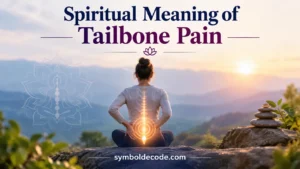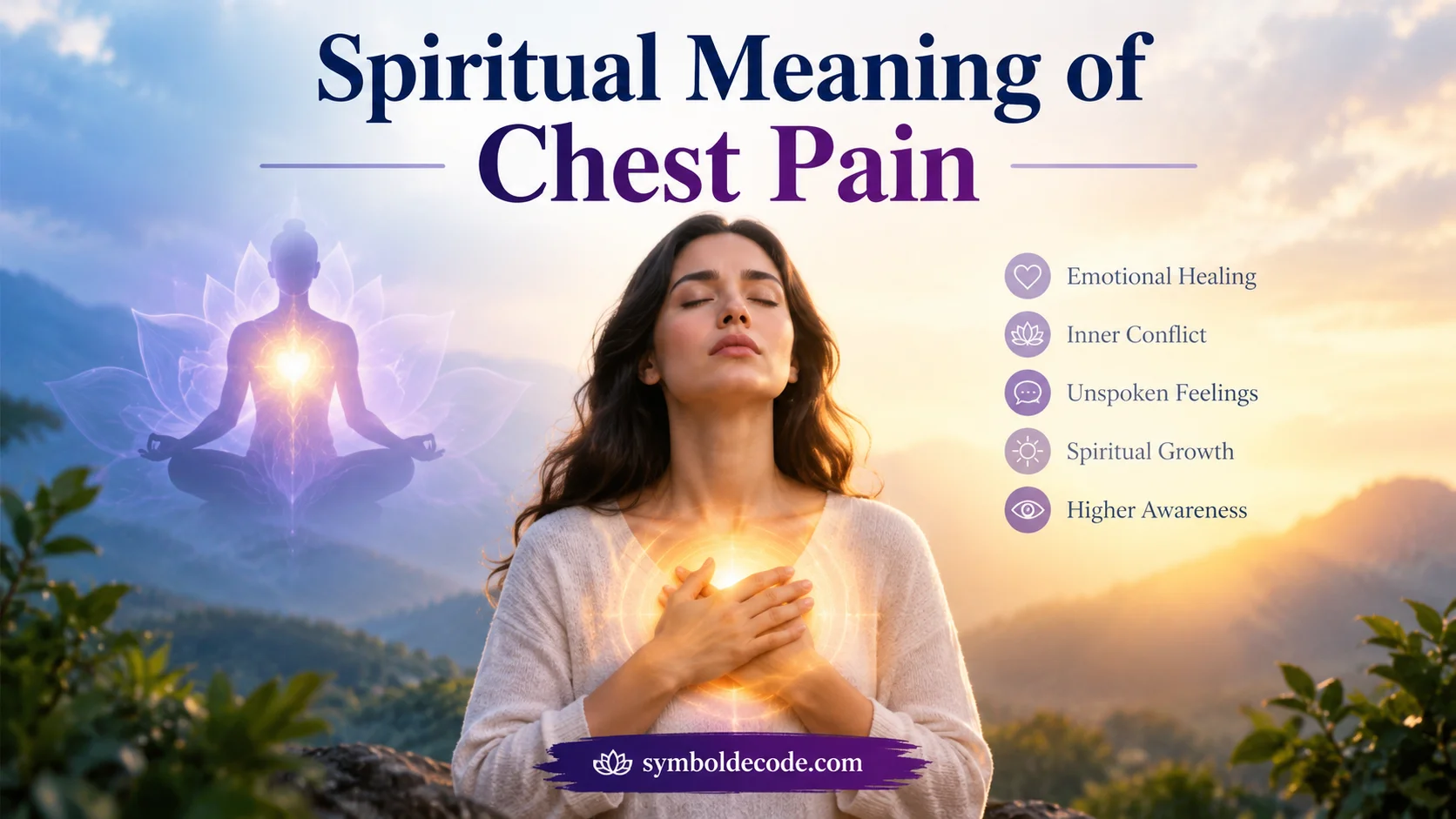
In spiritual and energetic traditions, the Spiritual Meaning of Chest Pain may relate to love, connection, compassion, and emotional processing. The chest is often linked with the heart chakra, the center of emotional energy and the fourth energy center of the body. When chest pain, tightness, heaviness, or an ache comes and goes, some people explore its symbolic meaning after a doctor has medically evaluated them and physical causes have been ruled out.
The centre of the chest is viewed as an energetic center connecting the physical realm and spiritual realm. In spiritual reflection, feeling trapped, hurt, or disconnected may represent emotional blockages around forgiveness, unconditional love, and emotional balance. Healing can involve releasing pain, creating space, and allowing the flow of love through your being. A guided breathwork exercise may help you open your heart, while reflection can support greater awareness.
Quick Answer
The spiritual meaning of chest pain is often associated with emotional pressure, grief, fear, heartbreak, vulnerability, or unresolved feelings. In the United States, these ideas are strongly connected with the symbolic heart, while broader spiritual traditions may view the chest as a center of love, compassion, breath, or inner awareness.
TL;DR
- Chest symbolism often centers on love, emotion, courage, and vulnerability.
- Ancient cultures connected the heart with memory, character, and inner life.
- American culture strongly links chest sensations with emotional experiences.
- Spiritual interpretations may represent grief, pressure, fear, or emotional release.
- Modern use appears in wellness, meditation, art, tattoos, and personal reflection.
What Does Chest Pain Represent Symbolically?
Chest pain has a powerful symbolic quality because the chest contains organs closely connected with life and breathing. More importantly, the heart has been treated as an emotional symbol for thousands of years.
For a modern American reader, chest symbolism often reflects the language people already use. Someone may describe grief as a broken heart or emotional pressure as a weight on the chest.
The Chest as an Emotional Center
Symbolically, the chest can represent the space where inner feelings meet outward life. Therefore, discomfort may become a metaphor for something that feels difficult to carry, express, or release.
Common symbolic associations include:
- Emotional pressure from responsibilities or difficult relationships
- Heartbreak connected with loss, rejection, or separation
- Grief following an important personal loss
- Vulnerability when emotional defenses feel weaker
- Courage when facing fear or major change
- Unexpressed feelings that remain difficult to communicate
These meanings are interpretations rather than universal rules. Two people can experience the same sensation while giving it completely different personal meanings.
Historical Roots of Heart and Chest Symbolism
The symbolic history of the chest is closely tied to the history of the heart. Long before modern medicine separated emotional experience from anatomy, many cultures treated the heart as a center of thought, feeling, character, or spiritual identity.
Ancient Egyptian Roots
Ancient Egyptians gave the heart an especially important role. They viewed it as connected with emotion, memory, intelligence, personality, and moral character. The heart was also important in beliefs about the afterlife.
During the famous weighing of the heart, the deceased person’s heart was symbolically measured against the feather associated with Maat, representing truth and order. This made the heart more than a physical organ. It became a symbol of the person’s life and moral character.
Ancient Greek Ideas
Greek thinkers also debated the relationship between the heart, brain, soul, and emotions. Aristotle regarded the heart as central to life and believed it had a major role in the human soul. Other Greek thinkers placed greater importance on the brain.
This disagreement is important because it shows that the symbolic meaning of the heart was never completely fixed. Different societies developed different ideas about where thought, emotion, and identity lived within the body.
How Heart Symbolism Changed Over Time
The familiar heart shape developed through a long cultural history. Its exact origin remains uncertain, with several theories connecting it to ancient plants, artistic conventions, and medieval representations of anatomy.
Over time, the heart became increasingly associated with romantic love, religious devotion, affection, and emotional sincerity. Medieval and Renaissance art helped strengthen these connections.
From Sacred Symbol to Everyday Icon
Christian art also gave the heart important spiritual meanings. The Sacred Heart became a major religious image associated with divine love and devotion. Other religious artworks used hearts to represent love, repentance, compassion, or spiritual commitment.
Eventually, the heart moved beyond religious settings. By the eighteenth and nineteenth centuries, heart imagery had become common in romantic messages and Valentine’s Day culture.
That long history helps explain why modern people naturally connect the chest and heart with deep feelings.
Spiritual Meaning of Chest Pain in the USA
In the United States, chest symbolism sits between medical awareness and everyday emotional language. Americans commonly hear the heart described as a symbol of love, while chest discomfort can also immediately create feelings of concern because of its connection with heart health.
This creates an interesting cultural contrast. The same physical area can represent romance, grief, fear, courage, and physical danger.
Common American Symbolic Associations
| Context | Meaning in the USA | Common Association | Symbolic Theme |
| Love | Deep affection | Heart symbols | Connection |
| Grief | Emotional hurt | Broken heart | Loss |
| Stress | Feeling overwhelmed | Chest pressure | Burden |
| Courage | Facing difficulty | Strong heart | Bravery |
| Vulnerability | Emotional openness | Open heart | Trust |
| Healing | Moving beyond pain | Heart restoration | Renewal |
American music, movies, literature, and everyday speech continue to reinforce these associations. Phrases such as “brokenhearted,” “heartfelt,” and “heavy-hearted” make emotional states easier to describe through the body.
The Influence of Modern Wellness Culture
Modern wellness culture often encourages people to notice bodily sensations during periods of stress or emotional change. As a result, some people interpret chest sensations as reminders to slow down and reflect.
That interpretation can be personally meaningful without being treated as a universal spiritual message.
Spiritual Meanings of Chest Pain in Other Traditions
Different spiritual traditions have their own ways of understanding the heart and chest. These ideas should be understood within their original cultural settings rather than blended into one universal system.
Heart-Centered Spirituality
In several traditions, the heart is associated with compassion, love, awareness, devotion, or the inner self. Some yoga traditions, for example, describe Anahata, commonly called the heart chakra, as a center associated with the heart region and themes such as balance and compassion.
Other traditions use the heart as a metaphor for sincerity, moral awareness, or spiritual devotion. These interpretations vary considerably, so there isn’t one single spiritual meaning shared by every tradition.
A Symbol of Inner Connection
Across many spiritual interpretations, the heart can represent connection between the personal and the greater world. Therefore, chest symbolism may be connected with ideas such as:
- Compassion toward yourself and others
- Emotional openness and trust
- Love that extends beyond romance
- Inner balance during periods of change
- A desire for deeper personal connection
- Reflection on values and relationships
These are symbolic frameworks rather than established explanations for physical pain.
Read More: Spiritual Meaning of Hearing a Doorbell in Your Sleep
Emotional Meaning of Chest Pain
Chest symbolism becomes especially powerful during emotionally difficult experiences. People often describe intense grief, fear, rejection, or anxiety with physical language centered around the chest and heart.
Recent research has also examined the relationship between grief and chest pain, including possible links between emotional distress and bodily responses. This does not mean every episode of chest pain is caused by emotion. Instead, it shows why the connection between grief and chest sensations can feel very real to some people.
Grief and Heartbreak
The phrase “heartache” exists because emotional loss can feel physically powerful. A breakup, death, separation, or major disappointment may affect breathing, muscle tension, sleep, and overall bodily awareness.
Symbolically, chest discomfort during grief may represent the weight of missing someone or adjusting to a changed life.
Fear and Emotional Pressure
Fear can also become associated with the chest. When people feel threatened or overwhelmed, they may become highly aware of breathing, heartbeat, or muscle tension.
For symbolic reflection, this can represent a feeling of being unable to relax, speak freely, or make space for yourself.
Chest Pain and the Idea of Emotional Suppression
One common spiritual interpretation is that chest discomfort represents feelings being held inside. The chest becomes a metaphorical container for emotions that have not found an outlet.
This idea appears frequently in modern spiritual and wellness discussions. It can encourage reflection on whether someone has been avoiding difficult conversations or carrying emotional burdens for too long.
What Might “Holding It In” Symbolize?
Symbolically, holding something inside can relate to:
- Avoiding a difficult conversation
- Hiding sadness from other people
- Suppressing anger or disappointment
- Struggling to accept a major life change
- Protecting yourself after emotional hurt
- Feeling responsible for everyone around you
However, these interpretations shouldn’t be used to assume that a particular emotion caused someone’s physical symptoms.
Spiritual Meaning of Chest Tightness or Heaviness
Chest tightness and heaviness often receive similar symbolic interpretations, but the emotional image can be slightly different.
Tightness may symbolize restriction or feeling unable to move forward. Heaviness may represent emotional weight, responsibility, grief, or an experience that feels difficult to carry.
A Symbolic Reflection
If you’re exploring the symbolism personally, consider the context surrounding the experience. Ask yourself what was happening emotionally, what thoughts were present, and whether a recent event changed your sense of security or connection.
The goal isn’t to find one magical answer. Instead, symbolism can provide language for experiences that may otherwise be difficult to describe.
What Chest Pain Can Symbolize in Dreams
Chest sensations in dreams can carry another layer of symbolism. Dreams frequently use the body as a way of expressing fear, emotional conflict, vulnerability, or major life transitions.
Heart and Chest Dream Themes
A dream involving chest pain might symbolically connect with:
- Fear of losing someone important
- Emotional vulnerability
- Unresolved relationship concerns
- Anxiety about a major transition
- Feelings that seem difficult to express
- A desire for emotional protection
Dream symbolism is highly personal. A chest-related dream doesn’t automatically predict an event or reveal a hidden future.
Instead, the emotional tone of the dream may provide more useful context than the physical sensation itself.
Modern Uses of Chest and Heart Symbolism
Today, heart and chest symbolism appears almost everywhere. You can see it in tattoos, jewelry, artwork, clothing, social media posts, greeting cards, home decor, and personal writing.
Tattoos and Personal Identity
A heart tattoo may represent romantic love, family, remembrance, self-love, friendship, faith, or personal transformation. Adding a scar, flame, flower, name, date, or anatomical detail can make the meaning more personal.
An anatomical heart often carries a different tone from a simple heart icon. It can suggest realism, survival, vulnerability, or the complicated nature of human emotion.
Social Media and Digital Culture
Heart symbols have become a simple digital language for affection and support. A heart reaction can communicate appreciation without requiring a long message.
At the same time, people use phrases like “my heart hurts” to describe emotional experiences online. This keeps the old connection between the heart and emotion alive in modern communication.
Misunderstandings and Controversies
The biggest misunderstanding involves treating symbolic interpretations as literal explanations. A spiritual idea may help someone reflect on their emotions, but it cannot establish why a physical symptom is happening.
Chest pain has many possible physical causes. The American Heart Association notes that emotional stress can trigger some forms of angina, while serious heart-related conditions can also produce chest discomfort.
Symbolism Is Not Diagnosis
A symbolic interpretation should therefore remain separate from medical interpretation. If someone experiences unexplained, severe, new, or concerning chest pain, symbolic reflection should not replace appropriate professional evaluation.
This distinction is especially important because modern spiritual content sometimes presents emotional or energetic explanations as certain facts. Those claims go beyond what symbolism can establish.
How the Meaning Has Shifted Over Time
The symbolic meaning of the heart has changed significantly. Ancient Egyptians connected it with memory, thought, morality, and identity. Greek thinkers debated whether the heart or brain was the center of human life and thought. Later religious traditions added powerful meanings involving love, devotion, compassion, and spiritual commitment.
Today, the heart is strongly associated with romantic love and emotional life. However, modern spiritual discussions have expanded the symbolism to include self-awareness, emotional healing, boundaries, stress, and personal growth.
From Moral Heart to Emotional Heart
Earlier traditions often treated the heart as part of a person’s moral and spiritual identity. Modern American culture tends to emphasize feelings and relationships more strongly.
Still, the older meanings haven’t disappeared completely. Words such as heartfelt, kindhearted, heavy-hearted, pure-hearted, and hardhearted preserve the idea that the heart reflects character.
FAQs:
What is the spiritual meaning of chest pain?
Spiritually, chest pain is often interpreted as a symbol of emotional pressure, grief, fear, vulnerability, or unresolved feelings. These meanings are personal interpretations rather than scientifically established messages.
Can chest pain symbolize emotional stress?
It can be used symbolically to represent emotional stress or feeling overwhelmed. Emotional stress can also affect the body, but chest pain should not automatically be assumed to have an emotional cause.
What does chest heaviness mean spiritually?
Chest heaviness is sometimes viewed as a symbol of emotional burden, grief, responsibility, or feelings that are difficult to release. The meaning depends on the person’s circumstances and beliefs.
What does heart pain symbolize emotionally?
Heart pain can symbolize heartbreak, grief, rejection, fear, or deep emotional attachment. The familiar phrase “heartache” reflects the long cultural connection between the heart and emotional suffering.
Is chest pain always a spiritual sign?
No. There is no established spiritual rule saying that chest pain is a spiritual sign. Symbolic interpretations can support personal reflection, but they don’t determine the physical cause of pain.
What does chest pain mean during grief?
During grief, chest pain or discomfort may be experienced alongside intense emotional distress. Recent research has specifically explored grief-related chest pain and possible psychophysiological pathways.
Conclusion:
The spiritual meaning of chest pain is often connected with the symbolic heart, representing emotional pressure, grief, vulnerability, heartbreak, courage, or feelings that need attention. These ideas have deep historical roots, from ancient beliefs about the heart to modern American expressions about love and loss. At the same time, symbolism should remain a tool for reflection rather than a diagnosis. The chest has carried powerful meanings across cultures for thousands of years, and its symbolism continues to evolve. If the experience feels personally meaningful, you might pause and consider what your emotions, relationships, and recent life changes are asking you to notice.