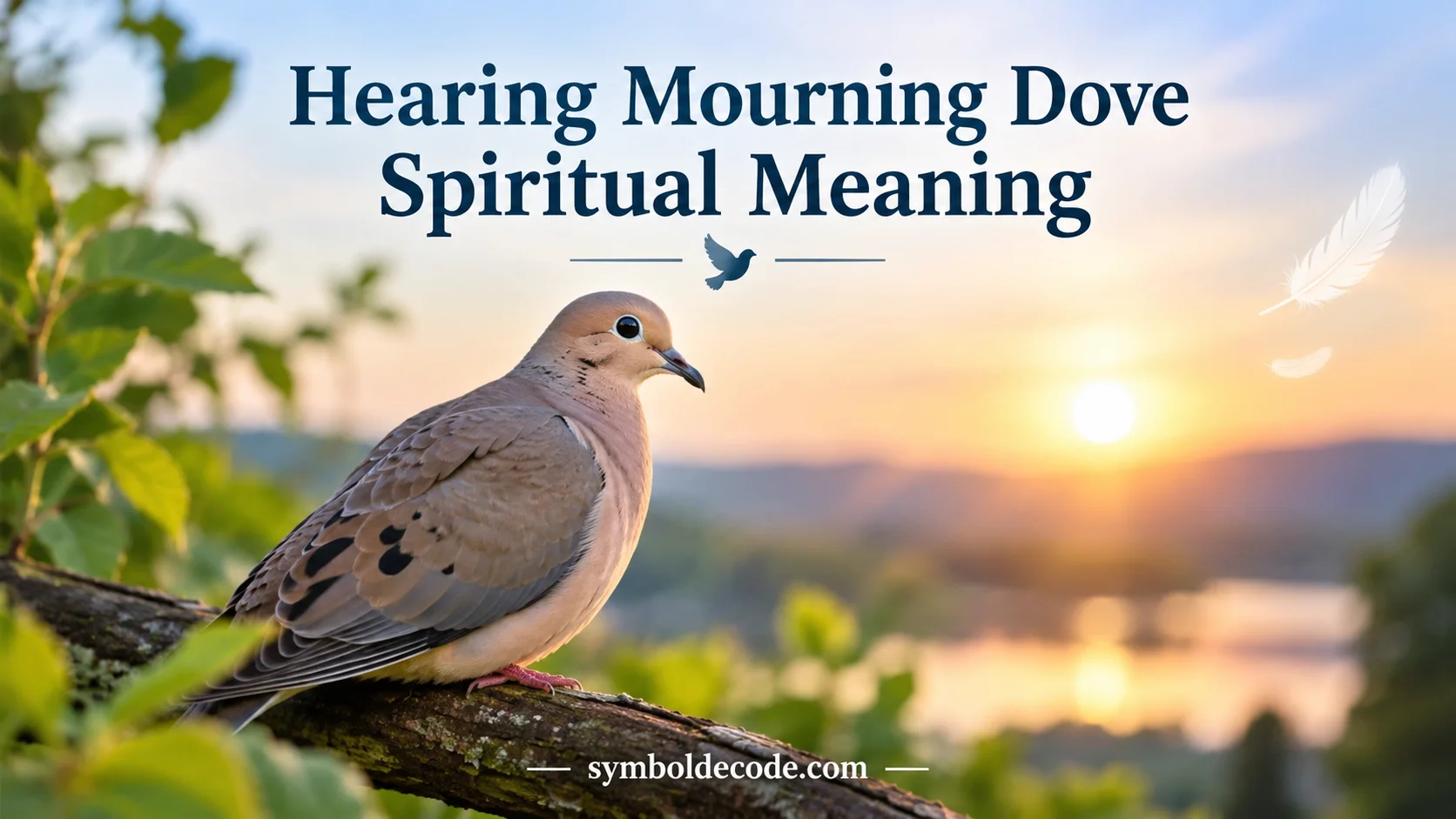
Hearing Mourning Dove Spiritual Meaning often relates to peace, hope, love, grief, and spiritual connection. When you sit outside in your backyard, walk through parks, or spend time in open fields, hearing a mourning dove’s soft coo can bring a sense of calm. Its distinctive calls and graceful flight may inspire reflection and remind you of meaningful memories. Across North America, this gentle bird is a familiar sight among backyard birds and other feathered neighbors. Whether you enjoy birdwatching or simply appreciate nature, the mourning dove symbolism can help you explore your emotions and find comfort in everyday experiences.
The spiritual meaning of hearing mourning doves may also represent healing, patience, emotional balance, and renewal. Their melancholic coo can remind you to accept sadness, reflect on personal changes, and appreciate your connection with nature. Some people interpret these calls as a message of hope, a message of love, or a message of peace during difficult times. Your personal spiritual interpretation depends on your feelings, beliefs, and experiences. Although a mourning dove may feel like a powerful spiritual message, its presence is not proof of a supernatural sign. Instead, use the experience as an opportunity for emotional reflection, spiritual awareness, and a renewed appreciation for the natural world.
Quick Answer
The hearing mourning dove spiritual meaning in the United States commonly reflects peace, love, hope, remembrance, and emotional comfort. In spiritual interpretations, its gentle call may symbolize reassurance, healing, or a new beginning, while its natural meaning is simply part of the bird’s ordinary communication.
TL;DR
- Peace: The dove’s gentle call can represent calm and harmony.
- Love: Its presence may remind you of lasting affection and close relationships.
- Remembrance: The mournful sound can bring memories of loved ones to mind.
- Hope: Hearing a dove may inspire optimism during difficult transitions.
- Renewal: Its call can encourage reflection and a fresh perspective.
- Nature: The sound often reflects ordinary bird behavior and seasonal activity.
1. What Does Hearing a Mourning Dove Mean Spiritually?
Hearing a mourning dove can become a personal symbol of comfort, reflection, and emotional connection. In American spiritual interpretations, the bird’s gentle voice often represents a peaceful presence during uncertain or emotional times.
However, there’s no single spiritual meaning that applies to everyone. Your feelings, memories, and beliefs can shape what the sound means to you.
The Three Core Meanings
- Peace and harmony: A gentle reminder to welcome calm into your daily life.
- Love and remembrance: A sound that brings meaningful relationships and cherished memories to mind.
- Hope and renewal: An invitation to keep moving forward after a difficult experience.
Why the Sound Feels Meaningful
Unlike a sudden, loud birdcall, a mourning dove’s coo is soft and drawn out. Its descending notes can sound almost like a sigh, creating a reflective mood.
Because of this, listeners may connect the call with feelings they already carry. Someone experiencing grief might hear sadness, while someone beginning a new chapter might hear reassurance.
The interpretation can be meaningful without treating the bird as a supernatural messenger. Sometimes, nature simply gives us a quiet moment to recognize what matters most.
2. Historical Origins of Mourning Dove Symbolism
The mourning dove’s symbolic meaning developed through a mixture of natural observation, storytelling, religious imagery, and personal experience. Its familiar presence across North America helped it become part of everyday life long before modern spiritual websites discussed animal signs.
Why Is It Called a Mourning Dove?
The bird’s name comes from its mournful-sounding call. Its low, repeated coo can resemble a lament, which is an expression of sorrow or grief.
The scientific name is Zenaida macroura. The species has a long, pointed tail and soft brownish-gray feathers, making it recognizable in many American neighborhoods.
Over time, the sound itself encouraged associations with sadness, tenderness, and remembrance. These associations grew from ordinary human reactions rather than one universal ancient belief.
Ancient and Traditional Bird Symbolism
Doves and pigeons have carried symbolic meanings across many historical societies. Depending on the tradition, they have represented affection, fertility, peace, devotion, or connections between the earthly and spiritual worlds.
However, it’s important to distinguish the mourning dove from other dove species. Ancient Mediterranean stories and religious images often feature doves generally, not the specific North American species known as the mourning dove.
In the United States, the bird’s own distinctive call and widespread presence helped shape its more personal associations with loss and comfort.
3. Mourning Dove Spiritual Meaning in American Culture
In the United States, mourning doves are familiar backyard visitors. They perch on telephone wires, gather beneath bird feeders, and call from trees near homes, farms, and parks.
This everyday familiarity gives the bird a special kind of symbolism. Rather than appearing only in sacred places or formal ceremonies, it can become meaningful during ordinary moments at home.
Peace, Home, and Everyday Life
American listeners often connect doves with peaceful surroundings and emotional warmth. The mourning dove’s quiet behavior and gentle appearance can strengthen those associations.
For example, hearing one outside your kitchen window might remind you of childhood mornings or time spent with family. In this case, the bird’s significance comes partly from the memories attached to its familiar sound.
Mourning Doves and Remembrance
The word mourning naturally connects the bird with grief in American culture. Some people find its call especially moving after losing a family member, friend, or beloved companion.
At memorial gatherings or during private reflection, a dove may become a personal symbol of love that continues after loss. Still, not everyone interprets the sound spiritually, and no particular response is required.
The bird can be a meaningful reminder of someone you miss without being proof of contact from the afterlife.
4. Hearing a Mourning Dove After Someone Dies
Hearing a mourning dove after a loved one’s death can feel deeply personal. Its mournful call may seem to match the emotions that accompany grief, especially when the sound occurs during a quiet or reflective moment.
For some people, the experience becomes a comforting reminder of the person they’ve lost. Others understand it as a spiritual sign of continued love, peace, or the possibility of life beyond death.
Could It Be a Sign From a Loved One?
Some spiritual traditions and personal belief systems interpret birds as messengers or reminders of loved ones who have died. Within that framework, a mourning dove’s call may feel like reassurance that love remains important.
However, there is no reliable way to establish that a particular bird is carrying a message from someone who has passed away. The experience can still hold emotional value without requiring certainty about its source.
Finding Comfort Without Fear
If hearing a dove brings up sadness, give yourself permission to remember the person and acknowledge your feelings. You might recall a favorite story, look through family photographs, or spend a few quiet minutes outdoors.
Grief doesn’t follow a fixed schedule. A familiar sound can unexpectedly bring back emotions even years later, and that response doesn’t mean anything is wrong.
Instead, let the moment become an opportunity for gentle remembrance rather than a reason to worry about what might happen next.
5. Is Hearing a Mourning Dove a Sign From Angels?
Some modern spiritual interpretations connect doves with angels, divine comfort, or a sense of spiritual protection. When people hear a mourning dove during a difficult period, they may interpret its call as a reminder that they’re not alone.
These ideas are personal or faith-based interpretations, not facts that can be confirmed through bird behavior.
Spiritual Reassurance and Protection
Within an angel-centered belief system, a dove’s gentle call may symbolize:
- Reassurance: Feeling supported when life becomes overwhelming.
- Guidance: Taking time to consider a difficult choice thoughtfully.
- Protection: Remembering the people, practices, and values that help you feel safe.
- Trust: Allowing uncertainty without assuming the worst.
How to Interpret the Experience
Consider what was happening when you heard the bird. Were you worried about someone, remembering a loved one, or looking for encouragement?
Your answer may reveal why the moment felt significant. You can appreciate that meaning while recognizing that a bird’s ordinary call doesn’t establish the presence of angels or predict future events.
6. Mourning Dove Meaning in Christianity and Other Traditions
Doves appear in several religious and cultural traditions, although their meanings differ. Understanding those differences helps explain why people sometimes associate hearing a mourning dove with peace, hope, or spiritual connection.
Christian Symbolism
In Christianity, the dove is widely associated with the Holy Spirit, particularly through the Gospel accounts of Jesus’ baptism. The image has also become connected with peace, innocence, and divine presence in Christian art and teaching.
However, these associations apply to dove imagery broadly. Christian tradition doesn’t establish that every mourning dove call carries a specific personal message.
For a Christian listener, hearing one might encourage prayer, gratitude, or quiet reflection. Its significance will depend on personal faith and how the moment fits within that person’s beliefs.
Other Cultural Interpretations
Across different societies, doves have represented love, devotion, fertility, and peaceful relationships. Some spiritual and folk traditions also associate birds with communication between different realms.
These meanings shouldn’t be treated as interchangeable. Indigenous nations and other cultural communities have their own distinct histories and beliefs, and there’s no single spiritual interpretation shared by all of them.
A respectful approach is to explore a tradition in its own context rather than assigning one universal meaning to every dove.
7. The Emotional and Psychological Meaning of Hearing a Mourning Dove
A bird’s call can affect your mood because sound, memory, and emotion are closely connected. A gentle, repeated coo may encourage calm, while its melancholy quality might bring sadness or nostalgia to the surface.
These reactions are normal ways of experiencing the world. They don’t require a supernatural explanation to feel important.
Why the Call Can Feel So Powerful
Several factors can shape your response:
- Memory: The sound may remind you of a familiar home or a loved one.
- Mood: Your current feelings can influence how you interpret the call.
- Attention: A quiet environment makes subtle sounds easier to notice.
- Personal meaning: Past experiences may give an ordinary sound special significance.
- Reflection: A peaceful moment can create space to process difficult emotions.
Turning the Moment Into Reflection
If the call catches your attention, pause and notice your immediate response. Ask yourself whether you feel peaceful, sad, hopeful, or simply curious.
You don’t need to assign a fixed spiritual message to the experience. Sometimes, recognizing an emotion is valuable on its own.
For example, a person facing a major life change might associate the sound with patience. Someone remembering a grandparent might connect it with love and family history.
8. Hearing a Mourning Dove in the Morning
Morning often symbolizes fresh beginnings, clarity, and renewed energy. When a mourning dove calls around sunrise, some people interpret the experience as encouragement to approach the day with patience and hope.
There is also a natural explanation. Mourning doves commonly vocalize from perches, and their calls are part of ordinary communication and breeding behavior.
Spiritual Meaning of a Morning Call
A morning encounter might inspire these personal interpretations:
- Fresh beginnings: Approach the day with an open mind.
- Inner peace: Make room for a calmer start.
- Gratitude: Appreciate the small details around you.
- Renewed hope: Focus on what you can do today.
What the Timing Can Tell You
The time of day can influence how you experience the sound, but it doesn’t establish a universal spiritual rule. A morning call isn’t automatically more meaningful than one heard in the afternoon or evening.
Instead, consider what the new day represents to you. If you’re starting a project, healing from a loss, or making an important change, the sound may become a useful personal reminder to move forward gently.
Read More: Hearing Voices at Night Spiritual Meaning
9. Hearing a Mourning Dove at Night
Hearing a mourning dove at night may seem unusual because many people associate its call with daylight. Spiritually, some listeners connect a nighttime encounter with introspection, emotional release, or the need to find peace during uncertainty.
However, the sound may come from a nearby bird calling at an unexpected hour. It could also be another bird with a similar-sounding call.
Spiritual Interpretations of a Nighttime Call
Night often represents rest, mystery, and the parts of life we haven’t fully understood. Within that symbolic framework, a dove’s call may encourage you to slow down and pay attention to your emotions.
You might interpret the moment as a reminder to release the day’s worries or make peace with an unresolved feeling. These are reflective possibilities, not established rules about nighttime bird encounters.
Should You Be Concerned?
No. Hearing a dove after dark isn’t, by itself, a warning or a sign of approaching trouble.
If you’re curious about the source, observe your surroundings and listen carefully. Learning which birds live nearby can help you distinguish an actual mourning dove from other nighttime sounds.
10. Hearing a Mourning Dove Repeatedly
When you hear a mourning dove every day, the repeated sound may begin to feel like a personal symbol. You might associate it with stability, consistency, or a recurring reminder to return to what matters.
Spiritually, repetition can encourage reflection. However, it doesn’t necessarily mean that the universe is sending you an increasingly urgent message.
What Repeated Calls May Symbolize
- Consistency: Keep showing up for the people and goals you value.
- Patience: Give important changes time to develop.
- Awareness: Notice patterns in your emotions and daily routines.
- Connection: Appreciate the familiar sounds that make a place feel like home.
- Reflection: Revisit a concern that deserves your thoughtful attention.
The Natural Explanation
Mourning doves are common across much of the United States. Male birds often sing from favored perches, especially when attracting mates or defending a territory.
Consequently, hearing the same bird repeatedly may simply mean that it lives nearby. A nearby nest, a dependable perch, or a regular food source can explain frequent encounters.
You can appreciate the experience spiritually while also recognizing the bird’s ordinary habits.
11. Mourning Dove Symbolism in Dreams, Tattoos, and Home Decor
Mourning dove symbolism extends beyond hearing a bird outdoors. In the United States, dove imagery appears in jewelry, artwork, memorial designs, tattoos, garden decorations, and personal keepsakes.
The image often allows people to express feelings that are difficult to put into words. Its meaning depends on the setting and the person’s intentions.
Mourning Dove Dreams
A mourning dove in a dream may symbolize peace, longing, affection, or a desire for emotional resolution. If you’ve recently heard the bird or experienced a loss, your memories may also influence the dream.
Dream interpretations aren’t universal predictions. Instead, consider how the bird behaved and what you felt during the dream.
Tattoos and Personal Identity
People may choose dove tattoos to represent love, hope, spiritual faith, or remembrance. A mourning dove can be especially meaningful when connected with a particular person or chapter of life.
Common design choices include:
- A single dove representing peace or personal freedom.
- Two doves representing partnership and lasting affection.
- A dove with flowers representing renewal and remembrance.
- A dove with a date or name honoring someone who died.
- A flying dove representing change, release, or independence.
Home Decor and Memorial Objects
Dove figurines, paintings, garden ornaments, and framed artwork can express a wish for a peaceful home. In memorial settings, the image may honor a loved one and provide a visual focus for remembrance.
However, a dove decoration doesn’t have one fixed meaning. Its significance comes from the story, belief, or memory attached to it.
12. Mourning Dove Meanings Across Different Situations
The same bird call can feel different depending on where you hear it and what you’re experiencing. Comparing the circumstances can help you explore personal symbolism without treating every encounter as a prediction.
| Situation | Possible Symbolic Meaning | Natural Explanation |
| Hearing a dove near home | Comfort, familiarity, belonging | A suitable perch or nearby food |
| Hearing one after a loss | Remembrance, love, emotional healing | An ordinary birdcall that evokes memories |
| Hearing one during a life change | Hope, patience, fresh beginnings | A bird calling in its usual habitat |
| Hearing one repeatedly | Consistency, awareness, reflection | A resident bird using a familiar perch |
| Hearing one near sunrise | Renewal, gratitude, a peaceful start | Vocal activity around the beginning of the day |
| Hearing one during prayer | Personal faith, reassurance, contemplation | A natural sound experienced during reflection |
How to Find Your Own Interpretation
First, identify the situation in which you heard the call. Then consider your feelings, memories, and current circumstances.
For instance, someone preparing to move might connect the sound with a peaceful transition. Another person remembering a parent might find comfort in its familiar, mournful quality.
Neither interpretation needs to be universally correct. A personal symbol can be meaningful because it helps you understand your own experience.
13. Misunderstandings, Superstitions, and Negative Interpretations
The mourning dove’s name and mournful call sometimes encourage associations with death, bad luck, or approaching misfortune. Some folk beliefs have treated a dove’s call near a home as an omen, while modern spiritual interpretations more often emphasize comfort and hope.
These beliefs vary, and no reliable evidence establishes that a mourning dove predicts death or other specific events.
Does a Mourning Dove Mean Someone Will Die?
No. Hearing a mourning dove isn’t evidence that someone will die or that a tragedy is approaching.
The word mourning describes the sound that inspired the bird’s name. It doesn’t mean the bird causes grief or announces a death.
Why Negative Interpretations Develop
People naturally search for meaning when something feels unusual or emotionally powerful. If a sad event happens shortly after a birdcall, the two experiences may become linked in memory.
That connection can feel convincing without showing that one event predicted the other. Cultural stories and personal experiences may reinforce the association over time.
A Balanced Way to Understand the Symbol
- Treat spiritual interpretations as possibilities rather than proven facts.
- Avoid frightening others with claims about death or bad luck.
- Respect personal beliefs without presenting them as universal traditions.
- Consider ordinary wildlife behavior before assuming an encounter is unusual.
- Choose interpretations that encourage reflection rather than unnecessary fear.
The mourning dove can remain a symbol of remembrance without becoming a source of anxiety.
14. How Mourning Dove Symbolism Has Changed Over Time
Mourning dove symbolism hasn’t remained the same across every period or community. Its meaning has developed through natural observation, folk beliefs, religious imagery, literature, and modern personal spirituality.
From Folk Beliefs to Personal Reflection
Historically, people often interpreted animal calls through local stories and traditional beliefs. A mournful sound could be connected with sorrow, weather, love, or the possibility of misfortune, depending on the community.
In modern American life, the mourning dove also represents comfort, remembrance, and peace. Social media, memorial artwork, and spiritual writing have helped people share personal interpretations of familiar bird encounters.
What Has Stayed Consistent?
The bird’s distinctive sound remains central to its symbolism. Its gentle appearance and melancholy call continue to inspire thoughts about love, grief, and the passing of time.
However, these associations aren’t fixed rules. One person may see a dove as a reminder of a loved one, while another simply enjoys hearing a familiar backyard bird.
The most balanced approach combines an appreciation of cultural history with an understanding of nature. You can honor the symbolism without assuming that every call carries a hidden message.
FAQs:
1. What does it mean when you hear a mourning dove?
Hearing a mourning dove is often interpreted as a symbol of peace, love, hope, or remembrance. Its meaning may depend on your personal beliefs, emotional state, and the circumstances surrounding the encounter.
2. Is hearing a mourning dove a sign from a deceased loved one?
Some people interpret a dove’s call as a comforting reminder of someone who has died. However, there’s no reliable way to confirm that the bird is communicating with the deceased.
3. Does hearing a mourning dove mean good luck?
Some people associate doves with peace, harmony, and positive change. However, hearing a mourning dove doesn’t guarantee good luck or predict a particular outcome.
4. What does hearing a mourning dove in the morning mean spiritually?
Spiritually, a morning call may represent renewal, gratitude, and a fresh start. Naturally, mourning doves also vocalize from perches as part of their regular communication.
5. What does it mean when you hear a mourning dove at night?
A nighttime encounter may inspire reflection, calm, or a desire for emotional clarity. It isn’t automatically a warning, and the sound may come from a dove or another bird nearby.
6. Why do mourning doves sound like they’re crying?
Their low, drawn-out coo has a mournful quality that inspired their common name. The sound is normal bird vocalization, not necessarily a sign that the bird is distressed or grieving.
7. Is a mourning dove a symbol of peace or death?
A mourning dove can symbolize peace, remembrance, love, or grief, depending on the context. Although some folk beliefs associate its call with death, hearing one isn’t evidence that a death will occur.
Conclusion:
The hearing mourning dove spiritual meaning often brings together peace, love, remembrance, hope, and emotional healing. In American culture, the bird’s gentle call can evoke memories of home, comfort after loss, or a renewed appreciation for life’s quieter moments. Its significance may also reflect personal faith, family traditions, and individual experiences. At the same time, mourning doves are ordinary wild birds with natural behaviors. Their calls don’t reliably predict future events or prove that a supernatural message has arrived. You can appreciate their spiritual symbolism while remaining open to the simple beauty of nature. The next time you hear a mourning dove, pause for a moment and notice what the sound brings to mind. Perhaps it reminds you of someone you love, encourages you to welcome change, or simply helps you feel more connected to the world around you. Sometimes, the meaning we find in a quiet moment is valuable enough on its own.