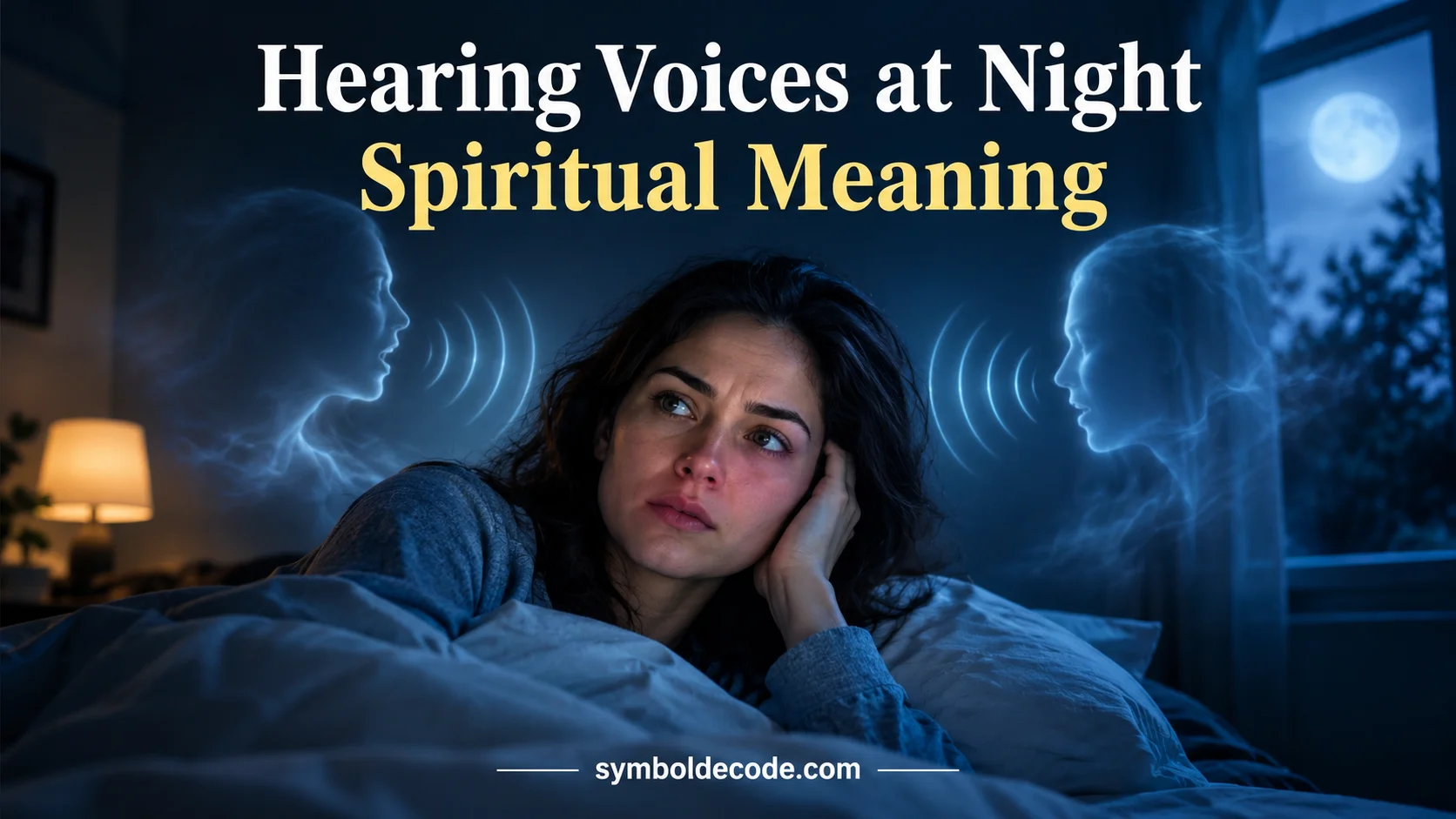
The Hearing Voices at Night Spiritual Meaning connects with spiritual beliefs, personal experiences, and religious traditions. Some people interpret hearing voices at night as a spiritual experience or explore its meaning through prayer, sacred texts, and spiritual communication. Different cultures have their own beliefs about divine messages, hearing the voice of God, and communication with the deceased. However, these interpretations reflect personal beliefs rather than proven explanations for nighttime voices.
From a practical perspective, voices at night may be associated with sleep disruption, stress, medication effects, or other auditory experiences. Although these experiences do not automatically indicate a mental health condition, persistent or distressing voices deserve attention. Spirituality and religious faith may offer comfort, while professional support can help identify possible causes. If voices cause fear or interfere with sleep, consult a healthcare provider for appropriate guidance and assessment.
Quick Answer
The hearing voices at night spiritual meaning may symbolize inner reflection, intuition, emotional awareness, or a desire for guidance in American spiritual traditions. However, nighttime voices can also have sleep-related or environmental explanations, so they aren’t proof of a spiritual presence.
TL;DR
- Nighttime voices may inspire reflection, curiosity, or a search for meaning.
- Some spiritual traditions connect nighttime experiences with prayer or inner awareness.
- American interpretations often combine personal spirituality, religious beliefs, and psychology.
- Stress and sleep transitions can influence nighttime sounds and perceptions.
- A comforting interpretation shouldn’t replace practical explanations or needed support.
- Personal context matters more than assuming every voice carries a supernatural message.
1. What Is the Spiritual Meaning of Hearing Voices at Night?
Hearing voices at night can feel mysterious because darkness and silence make small experiences seem unusually vivid. In spiritual discussions, people sometimes connect these moments with inner awareness, personal change, or a desire for guidance.
However, there isn’t one universal meaning. Your beliefs, emotions, surroundings, and state of sleep can all shape how you understand the experience.
Common Symbolic Interpretations
- Inner reflection: A reminder to notice thoughts and feelings you usually overlook.
- Spiritual curiosity: An invitation to explore your beliefs without rushing to conclusions.
- Emotional awareness: A possible prompt to consider unresolved worries or personal concerns.
- Transition: A symbolic connection with uncertainty, growth, or a new chapter.
These interpretations are personal reflections, not established explanations for hearing voices. You don’t need to assign a spiritual meaning to every unusual nighttime sound.
Why Nighttime Feels Significant
Night has long represented mystery, rest, solitude, and the boundary between the known and unknown. Because everyday distractions decrease after dark, people may pay closer attention to their thoughts and surroundings.
Consequently, a voice heard at night might feel more important than a similar sound during the day. That feeling can be meaningful to you without proving that the experience came from a supernatural source.
2. Historical Origins of Voices in Spiritual Traditions
The connection between voices and spirituality reaches back thousands of years. Across history, communities have interpreted unusual auditory experiences through the religious ideas and knowledge available to them.
For American readers, this history helps explain why some people understand voices spiritually while others prefer psychological or scientific explanations.
Ancient Beliefs and Sacred Voices
In ancient Mesopotamia, Egypt, Greece, and other societies, accounts of divine communication appeared in religious stories and practices. Priests, oracles, and spiritual figures were sometimes believed to receive messages from gods or other supernatural powers.
In ancient Greece, the oracle at Delphi became famous for delivering pronouncements associated with Apollo. Such traditions placed special importance on unusual experiences, although historical descriptions don’t always establish what the individuals actually heard or felt.
Religious Interpretations Through the Centuries
Jewish, Christian, and Islamic traditions contain accounts of divine communication, revelation, dreams, and messages delivered through angels. These stories hold different meanings within each faith and shouldn’t be treated as identical experiences.
During later European history, interpretations of voice hearing shifted between spiritual acceptance, religious suspicion, and medical explanations. Modern discussions increasingly recognize that personal meaning, cultural expectations, and health-related factors may all deserve consideration.
What History Can Teach Us
Historical accounts show that people have never interpreted unusual voices in just one way. Some understood them as sacred, while others viewed similar experiences with caution.
Today, this history encourages respectful curiosity rather than automatic conclusions. A modern nighttime experience doesn’t necessarily match an ancient religious account, even if the two seem similar.
3. Hearing Voices at Night Spiritual Meaning in the USA
In the United States, spiritual interpretations develop within a diverse society shaped by Christianity, other religions, secular thought, and personal spirituality. As a result, hearing a voice at night can carry different meanings for different people.
Some Americans may consider prayer, scripture, or religious community when reflecting on an unusual experience. Others may view it as a dream-related event or an opportunity to understand their emotions.
American Religious and Spiritual Perspectives
In some Christian communities, people may reflect on biblical stories involving divine communication. They might pray for peace or seek thoughtful guidance from a trusted religious leader.
Meanwhile, people who identify as spiritual but not religious may explore the experience through meditation, journaling, or personal reflection. Others don’t assign it spiritual significance at all.
How American Culture Shapes Interpretation
Movies, television, podcasts, and social media frequently portray nighttime voices as mysterious or supernatural. These stories can influence what people expect to hear and how they respond when something unusual happens.
However, entertainment often exaggerates frightening experiences for dramatic effect. Real-life experiences are more varied and don’t automatically point toward danger, prophecy, or a hidden presence.
Common American Associations
- Prayer and faith: Seeking reassurance during uncertain moments.
- Personal growth: Examining emotions during quiet periods.
- Mystery and imagination: Exploring questions about consciousness and dreams.
- Emotional comfort: Finding meaning through reflection or supportive conversation.
These associations describe cultural possibilities, not beliefs shared by every American. Religious background and individual experience make a substantial difference.
4. Biblical Meaning of Hearing Voices at Night
For many American Christians, the Bible provides a familiar framework for thinking about voices, dreams, and spiritual guidance. Biblical stories include people who hear God speak, receive messages through dreams, or encounter angels.
Nevertheless, these accounts belong to specific religious narratives. Hearing an unexplained voice today doesn’t establish that the same kind of event has occurred.
Voices and Dreams in Biblical Stories
The Bible includes accounts of God calling Samuel during the night and Joseph receiving guidance through dreams. These passages are often discussed when Christians explore the relationship between nighttime experiences and faith.
Within their religious context, such stories concern particular people and events. They don’t establish that every nighttime voice carries a divine message.
What Christians May Take From These Stories
Some believers use biblical passages as a starting point for prayer and careful reflection. They may consider whether an interpretation aligns with their values, established teachings, and concern for others.
Others emphasize caution and recognize that dreams, imagination, and ordinary sounds can feel significant. Christian communities also differ in how they understand contemporary claims of divine communication.
A Balanced Spiritual Approach
If an experience prompts religious questions, you can explore those questions without immediately deciding where the voice came from. A trusted faith leader may help you consider your beliefs without encouraging fear or making unsupported claims.
Spiritual reflection works best when it allows room for uncertainty. You don’t have to treat a voice as a command, prediction, or supernatural warning.
5. Cross-Cultural and Religious Interpretations
Across the world, unusual voices have been understood through many religious and cultural frameworks. However, beliefs differ within traditions, so no single interpretation represents every person or community.
Learning about these differences can help American readers approach unfamiliar beliefs with respect rather than assumptions.
Hindu and Buddhist Perspectives
Some Hindu traditions discuss sacred sound, mantras, meditation, and the importance of focused awareness. Yet hearing an unexpected voice at night isn’t automatically understood as a spiritual achievement or message.
Buddhist traditions also vary, but many emphasize observing thoughts and experiences without becoming attached to them. From that perspective, noticing an unusual experience calmly may be more useful than immediately assigning it a supernatural identity.
Indigenous and Other Spiritual Traditions
Some Indigenous communities have distinct teachings about dreams, ancestors, and relationships with the spiritual world. These teachings vary significantly among nations and communities, and they shouldn’t be reduced to a single general belief.
Likewise, some people in African, Asian, and other religious traditions may interpret voices through their own sacred histories. The meaning depends on the particular tradition, individual, and circumstances.
Respectful Cross-Cultural Understanding
A useful principle is to separate what a tradition teaches from what an individual personally experiences. Someone may find spiritual comfort in an interpretation without that interpretation becoming a universal explanation.
Avoid assuming that a voice represents an ancestor, deity, spirit, or supernatural force simply because a particular culture recognizes such possibilities. Respect includes leaving space for different understandings.
6. Psychological and Emotional Meaning of Hearing Voices at Night
Nighttime experiences can feel emotionally powerful because they happen when you’re tired, alone, or preparing to sleep. From a symbolic perspective, you might connect them with concerns that need attention or feelings that haven’t found an outlet.
Still, emotional symbolism is different from identifying the actual cause of a voice. Your feelings can help you reflect, but they can’t prove that an experience has a particular spiritual origin.
What Different Emotions May Represent
- Peace: A desire for reassurance, stability, or emotional comfort.
- Fear: Uncertainty about something you don’t fully understand.
- Sadness: Memories, grief, or feelings that deserve compassionate attention.
- Curiosity: An interest in dreams, consciousness, or spiritual questions.
- Confusion: A need to slow down and understand what’s happening.
These are possible symbolic associations rather than fixed meanings. For example, a comforting experience might remind you of someone you miss, while a frightening one might reflect your current worries.
The Connection Between Silence and Self-Reflection
Quiet evenings often provide more room for thinking about relationships, responsibilities, and personal decisions. Consequently, an unusual sound or vivid inner experience may become connected with whatever is already on your mind.
You can use the moment to reflect on your feelings without assuming the voice reveals a hidden truth. Sometimes, the most helpful response is simply to acknowledge your emotions and return your attention to the present.
7. Hearing Voices While Falling Asleep or Waking Up
One important distinction is whether a voice occurs as you’re drifting into sleep or coming out of it. Experiences during these transitions can sometimes include hearing words, names, conversations, or sounds that seem completely real.
These experiences are sometimes called hypnagogic hallucinations when they occur as you fall asleep and hypnopompic hallucinations when they occur as you wake up. They can happen without a person having a mental health condition.
Why Sleep Transitions Can Produce Voices
During the transition between wakefulness and sleep, dreamlike experiences can overlap with your awareness of the bedroom. A voice may seem to come from across the room even when no speaker is present.
Sleep deprivation, irregular sleep schedules, and stress may also influence these experiences. Therefore, the timing of a voice can offer useful context before you decide what it means personally.
Sleep-Related Experiences Versus Waking Experiences
| Experience | Possible explanation | Helpful consideration |
| Hearing your name while drifting off | A sleep-transition experience | Notice whether it occurs only near sleep |
| Hearing a brief conversation after waking | Dreamlike auditory perception | Consider sleep quality and timing |
| Mistaking a fan or distant sound for speech | Environmental sound interpretation | Check the room and nearby devices |
| Hearing voices while fully awake repeatedly | Several possible causes | Consider discussing it with a healthcare professional |
| Hearing a familiar voice after a loss | Grief, memory, or other experiences | Reflect on its emotional impact without assuming its source |
This table offers general possibilities, not a way to diagnose yourself. Experiences vary, and their meaning can’t be determined from timing alone.
When to Look Beyond Spiritual Interpretation
If voices occur frequently while you’re fully awake, disrupt your sleep, cause significant distress, or make daily life difficult, consider speaking with a healthcare professional. This is particularly important if the experience is new or becoming more intense.
If a voice tells you to hurt yourself or someone else, seek urgent professional help. You can respect your spiritual beliefs while also taking your well-being seriously.
8. Is Hearing Voices at Night a Sign of Spiritual Awakening?
Some spiritual communities use the term spiritual awakening to describe a period of changing beliefs, greater self-awareness, or a deeper sense of purpose. During such periods, people may pay closer attention to dreams, emotions, and experiences they previously overlooked.
However, hearing voices isn’t a reliable sign of spiritual awakening. An unusual experience alone doesn’t establish that you’re developing special abilities or receiving supernatural guidance.
Why People Connect Voices With Awakening
Personal changes can make ordinary experiences feel newly significant. For instance, someone exploring meditation or religious beliefs might become more attentive to internal thoughts and nighttime dreams.
This increased attention may encourage questions about identity, values, and purpose. Yet the connection is personal rather than proof of a spiritual transformation.
Reflecting Without Making Assumptions
If you associate a nighttime experience with spiritual growth, consider what the experience brings up for you. Ask whether it encourages kindness, patience, self-understanding, or a healthier relationship with others.
You don’t need to follow a voice or accept every interpretation that comes to mind. Spiritual growth can include uncertainty, critical thinking, and a willingness to seek support.
Read More: Itchy Left Eyebrow Spiritual Meaning
9. Hearing a Familiar Voice at Night: Loved Ones and Ancestors
Hearing the voice of someone you know can be especially emotional, particularly if that person has died or lives far away. The experience may feel like a memory returning unexpectedly or a moment of closeness with someone important.
For some people, this experience carries spiritual meaning. Others understand it through memory, grief, dreams, or the mind’s ability to recognize familiar voices.
The Symbolism of a Familiar Voice
A familiar voice may remind you of love, protection, unfinished conversations, or an important chapter in your life. Its emotional impact can reveal how deeply that relationship matters to you.
For example, someone grieving a parent might find comfort in remembering their parent’s words. That comfort can be real even when the source of a nighttime voice remains uncertain.
Ancestors and Spiritual Connection
Some cultural traditions place importance on ancestors and their continuing role in family identity. Within those traditions, dreams or unusual experiences may be interpreted through inherited beliefs about connection across generations.
However, these interpretations aren’t universal, and a familiar voice doesn’t prove that a deceased person is communicating. You can honor your memories and cultural traditions without feeling pressured to reach a definite conclusion.
Finding Comfort Without Fear
If the experience brings up grief, consider writing down the memory or talking with someone you trust. A meaningful ritual, prayer, or family conversation may also help you process your feelings.
If the voices become distressing or interfere with everyday life, additional support may be helpful. You don’t have to choose between respecting your beliefs and caring for your emotional well-being.
10. What Does the Tone or Content of a Nighttime Voice Symbolize?
People often focus on what a voice says or how it sounds. A whisper may feel intimate, a loud voice may seem alarming, and a familiar tone may bring back powerful memories.
These impressions can influence your personal interpretation, but tone and content don’t establish whether a voice has a spiritual source.
Whispering Voices
In symbolic storytelling, whispers often represent secrecy, uncertainty, private thoughts, or information that feels difficult to express. Hearing a whisper may therefore inspire reflection about something you’re hesitant to discuss.
However, a whisper isn’t automatically a supernatural message. It may also be a dream-related experience or a sound that your brain interprets as speech.
A Voice Calling Your Name
Hearing your name can feel especially personal because names are closely connected with identity and attention. Symbolically, you might associate the experience with wanting to feel recognized or becoming more aware of your surroundings.
Still, hearing your name doesn’t necessarily mean someone or something is trying to contact you. Consider the circumstances and whether the experience occurs around sleep.
Angry, Threatening, or Reassuring Voices
An angry voice may feel frightening, while a reassuring voice may provide temporary comfort. Neither emotional tone proves that the voice is good, bad, divine, or harmful.
If a voice threatens you, repeatedly frightens you, or pressures you to act, focus on your safety and seek appropriate support. You don’t need to interpret or obey it to take the experience seriously.
11. Modern Symbolism in Dreams, Meditation, and Social Media
Today, people often discuss unusual nighttime experiences through online communities, dream journals, meditation practices, and spiritual content. These spaces can help people compare perspectives, but they can also spread overly confident explanations.
Understanding the difference between personal symbolism and established fact helps keep these conversations balanced.
Dreams and Personal Journaling
Writing down an experience shortly after waking can help you notice its timing, emotional tone, and relationship to recent events. You might record whether you were falling asleep, waking up, or fully alert.
Over time, these notes may help you identify patterns involving stress, sleep, or recurring concerns. They won’t necessarily reveal a supernatural meaning, but they can support thoughtful self-reflection.
Meditation and Quiet Reflection
Some people use meditation or prayer to feel calmer after an unusual experience. Others prefer reading, breathing exercises, or talking with a trusted person.
Choose practices that help you feel grounded rather than more frightened. If meditation makes the voices feel more intense or distressing, pause and consider another approach.
Social Media and Spiritual Content
Online posts sometimes label nighttime voices as signs of angels, spirits, psychic gifts, or impending change. Such interpretations may attract attention, but popularity doesn’t make them reliable.
Before accepting a claim, consider whether it encourages fear, isolation, or dependence on a stranger’s interpretation. You can explore spiritual ideas without treating social media predictions as facts.
12. Common Misunderstandings and Controversies
Hearing voices at night sits at the intersection of spirituality, culture, psychology, and health. Problems arise when one explanation is presented as the only possible truth.
A balanced approach recognizes personal beliefs while avoiding unsupported claims about the experience.
Myth Versus Reality
- Myth: Every nighttime voice is a spirit. Reality: Sleep and environmental factors can produce similar experiences.
- Myth: Hearing voices always means something is wrong. Reality: Some brief sleep-related experiences occur without a diagnosable condition.
- Myth: A frightening voice predicts future danger. Reality: A voice isn’t reliable evidence of a future event.
- Myth: Spiritual interpretations must replace professional support. Reality: Personal faith and healthcare can coexist.
- Myth: Every familiar voice represents a deceased loved one. Reality: Memory, grief, dreams, and other factors may contribute.
Why Fear-Based Interpretations Can Be Harmful
Claims that a voice proves a curse, demonic attack, or unavoidable disaster may intensify fear without offering reliable evidence. Such claims can also encourage people to spend money on unnecessary rituals or avoid appropriate care.
Religious beliefs deserve respect, but nobody should use them to pressure someone who feels frightened or vulnerable. A thoughtful interpretation should leave room for uncertainty and personal choice.
Respecting Different Perspectives
Some people find comfort in spiritual explanations, while others prefer scientific ones. These differences don’t need to become arguments about whose experience is more authentic.
Instead, ask what the person experienced, how it affected them, and what kind of support they want. Listening without ridicule or premature judgment can make the conversation more helpful.
13. How the Meaning of Hearing Voices at Night Has Changed
The interpretation of voices has shifted as societies have developed new religious traditions, scientific knowledge, and ways of discussing mental health. Yet spiritual and psychological explanations continue to exist side by side.
Understanding this history can help explain why modern interpretations differ, even within the same community.
From Sacred Messages to Multiple Explanations
In many ancient societies, unusual voices were sometimes understood through religious beliefs about gods, spirits, or sacred communication. These interpretations reflected the cultural knowledge of their time.
Later, some Western communities increasingly explained voice hearing through medical and psychological frameworks. This shift didn’t eliminate spiritual interpretations, which remain important to many people today.
Modern Conversations About Voice Hearing
Today, researchers and healthcare professionals study the different circumstances in which people hear voices. Religious scholars also examine how faith, culture, and personal meaning shape these experiences.
Meanwhile, online communities have made it easier for people to share experiences and find others with similar questions. However, shared stories don’t establish that everyone has the same underlying cause.
What Has Stayed the Same?
People still seek meaning when they encounter experiences that feel unfamiliar or deeply personal. Whether they turn to faith, reflection, scientific explanations, or several perspectives, the desire to understand remains.
The most useful interpretation is one that respects the person’s experience without turning uncertainty into fear or false certainty.
FAQs:
1. What Does Hearing Voices at Night Mean Spiritually?
Some people interpret nighttime voices as symbols of intuition, inner reflection, spiritual curiosity, or a desire for guidance. However, there is no universal spiritual meaning, and sleep-related experiences can produce voices without a supernatural cause.
2. Is Hearing Voices at Night a Sign From God?
Some religious traditions include accounts of divine communication, and believers may interpret certain experiences through their faith. However, hearing a voice doesn’t establish that it came from God, so thoughtful reflection and guidance from a trusted religious leader may help.
3. Why Do I Hear Someone Calling My Name at Night?
A voice calling your name may occur during the transition between wakefulness and sleep. It can also involve environmental sounds or other factors, so the experience doesn’t automatically indicate a spiritual presence.
4. What Does Hearing a Deceased Loved One’s Voice Mean?
Some people interpret the experience as a spiritual connection, while others understand it through grief, memory, or dreams. You can find comfort in what the person meant to you without assuming that the voice proves communication from beyond death.
5. Is Hearing Voices at Night a Sign of Spiritual Awakening?
Not necessarily. Some people connect unusual experiences with periods of personal or spiritual change, but voices alone don’t demonstrate spiritual awakening or special abilities.
6. Should I Be Worried About Hearing Voices at Night?
A brief experience around falling asleep or waking up can occur without a serious underlying condition. However, frequent, distressing, or daytime voices deserve attention from a healthcare professional, especially when they disrupt sleep or daily life.
Conclusion:
The hearing voices at night spiritual meaning can involve inner reflection, emotional awareness, faith, personal memories, or a search for guidance. In the United States, these experiences are understood through different perspectives, including Christianity, personal spirituality, psychology, and modern culture. However, a nighttime voice does not automatically represent a spirit, divine message, or warning. Sleep transitions, environmental sounds, and other factors can also explain what you experience. If you hear a voice at night, consider when it happened and how it made you feel. Explore your beliefs with curiosity, stay grounded in practical explanations, and seek support if the experience becomes troubling. You can honor the mystery of an experience without assuming you already know its meaning.