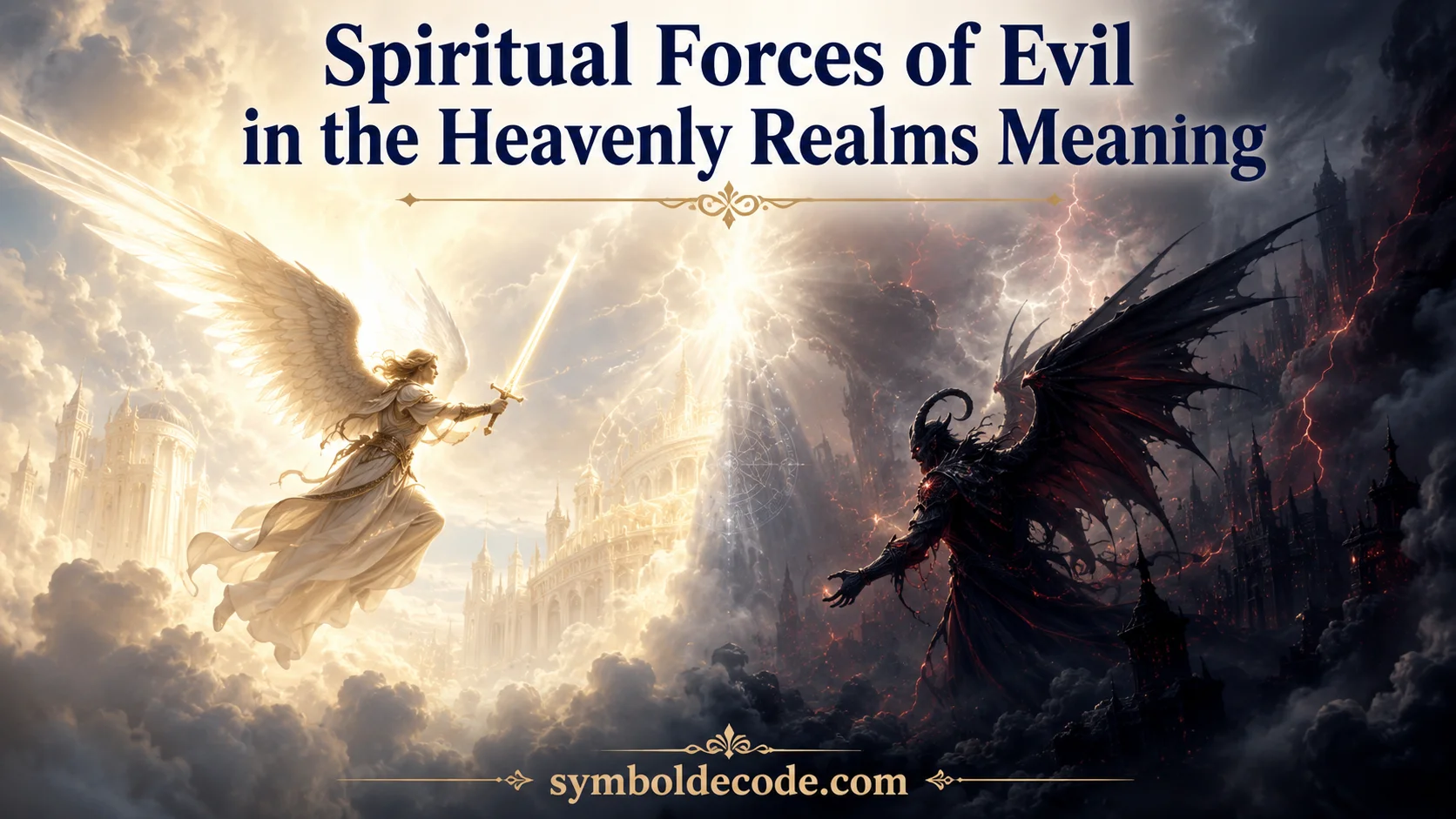
Spiritual Forces of Evil in the Heavenly Realms Meaning explains how Paul in Ephesians 6:12 describes the Christian struggle against unseen powers, rulers, and authorities of the dark world. These spiritual forces include demons and spirits working like foot soldiers in lower ranks, trying to oppose and obstruct men and women from finding truth. They target both non-Christians and believers, slowing growth after people commit their lives to Christ and begin their journey with God.
From real-life understanding, every believer may feel demonic pressure that tries to weaken faith and destroy testimony. The main weapon is destructive thoughts planted in our minds, where negative ideas grow into harmful habits and attitudes, leading to bondage under Satan. As your influence in the Kingdom grows, the enemy increases his cleverness and sees you as a threat. Stay strong, pray, and remain diligent in the things of God to overcome every challenge.
Quick Answer
Spiritual Forces of Evil in the Heavenly Realms Meaning refers to unseen negative powers or influences believed to exist beyond the physical world, often symbolizing moral struggle, temptation, and the battle between good and evil, especially in American Christian thought.
TL;DR
• Refers to unseen spiritual conflict beyond the physical world
• Rooted in religious texts and symbolic traditions
• In the USA, often linked to Christian teachings
• Also seen as a metaphor for inner struggles
• Represents tension between good, evil, and human choices
What Are Spiritual Forces of Evil in the Heavenly Realms?
This phrase describes invisible forces believed to operate in a spiritual dimension. For many Americans, it comes from religious teachings and represents a struggle between divine goodness and opposing forces.
Literal Meaning
At its core, the phrase suggests that:
• Evil is not only physical but also spiritual
• These forces exist in a higher, unseen realm
• Humans may feel their influence indirectly
Symbolic Interpretation
However, many people today interpret it more symbolically:
• Inner conflict between right and wrong
• Negative thoughts or destructive habits
• Emotional struggles that feel overwhelming
Because of this dual meaning, the phrase bridges both religious belief and psychological understanding.
Historical Origins and Religious Roots
To understand this concept fully, we need to look at its origins. It is most commonly linked to early Christian writings, but its ideas go back even further.
Ancient and Pre-Christian Ideas
Long before Christianity, many cultures believed in unseen forces:
• Ancient Mesopotamian myths described spirits influencing human fate
• Greek traditions spoke of daimons guiding or misleading people
• Early Jewish texts mentioned spiritual beings beyond human sight
These ideas created a foundation for later religious teachings.
Early Christian Development
In Christian theology, the phrase became more defined:
• It described a cosmic battle between good and evil
• Evil forces were seen as opposing divine authority
• The “heavenly realms” referred to a spiritual dimension, not the sky
Over time, this concept became a key part of spiritual warfare teachings.
Spiritual Forces of Evil Meaning in the USA
In the United States, this concept is most often understood through a Christian lens. However, its meaning has expanded into broader cultural discussions.
Religious Context
For many Americans:
• It represents spiritual opposition to faith
• It highlights the importance of moral choices
• It reinforces the idea of unseen spiritual realities
Cultural Influence
Beyond religion, the phrase appears in:
• Movies and TV shows about supernatural battles
• Books discussing good versus evil themes
• Conversations about mental and emotional struggles
Everyday Understanding
Today, people may use the phrase to describe:
• Feeling spiritually challenged or tested
• Experiencing negativity that feels external
• Struggling with personal values or decisions
Symbolism of Good vs Evil in Heavenly Realms
This concept is deeply symbolic. It reflects one of humanity’s oldest themes: the tension between light and darkness.
Core Symbolic Meanings
• Conflict between moral choices
• Invisible influences shaping behavior
• The idea of higher-level struggles beyond daily life
Archetypal Patterns
Across cultures, similar ideas appear:
• Light represents truth, clarity, and goodness
• Darkness symbolizes confusion, fear, and harm
• The “heavens” symbolize a higher level of existence
Because of this, the phrase resonates even with people who don’t follow a specific religion.
Cross-Cultural and Spiritual Interpretations
Although rooted in Christian thought, similar ideas exist worldwide. Each culture explains them differently but shares common themes.
Global Perspectives
• Eastern traditions often describe balance between opposing energies
• Indigenous beliefs may focus on spiritual harmony and imbalance
• Islamic teachings also mention unseen beings influencing humans
Shared Themes
Despite differences, many traditions agree:
• There is more to reality than what we see
• Human actions are influenced by unseen forces
• Maintaining balance or goodness is essential
These similarities show how universal this concept really is.
Emotional and Psychological Meaning
In modern psychology, this phrase is often interpreted metaphorically. Instead of literal beings, it represents internal experiences.
Inner Conflict
People may relate it to:
• Struggles between impulses and values
• Feelings of guilt, doubt, or fear
• Moments when choices feel morally difficult
Mental and Emotional States
It can also reflect:
• Negative thought patterns
• Emotional overwhelm or stress
• The sense of battling something invisible
Because of this, many see it as a powerful way to describe internal struggles in human life.
Modern Usage in Media and Everyday Life
Today, the phrase appears in many areas beyond religion. It has become part of broader cultural language.
In Media
• Movies portray battles between angels and dark forces
• TV shows explore supernatural conflicts
• Books use it to symbolize moral dilemmas
In Personal Expression
• Tattoos representing light vs dark themes
• Social media discussions about spiritual growth
• Motivational content about overcoming negativity
In Daily Conversation
People may use it casually to describe:
• Feeling spiritually challenged
• Facing intense personal struggles
• Experiencing negativity that feels overwhelming
Read More: Spiritual Meaning of a Groundhog
Common Contexts and Meanings Table
| Context | Meaning in the USA | Common Associations | Notes |
| Religious teaching | Spiritual battle between good and evil | Faith, prayer, morality | Most traditional interpretation |
| Psychological view | Inner emotional or mental struggle | Stress, doubt, conflict | Modern symbolic approach |
| Pop culture | Supernatural conflict stories | Angels, demons, fantasy | Often dramatized |
| Personal growth | Overcoming negative influences | Self-improvement, resilience | Motivational use |
| Cultural symbolism | Universal good vs evil theme | Light vs darkness | Cross-cultural relevance |
Misunderstandings and Controversies
Because this phrase is powerful, it can sometimes be misunderstood or misused.
Common Misunderstandings
• Taken too literally without context
• Used to label others unfairly
• Confused with superstition rather than symbolism
Sensitive Areas
Some concerns include:
• Fear-based interpretations that cause anxiety
• Misuse to justify extreme beliefs
• Oversimplifying complex human behavior
Balanced View
Today, many experts encourage:
• Understanding both symbolic and spiritual meanings
• Avoiding fear-driven interpretations
• Focusing on personal growth and awareness
How Meaning Has Changed Over Time
Like many symbolic ideas, this concept has evolved.
Past Interpretations
• Strong focus on literal spiritual beings
• Clear division between good and evil
• Emphasis on religious authority
Modern Shifts
• More symbolic and psychological interpretations
• Greater focus on personal responsibility
• Integration with self-help and mental health ideas
Today’s Perspective
Now, many people see it as:
• A blend of spiritual belief and personal insight
• A way to describe complex human experiences
• A reminder of the importance of choices
Why This Concept Still Matters Today
Even in a modern world, this idea remains relevant. It speaks to something deeply human.
Ongoing Relevance
• People still seek meaning beyond the physical world
• Moral questions remain central to life
• Inner struggles are universal experiences
Personal Connection
It helps individuals:
• Reflect on their actions and choices
• Understand emotional challenges
• Explore deeper spiritual questions
Because of this, the phrase continues to resonate across generations.
FAQs:
What does “spiritual forces of evil in the heavenly realms” mean?
It refers to unseen negative influences believed to exist beyond the physical world. Many interpret it as either spiritual beings or symbolic inner struggles.
Is this concept only religious?
No, while it has religious roots, many people now view it symbolically. It can represent emotional or psychological conflict.
Do people in the USA still believe in this idea?
Yes, especially in religious communities. However, others interpret it more metaphorically or culturally.
Is it about literal evil forces?
For some, yes. For others, it represents negative thoughts, behaviors, or influences rather than actual beings.
Why is it described as “heavenly realms”?
The term refers to a spiritual dimension, not the physical sky. It suggests a higher level of existence beyond human sight.
Can this concept be helpful today?
Yes, it can help people understand inner struggles and reflect on their values and decisions.
Conclusion:
The Spiritual Forces of Evil in the Heavenly Realms Meaning goes beyond a simple phrase, representing unseen struggles, moral choices, and the balance between good and evil. Rooted in ancient and religious traditions, it has evolved to include psychological and cultural meanings, especially in modern life. Today, many people in the United States view it as both a spiritual concept and a powerful metaphor, reminding us that our biggest challenges are often invisible yet deeply shape who we are. Ultimately, it encourages self-reflection, awareness, and the pursuit of inner balance in a complex world.