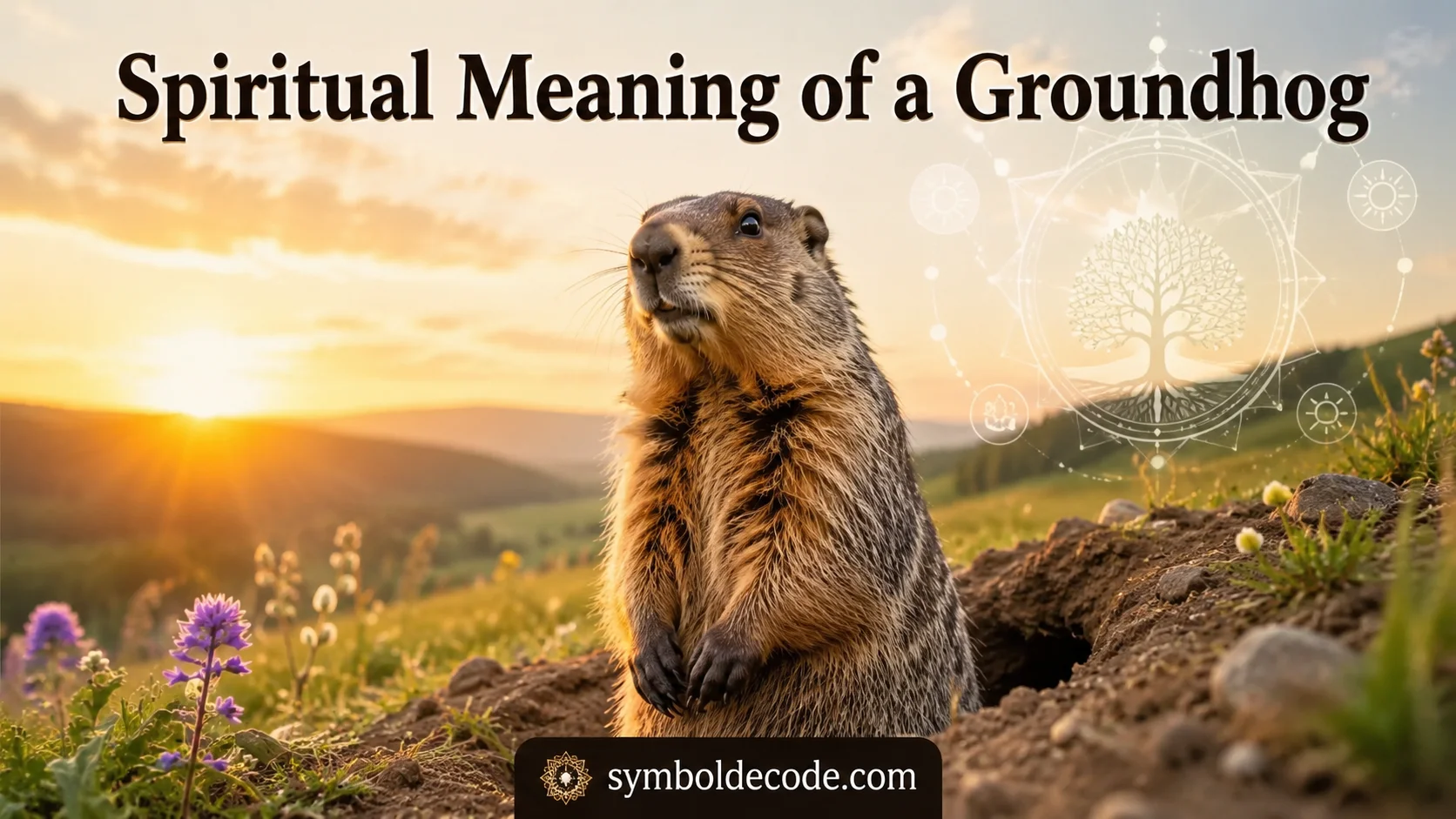
The Spiritual Meaning of a Groundhog shows how a Groundhog as a spirit animal guides you to explore consciousness and find answers within yourself. When you feel stuck, it is letting you know that you have not dug deep enough to find the root. This symbolism is clear—you must dig deeper. I noticed this while sitting and meditating in sunlight, where even small cues and signals felt meaningful and connected to inner awareness.
This journey begins by noticing subtle cues in your space, like how Groundhogs use alarm calls and a loud whistle to inform others of danger. In one moment, I saw how boundaries and safety shape trust between animals and humans, leaving a deep imprint on the psyche. These Animal totems, both natural and mythical, are representing qualities that teach important lessons. Many ancient cultures believed in this spiritual connection, helping us access messages from unseen spirits.
Quick Answer
The Spiritual Meaning of a Groundhog in the U.S. centers on cycles, awareness, and renewal. It symbolizes paying attention to timing, trusting your instincts, and recognizing life’s natural rhythms. More broadly, it also represents introspection and emerging from periods of rest or reflection.
TL;DR
• Groundhog symbolizes life cycles and seasonal change
• Associated with intuition and awareness
• Represents reflection and inner growth
• Strong link to American tradition and folklore
• Often seen as a sign of renewal and timing
What Is a Groundhog Symbolically?
Groundhogs are medium-sized mammals known for digging burrows and hibernating. In symbolism, their physical traits shape their deeper meaning. For a U.S. audience, understanding their natural behavior helps explain why they carry spiritual significance.
Physical Traits and Symbolism
• Lives underground, symbolizing introspection and hidden truths
• Emerges seasonally, representing renewal and timing
• Observant animal, linked to awareness and perception
• Grounded nature, connected to stability and balance
Because groundhogs move between underground and surface life, they often symbolize a bridge between the inner world and outer reality.
Groundhog Meaning in American Culture
In the United States, groundhogs are deeply tied to tradition. Their symbolic role is shaped by folklore and national identity.
Groundhog Day Tradition
Every year on February 2, Americans celebrate Groundhog Day. The animal is believed to predict whether winter will continue.
• Seeing shadow: longer winter ahead
• No shadow: early spring coming
• Celebrated since the 1800s in Pennsylvania
• Became a cultural symbol of seasonal transition
This tradition highlights how Americans view the groundhog as a messenger of change and timing.
Spiritual Meaning of a Groundhog in Daily Life
When people encounter a groundhog, they often attach personal meaning to the experience. In modern spiritual thinking, animals are seen as signs or guides.
Common Interpretations
• A reminder to pause and reflect
• Encouragement to trust your instincts
• Sign of upcoming change or transition
• Invitation to reconnect with nature’s rhythm
Because of its habits, the groundhog often signals a need to balance action and rest.
Historical Roots and Folklore
Groundhog symbolism didn’t appear suddenly. It evolved from older traditions brought to America.
European Origins
Early settlers brought weather-predicting customs from Europe.
• Similar traditions used animals like hedgehogs
• Connected to Candlemas Day (February 2)
• Focused on seasonal prediction rituals
• Blended into American culture over time
Eventually, the groundhog became the chosen animal in the U.S., replacing older symbols.
Read More: Spiritual Meaning of a Kingfisher
Cross-Cultural Spiritual Meanings
While groundhogs are most prominent in American culture, similar animals carry meaning worldwide.
Broader Symbolism
• Burrowing animals often symbolize introspection
• Seasonal animals represent life cycles
• Earth-connected creatures reflect grounding energy
• Hibernation links to rest and renewal
Across cultures, animals that disappear and reappear often symbolize transformation and rebirth.
Emotional and Psychological Symbolism
Animals often reflect human emotions and mental states. Groundhogs are no exception.
What a Groundhog Represents Emotionally
• Need for quiet time and reflection
• Desire to withdraw from stress
• Readiness to emerge after healing
• Sensitivity to surroundings
Psychologically, the groundhog reminds people that growth often happens beneath the surface before it becomes visible.
Spiritual Meaning of Seeing a Groundhog
Seeing a groundhog in real life can feel meaningful, especially if it happens unexpectedly.
Possible Messages
• Pay attention to your surroundings
• Prepare for a shift in your life
• Trust your inner voice
• Balance activity with rest
For many, this sighting becomes a gentle nudge to slow down and observe.
Groundhog Symbolism in Modern Life
Today, groundhog symbolism appears in subtle ways beyond tradition.
Where You Might See It
• Social media posts about Groundhog Day
• Home decor with nature themes
• Wildlife photography and art
• Seasonal celebrations and events
Although not as common as other animal symbols, the groundhog still holds a place in modern cultural awareness.
Symbolism Table: Groundhog Meanings in Context
| Context | Meaning in the USA | Common Associations | Notes |
| Groundhog Day | Seasonal prediction | Winter, spring, timing | Cultural tradition |
| Spiritual view | Intuition and reflection | Awareness, inner growth | Personal interpretation |
| Emotional state | Need for rest | Withdrawal, healing | Psychological symbolism |
| Nature symbolism | Cycles and renewal | Seasons, rebirth | Universal theme |
| Modern culture | Change awareness | Timing, patience | Subtle but present meaning |
Misunderstandings and Misuse
Like many symbols, groundhog meaning can be misunderstood.
Common Misinterpretations
• Seen only as a weather predictor
• Overlooked deeper symbolic meaning
• Treated as superstition rather than reflection
• Simplified into a single idea
However, its symbolism is richer and tied to broader themes of time and awareness.
How Groundhog Meaning Has Changed Over Time
Symbolism evolves with culture, and the groundhog is no exception.
Shifts in Meaning
• Originally tied to seasonal rituals
• Became a national tradition in the U.S.
• Now seen as a symbolic or spiritual sign
• Gained psychological interpretation in modern times
Today, people view the groundhog less as a literal predictor and more as a symbol of cycles and insight.
Groundhog as a Symbol of Cycles and Timing
Timing is one of the strongest themes linked to groundhog symbolism.
Key Ideas
• Life moves in repeating cycles
• Change comes naturally and gradually
• Patience is often necessary
• Awareness helps navigate transitions
Because it emerges at a specific time each year, the groundhog represents the importance of right timing in life decisions.
FAQs:
What does a groundhog symbolize spiritually?
A groundhog symbolizes cycles, awareness, and renewal. It often represents introspection and trusting your instincts.
Is seeing a groundhog a good sign?
Yes, many people view it as a positive sign. It can suggest change, growth, or the need for reflection.
Why is the groundhog important in the U.S.?
It’s tied to Groundhog Day, a cultural tradition predicting seasonal change. This gives it strong symbolic meaning in American life.
Does a groundhog represent transformation?
Yes, its hibernation and re-emergence reflect transformation and renewal. It shows how change happens over time.
What does a groundhog mean in dreams?
In dreams, it may symbolize withdrawal, reflection, or preparing for change. It can also reflect hidden thoughts or emotions.
Conclusion:
The Spiritual Meaning of a Groundhog goes far beyond its role in seasonal folklore, symbolizing cycles, timing, and inner awareness. It serves as a powerful reminder of reflection, renewal, and personal growth, connecting deeply with universal themes found across cultures. In today’s fast-moving world, the groundhog teaches us to pay attention to life’s natural rhythms, where pausing, observing, and reflecting can be just as important as taking action. By understanding this symbol, we begin to see change not as sudden or random, but as part of a natural, meaningful, and continuous cycle of life.