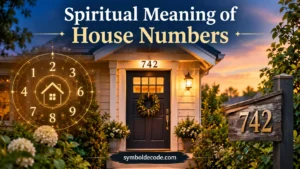
The Spiritual Meaning of House Numbers can help you understand how a house number may relate to your energy, lifestyle, and living space. For a detached house, the civic number identifies the home, while an apartment may use its unit number to represent the actual living space. Feng Shui house numbers and numerology give numbers from 1 to 9 a special meaning, often connecting them with creativity, stability, or financial growth.
Home numerology also connects numbers with well-being, vibrations, and the overall tone of your entire living space. Your address, building number, and apartment number may influence how a residence feels, while Feng Shui focuses on natural balance and unique energy. The street address, building address, and zip code can have an impact, but your house or apartment number often feels more personal, helping create surroundings that are compatible with your lifestyle, goals, and everyday needs.
Quick Answer
The Spiritual Meaning of House Numbers usually refers to the symbolic qualities connected with a home’s number. In common numerological interpretations, 1 represents independence, 2 partnership, 4 stability, 6 family, 7 reflection, and 8 ambition.
TL;DR
- House numbers can become symbols of identity, memory, and personal meaning.
- Numerology commonly reduces an address to a single number.
- Numbers 1 through 9 have different symbolic interpretations.
- Master numbers such as 11 and 22 may receive special treatment.
- American culture gives certain numbers additional superstitious meanings.
- House-number symbolism works best as reflection rather than prediction.
What Is the Spiritual Meaning of House Numbers?
House-number symbolism applies numerological ideas to the place where you live. The number becomes a symbolic way to describe qualities or experiences associated with that home.
For example, someone living at number 6 might connect the address with family, comfort, caregiving, and responsibility. Meanwhile, someone living at number 7 might associate the home with privacy, study, meditation, or quiet time.
How House Numbers Are Interpreted
Most basic numerology systems add the digits together and reduce the total.
For example:
4826 → 4 + 8 + 2 + 6 = 20 → 2 + 0 = 2
The final number is then interpreted through traditional numerological meanings.
However, different systems handle apartment numbers, letters, and master numbers differently. Therefore, two practitioners may interpret the same address in slightly different ways.
Why Numbers Can Feel Meaningful
Numbers are part of everyday life. They appear on houses, birthdays, clocks, roads, dates, and important documents.
Because of this familiarity, a number can become a personal symbol. Its emotional meaning often develops through memory, belief, and personal experience.
How Do You Calculate Your House Number?
Calculating a basic house number is usually simple. Add the digits of the street or unit number and continue reducing the total until you reach one digit.
For example, consider house number 1735:
1 + 7 + 3 + 5 = 16
Then:
1 + 6 = 7
The home would therefore be interpreted as a 7 house under this method.
What About Apartment Numbers?
Apartment addresses can be handled in different ways. Some practitioners use the apartment number because it identifies the person’s specific living space.
Others consider the building number first and treat the apartment number as an additional influence. There isn’t one universal calculation rule.
What About Letters in an Address?
Some addresses contain letters, such as 12A or 45B. Certain numerology systems assign numerical values to letters.
Other approaches use only the visible numbers. If you’re following a particular numerological method, use its rules consistently.
What Do House Numbers 1 Through 9 Mean?
Numbers 1 through 9 form the foundation of many modern numerological interpretations. Each number has its own collection of symbolic themes.
These meanings aren’t fixed rules. Instead, they provide a symbolic language that people can use when reflecting on their homes.
Number 1: Independence
Number 1 is commonly associated with independence, initiative, leadership, individuality, and new beginnings.
A 1 home may symbolically suit someone starting a new chapter or seeking greater personal freedom.
Number 2: Partnership
Number 2 is often connected with cooperation, sensitivity, balance, relationships, and harmony.
A 2 home can symbolize companionship, communication, and emotional connection.
Number 3: Creativity
Number 3 is frequently associated with creativity, communication, self-expression, joy, and social energy.
A 3 home may represent artistic interests, conversation, laughter, and lively gatherings.
Number 4: Stability
Number 4 commonly represents structure, discipline, organization, stability, and dependable foundations.
This symbolism can feel natural for a home because houses often represent security and permanence.
Number 5: Freedom
Number 5 is often linked with change, movement, curiosity, adventure, flexibility, and freedom.
A 5 home may symbolize a lifestyle that welcomes new experiences and changing routines.
Number 6: Family
Number 6 is strongly associated with family, care, comfort, beauty, responsibility, and nurturing.
Because these qualities relate closely to domestic life, number 6 often receives strong home-centered interpretations.
Number 7: Reflection
Number 7 commonly symbolizes introspection, learning, privacy, spirituality, and deeper thought.
A 7 home may therefore be viewed as a symbolic retreat from a busy outside world.
Number 8: Ambition
Number 8 is frequently associated with achievement, authority, organization, ambition, and material goals.
In modern American culture, these themes can connect with career development and business without guaranteeing financial success.
Number 9: Compassion
Number 9 is often connected with compassion, generosity, service, completion, and broader human concerns.
A 9 home may symbolically emphasize hospitality, emotional growth, and helping others.
What Is the Historical Background of Number Symbolism?
The idea that numbers can carry meaning is much older than modern house numerology. Ancient cultures used numbers in mathematics, astronomy, architecture, calendars, philosophy, and religious traditions.
However, ancient number symbolism wasn’t identical to modern house numerology. Today’s interpretations combine ideas from several historical and spiritual traditions.
Ancient Roots
Ancient Greek philosophical traditions gave numbers an important place in ideas about harmony and order. Pythagorean thinkers, in particular, explored relationships between mathematics and the structure of the world.
Other ancient cultures also gave certain numbers symbolic importance. Their meanings varied according to religion, language, mythology, and local customs.
Development of Modern Numerology
Over time, numerical symbolism appeared in mystical, philosophical, and religious traditions.
Modern Western numerology eventually developed systems that assign symbolic qualities to numbers. These systems may use names, birthdays, addresses, and other numerical information.
House numerology represents a later application of these ideas to residential addresses.
What Does a House Number Mean in America?
In the United States, house numbers have an important practical purpose. They identify properties for residents, visitors, mail delivery, emergency services, and local records.
Their spiritual meaning is therefore an additional symbolic layer rather than their original practical purpose.
American Ideas About Lucky Numbers
American culture has several popular beliefs about numbers. Number 7, for example, is commonly associated with luck in popular culture.
Number 13 has a different reputation. Some Americans associate it with bad luck, which has sometimes influenced the numbering of floors, rooms, and buildings.
However, these beliefs aren’t universal. Many people attach no special meaning to either number.
House Numbers and Personal Identity
An address can become an important part of someone’s personal story.
A family may remember a house number because it was their first home, their childhood home, or the place where an important life event happened. Over time, the number can become emotionally meaningful.
| House Number | Common Symbolic Theme | Possible Home Association | Cultural Note |
| 1 | Independence | New beginnings and personal freedom | Often linked with leadership |
| 2 | Partnership | Cooperation and relationships | Associated with balance |
| 4 | Stability | Structure and dependable routines | Represents strong foundations |
| 6 | Family | Care, comfort, and responsibility | Closely connected with home life |
| 7 | Reflection | Privacy, learning, and spirituality | Often associated with mystery |
| 8 | Ambition | Achievement and material goals | Frequently linked with power |
What Do House Numbers Mean Spiritually?
Spiritual interpretations depend on the tradition being used. Numerology generally treats numbers as symbolic patterns rather than physical forces that can be scientifically measured inside a home.
For some people, the practice provides a way to think about their surroundings and personal goals.
A House as a Symbolic Sanctuary
A home naturally represents safety, privacy, belonging, and personal identity. Because of this, its number can become part of its symbolic identity.
For example, someone might view a 2 home as a reminder to prioritize communication and cooperation. Someone else might see a 7 home as a reminder to protect quiet time.
Reflection Instead of Prediction
A grounded approach treats house numerology as a reflective practice.
Your house number doesn’t determine your future. Instead, its traditional symbolism can encourage you to think about your relationships, routines, goals, and feelings about home.
What Do House Numbers Symbolize Across Cultures?
Number symbolism differs greatly around the world. A number considered fortunate in one culture may have a completely different reputation elsewhere.
This matters when discussing house numbers because American interpretations aren’t universal.
Chinese Cultural Associations
In Chinese-speaking cultures, number symbolism can be influenced by pronunciation and similarities between number sounds and words.
The number 8, for example, has strong positive associations with prosperity in many Chinese cultural contexts.
Indian Numerological Traditions
Indian numerological traditions may connect numbers with planets, spiritual concepts, and personal qualities.
Some modern approaches apply these ideas to homes and addresses. However, these traditions have their own historical frameworks and shouldn’t simply be treated as identical to Western numerology.
Jewish and Christian Number Symbolism
Numbers also have symbolic importance in Jewish and Christian traditions. Certain numbers appear repeatedly in religious texts and may carry theological meanings.
However, religious number symbolism isn’t automatically the same as house numerology. The historical and religious context matters.
Read More: Spiritual Meaning of Losing House Keys
What Do House Numbers Symbolize Emotionally?
A house number can become an emotional symbol because homes are strongly connected with personal experience.
The number itself doesn’t automatically create an emotion. Instead, its meaning may interact with memories, expectations, and personal beliefs.
Common Emotional Associations
People may connect house numbers with themes such as:
• Security and belonging
• Independence and personal freedom
• Family and emotional connection
• Creativity and self-expression
• Privacy and inner reflection
• Growth and fresh beginnings
These associations can become stronger when a home contains important memories.
Why Symbolism Feels Personal
Imagine seeing the address of your childhood home years later. You might immediately remember family dinners, holidays, friends, or important conversations.
The number has become meaningful because of your experience. This is one reason ordinary objects can develop strong symbolic value.
How Are House Numbers Used in Modern Life?
Today, house-number symbolism appears in spiritual communities, home-design discussions, social media, and personal numerology practices.
At the same time, most Americans continue to use house numbers primarily as practical address markers.
Home Decor
Some people display house numbers prominently near doors, gates, mailboxes, or entryways.
A meaningful number can become part of a home’s visual identity. Decorative plaques can combine practical information with personal style.
Social Media
House numbers sometimes appear in posts about moving, buying a first home, renovating, or beginning a new chapter.
People may describe an address as having “good energy” or a meaningful number. These statements generally express personal beliefs rather than measurable properties of the home.
Tattoos and Personal Symbols
Some people turn meaningful numbers into tattoos.
A house number may represent childhood, a family home, a significant move, or a place connected with an important relationship. In these cases, the meaning comes from personal history as much as numerology.
What Are Master Numbers in House Numerology?
Some numerology traditions give special treatment to numbers such as 11, 22, and 33. These are commonly called master numbers.
Under some systems, they aren’t immediately reduced to single digits.
Number 11
Number 11 is often associated with intuition, inspiration, awareness, sensitivity, and inner insight.
An 11 home may symbolically represent reflection, creativity, or personal awareness.
Number 22
Number 22 is commonly connected with building, organization, practical vision, and turning ideas into tangible results.
Its symbolism may appeal to people focused on long-term projects and creating something lasting.
Number 33
Number 33 is sometimes associated with compassion, teaching, service, responsibility, and emotional support.
Not every numerological tradition treats 33 in the same way. Methods can differ considerably.
Are Some House Numbers Considered Unlucky?
Yes, some numbers have negative reputations in particular cultures. However, there is no universal list of unlucky house numbers.
Meaning depends on cultural background, personal beliefs, religious traditions, and local customs.
The Number 13
In the United States, 13 is one of the most recognizable numbers associated with superstition.
Some buildings have historically skipped the number 13 for floors or rooms because of customer or resident preferences. Still, many people consider 13 completely ordinary.
The Number 4
Number 4 has different associations across cultures. In some East Asian settings, its pronunciation resembles words connected with death, which has contributed to avoidance in certain situations.
That association shouldn’t automatically be applied to American homes.
Tradition Isn’t the Same as Fact
A house number isn’t inherently lucky, unlucky, dangerous, or destined to create a particular outcome.
Symbolic traditions can still be meaningful without being treated as factual predictions.
How Has House Number Symbolism Changed Over Time?
The practical purpose of house numbers has remained consistent, but their symbolic interpretations continue to change.
Modern technology has also made numerology easier to explore. People can quickly calculate addresses and compare different interpretations.
From Practical Marker to Personal Symbol
A house number primarily serves to identify a property.
Today, however, people may also view it as part of their home’s identity. This reflects a wider modern interest in personal symbolism and intentional living.
Modern Interpretations Are Flexible
Older numerical traditions are often combined with newer spiritual language.
As a result, different practitioners may give slightly different meanings to the same number. This usually reflects differences between numerological systems.
How Should You Interpret Your Own House Number?
Start with the basic number, then compare its traditional symbolism with your actual experience.
Suppose your address reduces to 4. You might reflect on stability, organization, structure, and long-term foundations.
Ask Reflective Questions
Instead of asking what your number will make happen, ask what it reminds you to notice.
• Does my home feel stable and organized?
• What values do I want my home to represent?
• Which relationships feel strongest here?
• What atmosphere do I want to create?
• Does the traditional meaning resonate with my experience?
These questions keep the practice personal without turning symbolism into a prediction.
Let Your Experience Matter Most
If a traditional interpretation doesn’t fit your home, you don’t have to force it.
Your memories, relationships, routines, and values are direct parts of your home’s story. The number can simply be another symbol within that story.
FAQs:
What Is the Spiritual Meaning of a House Number?
A house number can symbolize themes associated with numerology, including independence, family, stability, creativity, ambition, or reflection. Different traditions may interpret the same number differently.
How Do I Find My House Number in Numerology?
Add the digits of your house or unit number and reduce the total to a single digit. Some systems preserve master numbers such as 11, 22, or 33.
What Does House Number 7 Mean Spiritually?
Number 7 is commonly associated with reflection, privacy, learning, intuition, and spiritual exploration. It can symbolically represent a quieter and more inward-focused home.
What Does House Number 8 Mean?
Number 8 is often associated with ambition, organization, achievement, authority, and material goals. These are symbolic themes rather than guarantees of wealth or success.
Is House Number 13 Bad Luck?
Some Americans associate 13 with bad luck, but this is a cultural superstition rather than a universal rule. Other people consider 13 completely ordinary or personally meaningful.
What Does Number 6 Mean for a House?
Number 6 is commonly connected with family, care, responsibility, comfort, beauty, and domestic life. Its symbolism often resonates with people who value relationships and hospitality.
Conclusion:
The Spiritual Meaning of House Numbers offers a symbolic way to understand the place you call home, with numbers 1 through 9 often connected to independence, partnership, stability, family, reflection, ambition, and compassion. These meanings are not fixed predictions; instead, your home gains meaning through the people, memories, choices, and experiences within it. If your house number feels significant, use it as a gentle reflection tool by considering its traditional symbolism and deciding which meaning genuinely fits the life you’re creating inside your home.