The Spiritual Meaning of Poison Ivy teaches how nature reflects both beauty and hidden danger, guiding us toward deep reflection and understanding. As nature-oriented people, we often focus on fuzzy, happy parts like blooming, edible flowers, and cute animals, where we feel joy and peace. But true growth comes when we face dark parts, not avoid them. Like wise druids, we learn from defenses, predators, and even destruction, building a whole relationship through honoring nature and connecting with life fully.
In real life, I experienced Poison Ivy during walks in the woods, reminding me how spiritual temptations work like spiritual Poison Ivy. The body reacts to urushiol, just as the soul reacts to pride, anger, and worry, causing inner discomfort. Though the physical reaction is identifiable, inner struggles are harder to detect but still noticeable. To eliminate temptation, I follow the Holy Spirit, pray, build faith, and trust Christ. Through God’s healing balm, forgiveness, and love, we find the ultimate cure and walk again in righteousness.
Quick Answer
The Spiritual Meaning of Poison Ivy in the USA centers on boundaries, hidden danger, and self-protection. It also represents transformation and learning through discomfort, while in broader contexts it can symbolize resilience and awareness.
TL;DR
• Symbolizes boundaries and personal protection
• Represents hidden danger beneath beauty
• Linked to growth through discomfort
• Reflects emotional awareness and caution
• Used in modern art, tattoos, and symbolism
• Meaning has evolved from fear to insight
What Is Poison Ivy and Why It Matters Symbolically
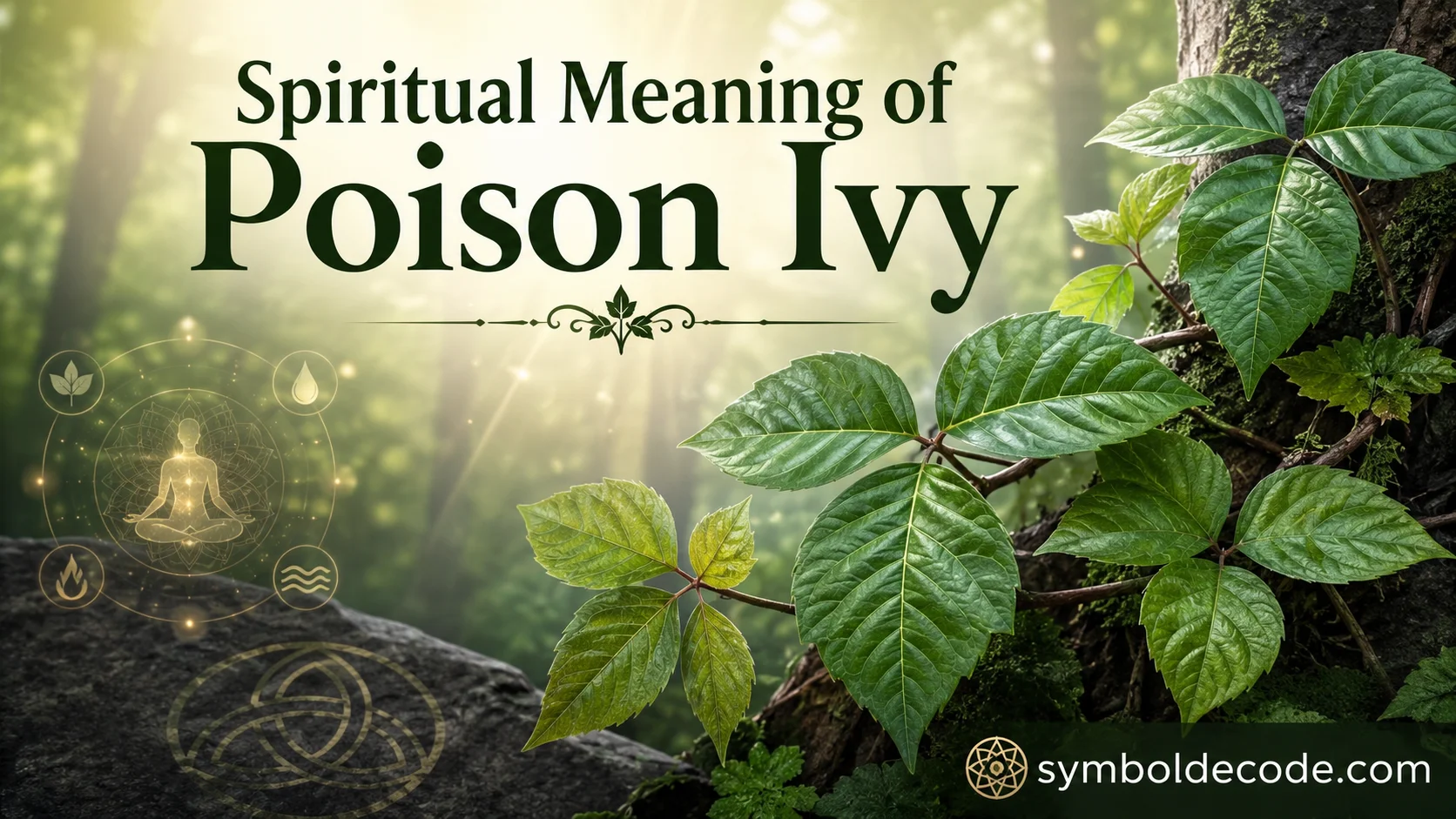
Poison ivy is a climbing or ground-growing plant known for its three-leaf clusters and skin-irritating oils. While many people see it simply as a hazard, its unique traits give it strong symbolic meaning in American culture.
Physical Traits and Symbolic Clues
The plant’s appearance plays a big role in its symbolism.
• Three-leaf clusters suggest warning and recognition
• Shiny green leaves signal attraction with hidden risk
• Seasonal color changes reflect transformation
• Climbing vines represent persistence and growth
Because it looks harmless at first, poison ivy teaches an important lesson: not everything is as safe as it seems.
Spiritual Meaning of Poison Ivy in Everyday Life
In daily life, poison ivy often becomes a symbol for personal boundaries and emotional awareness. Many people connect it with situations where caution is necessary.
Key Spiritual Interpretations
• Protect your energy from harmful influences
• Be mindful of people who seem safe but aren’t
• Growth often comes through discomfort
• Respect natural limits and boundaries
In the USA, this meaning fits well with ideas about self-care and personal space, which are widely valued today.
Historical Roots of Poison Ivy Symbolism
While poison ivy itself is native to North America, its symbolic meaning has evolved over time through observation and cultural storytelling.
Early Indigenous Perspectives
Native American communities understood poison ivy well and often used it carefully for practical purposes.
• Seen as a powerful plant requiring respect
• Used in traditional practices with caution
• Symbolized nature’s balance of help and harm
• Represented knowledge passed through experience
Colonial and Early American Views
Later, settlers began to associate poison ivy with danger and avoidance.
• Became a symbol of risk in unfamiliar environments
• Linked to survival awareness in the wild
• Represented consequences of ignoring nature
Over time, these ideas shaped how Americans still view the plant today.
Symbolism of Poison Ivy in the United States
In the USA, poison ivy carries strong cultural meaning due to its widespread presence and recognizable effects.
Common American Associations
• Warning sign in outdoor environments
• Symbol of hidden threats in everyday life
• Representation of personal boundaries
• Reminder to respect nature’s power
Cultural Context
Because poison ivy is taught in schools and discussed in outdoor safety, it becomes a shared cultural symbol. Nearly everyone recognizes it, making its meaning widely understood.
Emotional and Psychological Meaning
Beyond physical danger, poison ivy reflects deeper emotional themes.
What Poison Ivy Represents Emotionally
• Discomfort leading to personal growth
• Sensitivity to harmful environments
• Awareness of emotional boundaries
• Fear of unseen consequences
Psychologically, it can symbolize situations where something appears harmless but causes stress or harm later.
Poison Ivy as a Symbol of Boundaries
One of the strongest meanings tied to poison ivy is the idea of boundaries.
Lessons About Personal Space
• Not everything should be touched or engaged with
• Respecting limits prevents harm
• Clear boundaries protect well-being
• Awareness reduces negative experiences
In modern American life, this connects to mental health discussions about protecting one’s time, energy, and emotions.
Poison Ivy in Spiritual and Cross-Cultural Contexts
Although poison ivy is specific to North America, similar ideas appear in other cultures.
Broader Symbolic Themes
• Plants with defensive traits symbolize protection
• Natural warnings represent wisdom
• Harmful beauty appears in many traditions
• Growth through challenge is a universal idea
These parallels show that poison ivy’s meaning fits into larger spiritual patterns.
Read More: Spiritual Meaning of Purple Flowers
Poison Ivy in Modern Culture and Media
Today, poison ivy appears in many forms of media and symbolism.
Common Modern Uses
• Tattoos symbolizing resilience and caution
• Artwork representing hidden danger
• Metaphors in books and movies
• Social media references to toxic situations
Symbolism in Storytelling
In modern narratives, poison ivy often represents complex characters or situations that are both attractive and dangerous.
Table: Poison Ivy Symbolism in Different Contexts
| Context | Meaning in the USA | Common Associations | Notes |
| Nature | Warning and caution | Outdoor safety | Widely recognized plant |
| Emotional | Boundaries and awareness | Personal growth | Linked to self-care |
| Spiritual | Protection and transformation | Energy boundaries | Growing modern interest |
| Cultural | Hidden danger | Everyday metaphors | Common in language |
| Artistic | Beauty with risk | Tattoos and designs | Popular symbolic use |
Misunderstandings and Misuse of Poison Ivy Symbolism
While poison ivy has clear meanings, it can also be misunderstood.
Common Misinterpretations
• Seen only as negative or harmful
• Ignoring its role in teaching awareness
• Overused as a simple danger symbol
• Misapplied to judge people unfairly
It’s important to remember that its symbolism includes both warning and growth.
How Its Meaning Has Changed Over Time
The meaning of poison ivy has shifted alongside cultural changes.
Then vs. Now
• Earlier: pure danger and avoidance
• Today: balance of caution and growth
• Modern view includes emotional awareness
• Increasing use in symbolic and artistic contexts
This shift shows how people reinterpret natural symbols based on modern values.
Poison Ivy in Tattoos and Personal Expression
Poison ivy has become a unique symbol in personal expression.
Why People Choose It
• Represents strength after hardship
• Symbolizes awareness and wisdom
• Reflects personal boundaries
• Shows acceptance of life’s challenges
In tattoos, it often appears as vines, emphasizing growth and resilience.
FAQs:
What does poison ivy symbolize spiritually?
It symbolizes boundaries, protection, and hidden danger. It also represents growth through discomfort and increased awareness.
Is poison ivy a negative symbol?
Not entirely. While it warns of danger, it also teaches important lessons about respect and personal limits.
Why is poison ivy associated with boundaries?
Because touching it causes harm, it naturally represents the importance of respecting limits and personal space.
Does poison ivy have positive meaning?
Yes. It can symbolize resilience, learning from experience, and protecting yourself from harm.
What does poison ivy mean in dreams?
In dreams, it often suggests caution, emotional sensitivity, or a situation that may cause discomfort later.
Conclusion:
The Spiritual Meaning of Poison Ivy goes far beyond its physical effects. While it clearly represents danger and caution, it also carries deeper lessons about boundaries, awareness, and growth. In the United States, its symbolism is especially powerful because of how familiar and recognizable the plant is.
Over time, poison ivy has evolved from a simple warning sign into a meaningful symbol of personal protection and emotional insight. Today, it reminds us to pay attention, respect limits, and grow stronger through life’s challenges.
In the end, poison ivy teaches a simple but lasting truth: sometimes discomfort is the path to awareness, and awareness leads to strength.