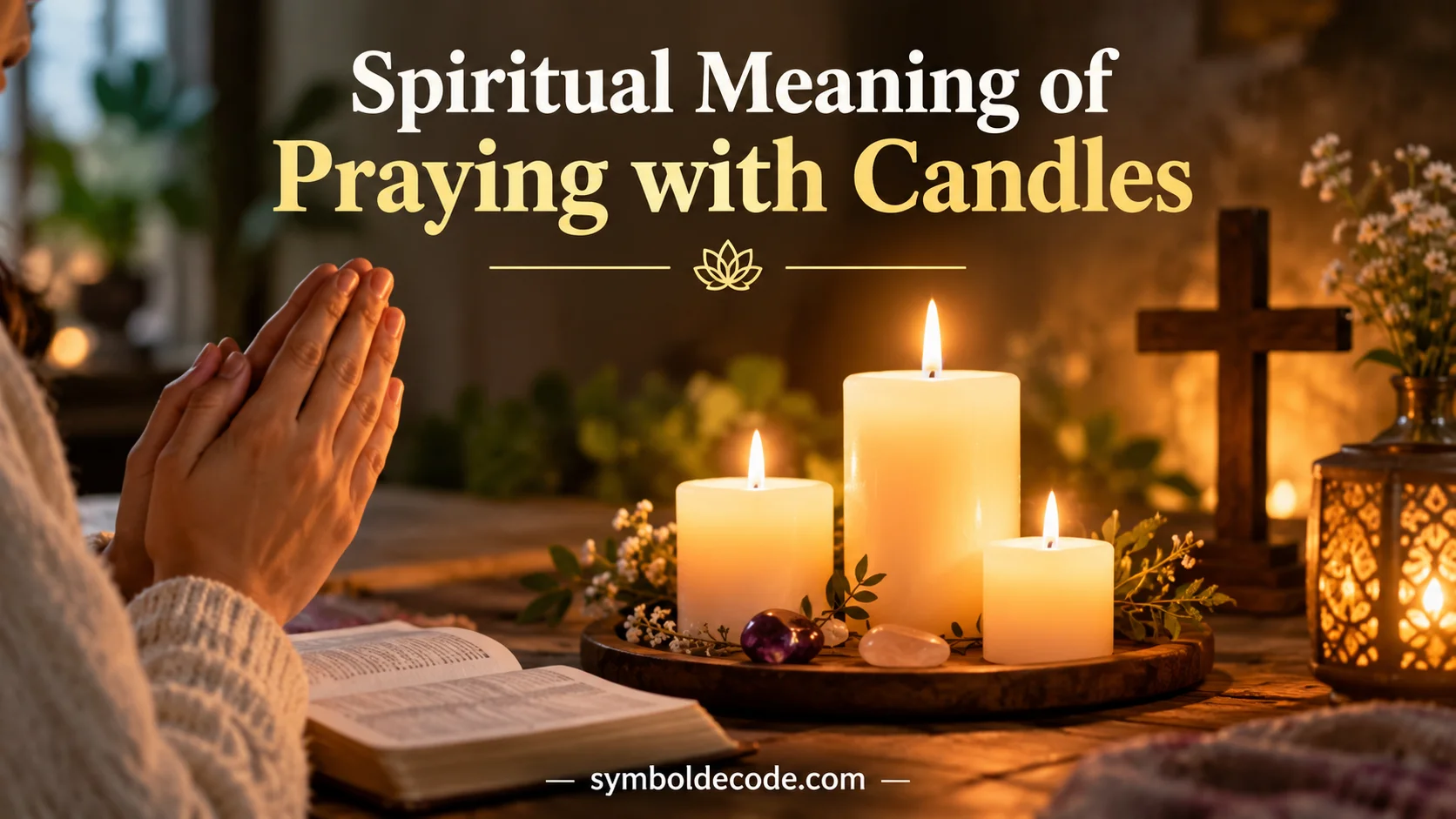
The Spiritual Meaning of Praying with Candles can bring prayer, reflection, and spiritual healing through a gentle flame. Candles have been used from time immemorial for religious, ceremonial, decorative, and romantic purposes. During prayers and meditations, candle burning creates a lovely, quiescent atmosphere that feels conducive to meditation, healing, contemplation, and communion. The flame may represent Divine Light, offering a powerful and supportive role when your thoughts feel scattered.
Candle colors can represent different spiritual energies during a personal meditative process. A colored candle may help focus attention on the auric field, while love can be symbolized by a beautiful, deep rose-pink light from a pink candle. A turquoise candle may represent prosperity and the turquoise ray of abundance. Lighting candles is also a timeless tradition deeply connected with the Christian faith. In churches, monasteries, and homes, this simple yet profound practice can express hope, devotion, and symbolism, giving candle lighting an enduring spiritual significance in Christianity.
Quick Answer
The Spiritual Meaning of Praying with Candles in the USA commonly points to hope, divine light, guidance, remembrance, peace, and focused intention. Across different traditions, candlelight can also represent wisdom, devotion, sacred presence, or the movement from darkness toward understanding.
TL;DR
- Candlelight often represents hope and spiritual guidance.
- The flame can symbolize divine presence or inner awareness.
- White candles commonly suggest peace, purity, and clarity.
- Candle prayer can support quiet reflection and focused intention.
- Different religions give candlelight their own meanings.
- Modern Americans use candles for prayer, remembrance, and meditation.
What Does Praying With Candles Symbolize?
Praying with candles combines a physical flame with a spiritual intention. The flame gives the eyes something simple to focus on while the person prays, reflects, remembers, or gives thanks.
For many Americans, this practice feels personal rather than complicated. A candle can mark a sacred moment without requiring elaborate words or rituals.
The Main Symbolic Meanings
The most common associations include:
• Light overcoming darkness and uncertainty
• Hope during difficult or uncertain periods
• Guidance when facing important choices
• Presence representing closeness to the sacred
• Remembrance for someone who has died or needs prayer
The important point is that the candle itself doesn’t have one fixed message. Context gives the flame its meaning.
Why Is Light Important in Prayer?
Light has been a powerful human symbol for thousands of years. People naturally connect brightness with visibility, safety, warmth, and the ability to see clearly.
Because of these everyday experiences, light became a natural spiritual metaphor. A candle can therefore represent the movement from confusion toward clarity or from fear toward hope.
Light as Spiritual Guidance
In Christian traditions, light has a strong connection with Christ and divine presence. Biblical language about light has influenced Christian worship and devotional candle practices for centuries.
At the same time, light symbolism isn’t limited to Christianity. Other traditions also connect light with wisdom, awareness, sacred presence, or spiritual understanding.
Light and Darkness
Darkness isn’t necessarily treated as evil in every tradition. Often, it simply represents what remains unknown or unseen.
A candle creates a small area of brightness. Symbolically, that can remind a person that even a small amount of hope can matter during a difficult season.
What Is the Historical Meaning of Candle Prayer?
The history of candle use is older than modern churches. Human societies have long treated fire as important because it provided warmth, protection, visibility, and a visible connection to ritual life.
Ancient Mediterranean cultures used lamps and flames in religious settings. Over time, Jewish and Christian traditions developed their own forms of sacred light, while other cultures created distinct practices involving lamps, incense, and flames.
From Fire to Candles
Early ritual fire wasn’t always produced by what we would recognize as a modern candle. Oil lamps, torches, hearth fires, and other forms of controlled flame served similar practical and symbolic purposes.
Candles became increasingly useful because their portable flame could be carried into sacred spaces. They also made it possible to maintain a small, controlled light during prayer.
Christian Development
Candlelight became especially important within Catholic and Orthodox Christianity. Candles came to symbolize Christ’s light, prayer, devotion, remembrance, and sacred presence.
Votive candles eventually became closely associated with personal prayer. A person could light a candle before an image, shrine, or altar while praying for someone or expressing gratitude.
How Is Candle Prayer Used in Christianity?
Christian candle prayer varies between denominations. Catholic and Orthodox traditions generally have stronger historic candle practices, while many Protestant communities have traditionally used candles more selectively.
Today, however, candles appear across many Christian settings. They may accompany Advent, Easter, memorial services, worship, personal devotion, or quiet prayer.
Common Christian Meanings
A candle may represent:
• Christ as spiritual light
• A prayer offered with faith
• Remembrance of someone who has died
• Gratitude for blessings received
• Hope during suffering or uncertainty
In some Christian settings, a burning candle can also remind worshippers that prayer continues beyond the spoken moment.
Candle Prayer at Home
Americans don’t need to be inside a church to use candle symbolism. Some families light a candle while praying together or during a quiet evening devotion.
The practice can be especially meaningful when someone doesn’t know what words to say. Sitting quietly with a flame can become a simple form of prayer.
What Do Candle Colors Mean in Spiritual Practice?
Candle colors can carry symbolic associations, but they aren’t universal rules. Their meanings depend heavily on religious tradition, cultural background, and personal practice.
A white candle, for example, may represent purity in one setting and peace or remembrance in another. Therefore, color should be understood as a symbolic suggestion rather than a guaranteed spiritual message.
| Candle Color | Common Association in the USA | Possible Spiritual Theme | Important Note |
| White | Peace and purity | Clarity, hope, prayer | Often used for general intentions |
| Red | Love and strength | Courage, devotion, passion | Meanings vary widely |
| Blue | Calm and serenity | Wisdom, peace, reflection | Often connected with quiet moods |
| Green | Growth and renewal | Healing, abundance, fresh beginnings | Context determines meaning |
| Purple | Reflection and spirituality | Preparation, devotion, contemplation | Especially familiar in Christian seasons |
Does Candle Color Change a Prayer?
Not necessarily. In many traditions, the intention of the prayer matters more than the color.
A person can pray sincerely with a plain white candle. The color can add personal symbolism, but it doesn’t automatically make a prayer stronger.
What Does the Flame Symbolize During Prayer?
The flame is often the most visually powerful part of the candle. It moves, changes shape, gives warmth, and eventually disappears when the candle is finished.
Because of these qualities, people often connect the flame with life, spirit, awareness, devotion, and transformation.
A Steady Flame
A steady flame may feel peaceful and reassuring. Symbolically, someone might associate it with stability, patience, or inner calm.
However, there is no reliable universal rule saying that a steady flame proves a spiritual presence. Such interpretations belong to particular personal or spiritual traditions.
A Flickering Flame
A flickering flame can attract attention because it responds to air movement. Some spiritual practitioners interpret this symbolically.
Still, a flickering candle has ordinary physical causes. Drafts, temperature changes, wick conditions, and airflow can all affect the flame.
Read More: Spiritual Meaning of Purple Candle
What Is the Psychological Meaning of Praying With Candles?
Candle prayer can also have an emotional and psychological dimension. A quiet flame provides a simple visual focus, which can make it easier to slow down and step away from distractions.
The ritual also creates a clear beginning. Lighting the candle tells the mind that ordinary activity is being paused for prayer or reflection.
Creating a Calm Atmosphere
Soft light can make a room feel quieter and more intimate. This atmosphere may encourage slower breathing, reflection, and emotional awareness.
For some people, the candle becomes a familiar signal for stillness. Over time, simply lighting it may help them transition into a more reflective state.
Giving Emotions a Place
Prayer often happens during emotionally important moments. People may light candles while grieving, waiting, hoping, celebrating, or searching for direction.
The flame doesn’t solve those emotions. Instead, it can give someone a physical symbol around which those feelings can be gathered.
What Does Praying With Candles Mean in America?
In the United States, candle prayer exists within a highly diverse religious landscape. Catholic, Orthodox, Protestant, Jewish, Buddhist, Hindu, and other communities may use candles differently.
Recent research shows that about one in five U.S. adults surveyed reported lighting candles or incense for spiritual or religious reasons. Among U.S. Catholics, candle or incense use remains a recognizable devotional practice, although it isn’t equally common among all Catholics.
American Associations
For many Americans, candlelight is connected with:
• Church worship and personal devotion
• Memorials for deceased loved ones
• Christmas and Advent traditions
• Easter and other religious celebrations
• Quiet home prayer and meditation
The meaning can also extend beyond formal religion. Some people use candlelight as part of personal spirituality without belonging to a specific religious community.
How Do Other Religions Understand Candle Prayer?
Candle and lamp traditions appear in many parts of the world. However, these practices shouldn’t be treated as if they all mean exactly the same thing.
In Buddhism, lamps and candles can symbolize wisdom and the dispelling of ignorance. Hindu traditions commonly use lamps and flames within devotional practices, where light can have sacred significance.
Jewish communities also use candles in important religious practices, although particular candle rituals have their own rules and meanings. In some traditions, candlelight is connected with holiness, remembrance, celebration, or marking sacred time.
Shared Themes and Differences
Across traditions, some themes overlap:
• Light can represent awareness or sacred presence.
• Flame can mark a meaningful transition.
• Candlelight can accompany remembrance and devotion.
• Illumination can symbolize understanding or hope.
Yet these similarities don’t erase important differences. A candle used in a Jewish ceremony isn’t automatically equivalent to a Christian votive candle or a Hindu lamp.
What Does Lighting a Candle for Someone Mean?
Lighting a candle for another person can express care without requiring a long explanation. Someone might do this while praying for a loved one’s health, safety, comfort, guidance, or memory.
In American communities, candles are also common during memorials and vigils. The visible flame can represent the continued importance of a person or cause.
Candlelight and Remembrance
A candle may be lit after a death, during an anniversary, or at a gathering honoring someone’s life. The flame provides a simple physical reminder of someone who isn’t physically present.
This symbolism can also appear after tragedies or community losses. Multiple candles may create a shared expression of grief, solidarity, and hope.
What Does It Mean to Pray With a White Candle?
A white candle is one of the most flexible choices for spiritual reflection. In many American settings, white suggests purity, peace, clarity, innocence, and a fresh beginning.
However, these meanings aren’t universal. The same white candle may have different significance depending on the religious or personal context.
When People Choose White Candles
People may choose white candles for:
• General prayer and quiet reflection
• Memorial and remembrance practices
• Peace-focused intentions
• New beginnings or transitions
• Spiritual contemplation
For someone who doesn’t follow a particular candle-color tradition, white is often a simple symbolic choice.
How Are Candles Used in Modern Spirituality?
Modern spiritual practice often blends older religious symbolism with personal reflection. Candles now appear in meditation corners, home prayer spaces, wellness routines, memorials, and private rituals.
Social media has also made candle-centered spiritual aesthetics more visible. Photos of flames, prayer spaces, altars, and quiet rooms can communicate peace, reflection, and intention without many words.
Candles in Home Decor
Candles can create a peaceful atmosphere even when they’re not being used formally for prayer. A person may keep one beside a journal, religious object, photograph, or favorite chair.
This overlap between decor and spirituality can make candle symbolism more personal. The object may be beautiful while still carrying emotional meaning.
Candles and Personal Identity
For some people, candle rituals connect family traditions with personal faith. For others, they represent a newer spiritual practice that isn’t tied to organized religion.
This flexibility helps explain why candlelight remains meaningful in modern American life.
Are There Misunderstandings About Candle Prayer?
One common misunderstanding is that every candle flame has a hidden spiritual message. Different spiritual traditions may interpret flames symbolically, but physical changes often have simple causes.
Another misunderstanding is that a candle automatically makes prayer more powerful. Most traditions that use candles treat the flame as a symbol or aid rather than a magical replacement for prayer.
Symbolism Versus Superstition
Symbolism invites reflection. Superstition may claim that a specific event guarantees a specific supernatural outcome.
For example, seeing a flicker can inspire personal reflection. It doesn’t prove that a particular spirit has arrived or that a future event will happen.
Respecting Religious Context
Modern spiritual trends sometimes combine symbols from different traditions. This can be meaningful when done respectfully, but it can also remove practices from their original context.
Learning where a ritual comes from helps prevent careless or inaccurate interpretations.
How Has the Meaning of Candle Prayer Changed Over Time?
The basic connection between flame and sacred meaning has remained remarkably durable. Yet the reasons people light candles have expanded.
Historically, candles were closely tied to religious worship and sacred spaces. Today, they may appear in churches, homes, memorial events, meditation rooms, and secular ceremonies.
From Sacred Space to Personal Space
The candle once strongly suggested a formal religious setting. Now, someone can create a small reflective space at home with a candle and a few quiet minutes.
This doesn’t necessarily weaken the symbolism. Instead, it shows how people adapt old symbols to modern life.
What Has Stayed the Same?
The strongest continuing themes are light, remembrance, hope, attention, and sacred intention.
Those themes remain understandable even when the person’s religious beliefs change. That’s one reason candlelight continues to cross generations and communities.
Is Praying With Candles a Form of Meditation?
Candle prayer can overlap with meditation, but the two practices aren’t identical. Prayer usually involves communication, devotion, gratitude, petition, or relationship with the sacred.
Meditation can involve observation, concentration, awareness, or quiet attention without prayer.
Where They Meet
A candle can serve as a visual anchor in either practice. Looking gently at the flame can help someone remain present instead of becoming distracted.
For some Americans, candle prayer therefore combines religious devotion with a meditative atmosphere. The exact experience depends on the person’s beliefs and intentions.
FAQs:
What Does Praying With Candles Mean Spiritually?
Praying with candles commonly symbolizes light, hope, guidance, remembrance, and sacred presence. The meaning changes according to the person’s faith and the context of the prayer.
Is It Biblical to Pray With Candles?
The Bible uses light as an important spiritual image, but candle prayer isn’t presented as a universal requirement for prayer. Christian candle practices developed through the history of Christian worship and devotion.
What Does a Candle Represent in Prayer?
A candle can represent divine light, hope, remembrance, devotion, or spiritual awareness. For some people, it also creates a physical focus during quiet prayer.
What Color Candle Is Best for Prayer?
There is no universally required prayer candle color. White is often chosen because it can symbolize peace, purity, clarity, or general spiritual intention.
What Does a Flickering Candle Mean Spiritually?
Some spiritual traditions give symbolic meanings to a flickering flame. However, flickering also has ordinary physical causes such as airflow, temperature changes, and wick conditions.
Can I Pray With a Candle at Home?
Yes, many people use candles during private prayer at home. The practice can be simple, such as lighting a candle, becoming quiet, and focusing on prayer or gratitude.
Conclusion:
The Spiritual Meaning of Praying with Candles is connected with light, hope, guidance, remembrance, and focused devotion. In the United States, candle prayer appears across religious traditions and personal spiritual practices, offering more than simple illumination. A flame can mark a pause in a busy day and create a visible symbol of intention and prayer. Whether used in a church, during a memorial, or beside a quiet chair at home, its meaning depends on the person, tradition, and moment. For many people, the simplest message remains powerful: even a small light can make darkness feel less overwhelming.